
Senate Hearing Highlights Rising Costs and Strategy Concerns in U.S.-Iran Conflict
Here's what it means for you.
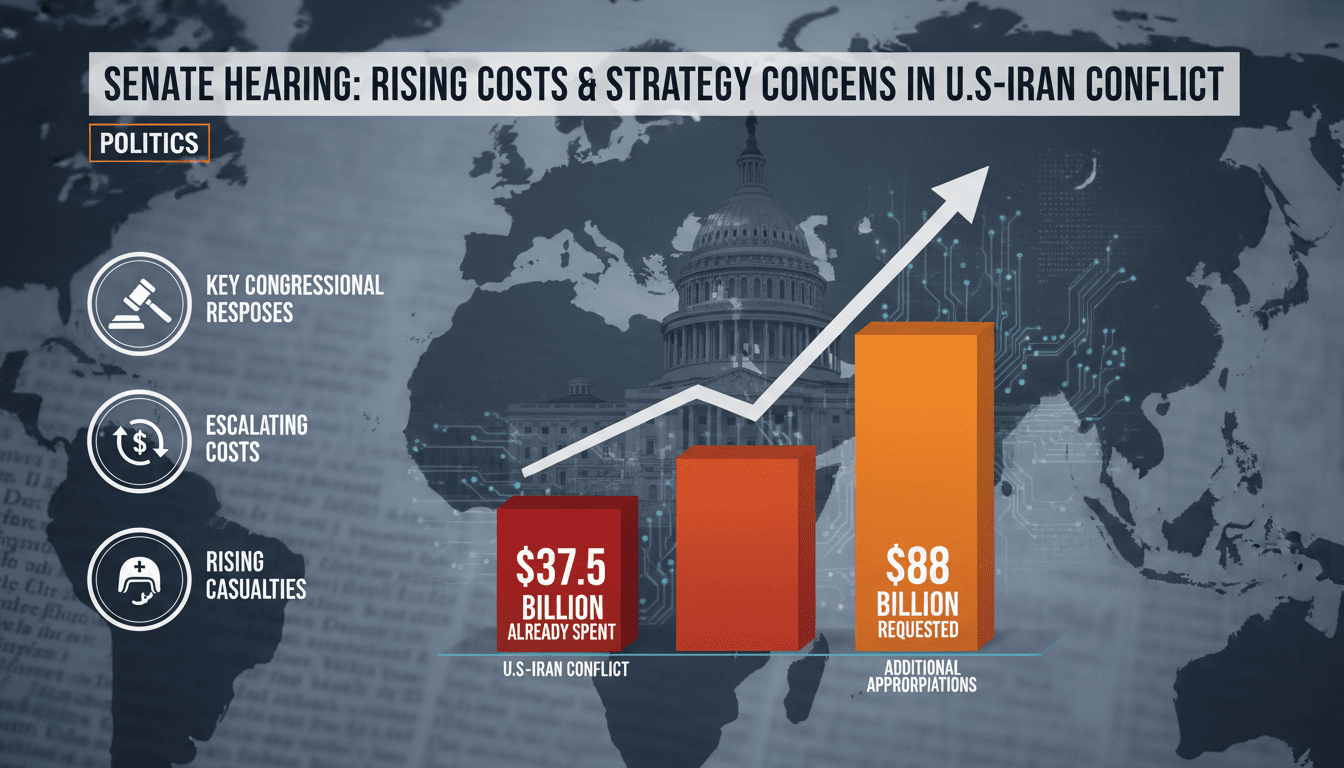
The recent Senate appropriations committee hearing underscores significant concerns regarding the financial and strategic management of the U.S.-Iran conflict. With $37.5 billion already spent and an additional $88 billion requested, lawmakers are increasingly questioning the sustainability of military expenditures. This scrutiny may lead to shifts in congressional support for future funding, impacting military operations and foreign policy direction. The contentious exchanges during the hearing reflect a growing divide in Congress, particularly regarding the effectiveness of the Trump administration's strategy. As casualties rise, including the recent deaths of American service members, the pressure on lawmakers to demand clarity and accountability will likely intensify.
What happened
During a Senate appropriations committee hearing on July 21, 2026, Defense Secretary Pete Hegseth faced intense scrutiny over the escalating costs and strategy of the U.S.-Iran conflict. Hegseth revealed that the war has already cost $37.5 billion and defended a request for nearly $88 billion in additional funding. The session featured heated exchanges, particularly between Hegseth and Senator Gary Peters, highlighting deep divisions in Congress regarding the management of the war.
Lawmakers expressed frustration over the lack of a clear strategy, which has become increasingly critical as casualties mount. The hearing was marked by protests and interruptions from activists, further emphasizing the contentious atmosphere surrounding military spending and foreign policy.
The Context
The U.S.-Iran conflict has seen rising costs and casualties, including the recent deaths of three American service members. This backdrop has fueled lawmakers' concerns about the sustainability and justification of continued military spending. Senator Gary Peters' criticism of the administration's strategy reflects a broader sentiment among some lawmakers who question the necessity and effectiveness of the ongoing military operations.
The Trump administration's funding request is viewed as urgent by certain stakeholders, while others remain skeptical about its implications. As the situation evolves, the dynamics within Congress will play a crucial role in shaping future military funding and strategy.
Takeaway
The contentious debate in Congress suggests ongoing challenges for the Trump administration in justifying military expenditures and strategy in the U.S.-Iran conflict. As costs continue to escalate, lawmakers may demand a clearer strategy and justification for military actions, which could impact future funding decisions.
Potential shifts in congressional support for military funding are likely as the administration faces increasing pressure to address these concerns. Observers should watch for further developments in U.S.-Iran relations and military strategy as the situation unfolds.
Arabic-language coverage of political affairs and current events.
"Okaz political coverage typically follows mainstream Saudi framing on national and regional affairs."
— A47 Editor
«أنت الفاشل وليس الجنود».. مواجهة حادة بين سيناتور ووزير الحرب الأمريكي
A heated exchange occurred during a U.S. Senate hearing between Democratic Senator Gary Peters and Secretary of War Pete Hegseth, where they exchanged accusations regarding the U.S. war strategy in Iran and the Trump administration's approach. Peters...
News from the United States including domestic politics, society, and culture.
"The Guardian is known for its progressive editorial stance and in-depth analysis, often advocating for social justice, environmental issues, and liberal values."
— A47 Editor
Hegseth tells Senate war on Iran has so far cost $37.5bn at hearing to request more funds
Defense Secretary Pete Hegseth informed the Senate appropriations committee that the ongoing US-Israel war on Iran has incurred costs of $37.5 billion to date, while requesting an additional $88 billion in funding to sustain military efforts. This re...
International coverage from The Guardian's global desks.
"The Guardian is known for its progressive editorial stance and in-depth analysis."
— A47 Editor
Hegseth tells Senate war on Iran has so far cost $37.5bn at hearing to request more funds
Defense Secretary Pete Hegseth informed the Senate appropriations committee that the ongoing US-Israel war on Iran has incurred costs of $37.5 billion to date, while requesting an additional $88 billion in funding to sustain military efforts. This re...
Pan-Arab news coverage spanning politics, business, sports, and regional affairs.
"Asharq Al-Awsat reflects a broad Arab editorial perspective with strong attention to regional geopolitics."
— A47 Editor
هيغسيث أمام مجلس الشيوخ للدفاع عن تمويل حرب إيران
U.S. Secretary of Defense Pete Hegseth and Chairman of the Joint Chiefs of Staff General Dan Kin appeared before the Senate Appropriations Committee on Tuesday to defend President Trump's strategy regarding funding for the Iran War. This session high...
Conservative-leaning political and national coverage.
"The Washington Times is a conservative-leaning newspaper known for its political coverage and advocacy of right-of-center viewpoints."
— A47 Editor
Hegseth facing questions from Congress about emergency spending package
Defense Secretary Pete Hegseth and Gen. Dan Caine are testifying before the Senate Appropriations Committee regarding the Trump administration's proposed $87 billion emergency supplemental spending package, which is aimed at addressing military opera...