
U.S. Defense Secretary Defends $88 Billion Funding Request Amid Rising Costs of Iran Conflict
Here's what it means for you.
The escalating costs of the U.S.-Iran conflict are prompting significant scrutiny from lawmakers, which could reshape future military funding decisions. As Defense Secretary Pete Hegseth defends a substantial funding request, the implications for military budgets and national security are profound. The recent loss of American service members adds urgency to the discussions, highlighting the human cost of ongoing military engagements. The financial demands of the conflict may lead to increased public dissent and pressure on Congress to reconsider allocations. Stakeholders must remain vigilant as these developments unfold, potentially impacting both military strategy and fiscal policy.
What happened
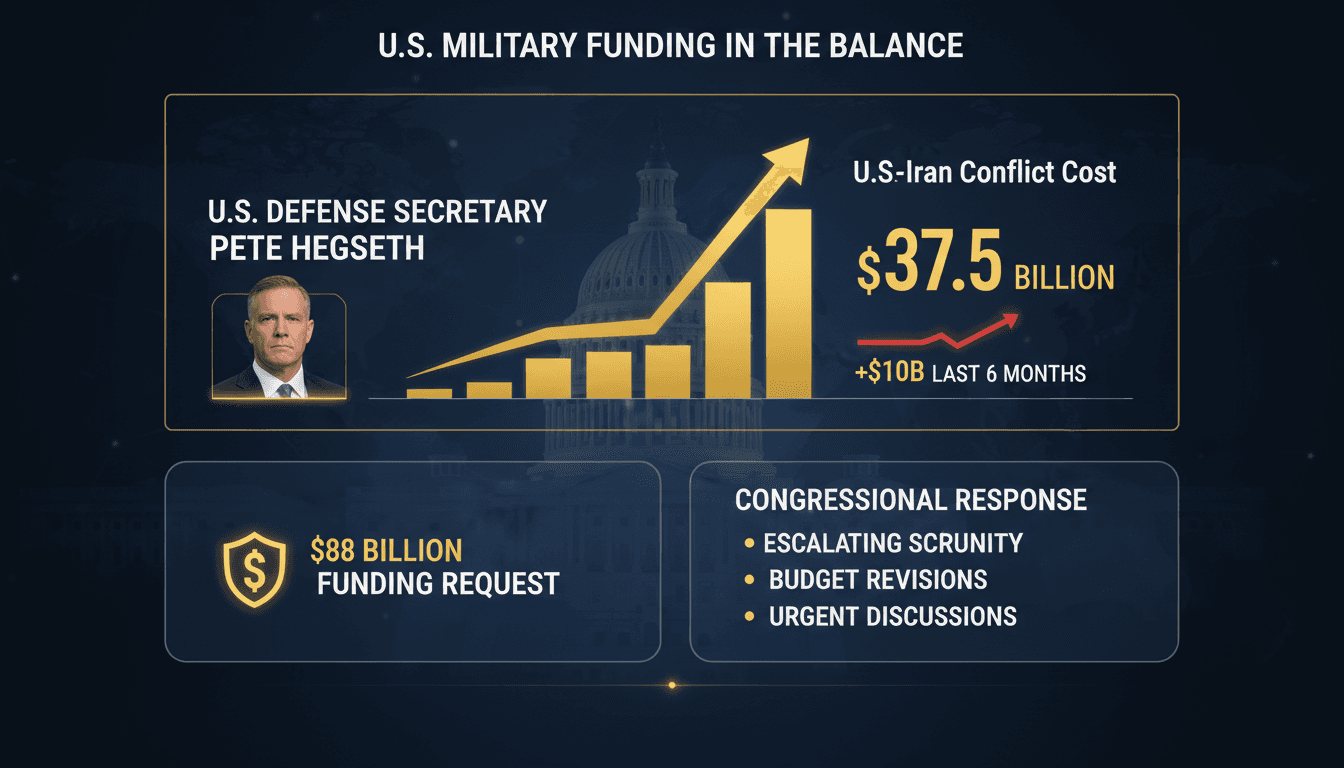
Defense Secretary Pete Hegseth testified before the Senate Appropriations Committee regarding the rising costs associated with the U.S.-Iran conflict, which have reached $37.5 billion. His testimony followed the tragic deaths of three American service members, underscoring the conflict's human toll. Hegseth defended the Trump administration's request for an additional $88 billion in funding, emphasizing the urgent need for financial support.
General Dan Caine also provided insights during the hearing, reinforcing the administration's position on the necessity of the supplemental funding. The testimony was met with interruptions from protests, reflecting growing public dissent regarding the war's financial and human costs.
The Context
The U.S.-Iran conflict has seen a significant escalation in military engagement, leading to mounting financial implications that are concerning lawmakers. As the conflict continues, the urgency of the supplemental funding request has become a focal point for congressional discussions. Lawmakers are increasingly worried about the sustainability of military funding in light of the ongoing expenditures.
The backdrop of recent American casualties adds a layer of complexity to the funding debate, as the administration faces tough questions about the war's direction and its impact on service members. The timing of Hegseth's testimony is critical, as it coincides with heightened scrutiny from both Congress and the public regarding military spending.
Takeaway
The ongoing financial demands of the U.S.-Iran conflict are likely to lead to intensified scrutiny and debate within Congress. As lawmakers assess the implications of the funding request, potential changes in military budget allocations could emerge based on their feedback. Future developments in U.S.-Iran military engagement will also be closely monitored, as they may influence the administration's funding strategies.
Stakeholders should prepare for possible shifts in military funding priorities as the conflict evolves. The financial and human costs of the war will remain central to congressional discussions, shaping the landscape of future military and budgetary decisions.
News from the United States including domestic politics, society, and culture.
"The Guardian is known for its progressive editorial stance and in-depth analysis, often advocating for social justice, environmental issues, and liberal values."
— A47 Editor
Hegseth tells Senate war on Iran has so far cost $37.5bn at hearing to request more funds
Defense Secretary Pete Hegseth informed the Senate appropriations committee that the ongoing US-Israel war on Iran has incurred costs of $37.5 billion to date, while requesting an additional $88 billion in funding to sustain military efforts. This re...
International coverage from The Guardian's global desks.
"The Guardian is known for its progressive editorial stance and in-depth analysis."
— A47 Editor
Hegseth tells Senate war on Iran has so far cost $37.5bn at hearing to request more funds
Defense Secretary Pete Hegseth informed the Senate appropriations committee that the ongoing US-Israel war on Iran has incurred costs of $37.5 billion to date, while requesting an additional $88 billion in funding to sustain military efforts. This re...
Pan-Arab news coverage spanning politics, business, sports, and regional affairs.
"Asharq Al-Awsat reflects a broad Arab editorial perspective with strong attention to regional geopolitics."
— A47 Editor
هيغسيث أمام مجلس الشيوخ للدفاع عن تمويل حرب إيران
U.S. Secretary of Defense Pete Hegseth and Chairman of the Joint Chiefs of Staff General Dan Kin appeared before the Senate Appropriations Committee on Tuesday to defend President Trump's strategy regarding funding for the Iran War. This session high...
Conservative-leaning political and national coverage.
"The Washington Times is a conservative-leaning newspaper known for its political coverage and advocacy of right-of-center viewpoints."
— A47 Editor
Hegseth facing questions from Congress about emergency spending package
Defense Secretary Pete Hegseth and Gen. Dan Caine are testifying before the Senate Appropriations Committee regarding the Trump administration's proposed $87 billion emergency supplemental spending package, which is aimed at addressing military opera...
Capitol Hill news, legislation, and policy insight.
"The Hill specializes in U.S. politics and policy, with a focus on Capitol Hill developments and a reputation for insider reporting."
— A47 Editor
Hegseth, Caine testify on Iran supplemental amid escalation: What to know
Defense Secretary Pete Hegseth and Chairman of the Joint Chiefs of Staff Gen. Dan Caine are scheduled to testify before the Senate regarding the White House's supplemental funding request, following a recent escalation in the U.S.-Iran conflict that ...