
US Senate panel approves bill to restrict Chinese-owned automotive companies
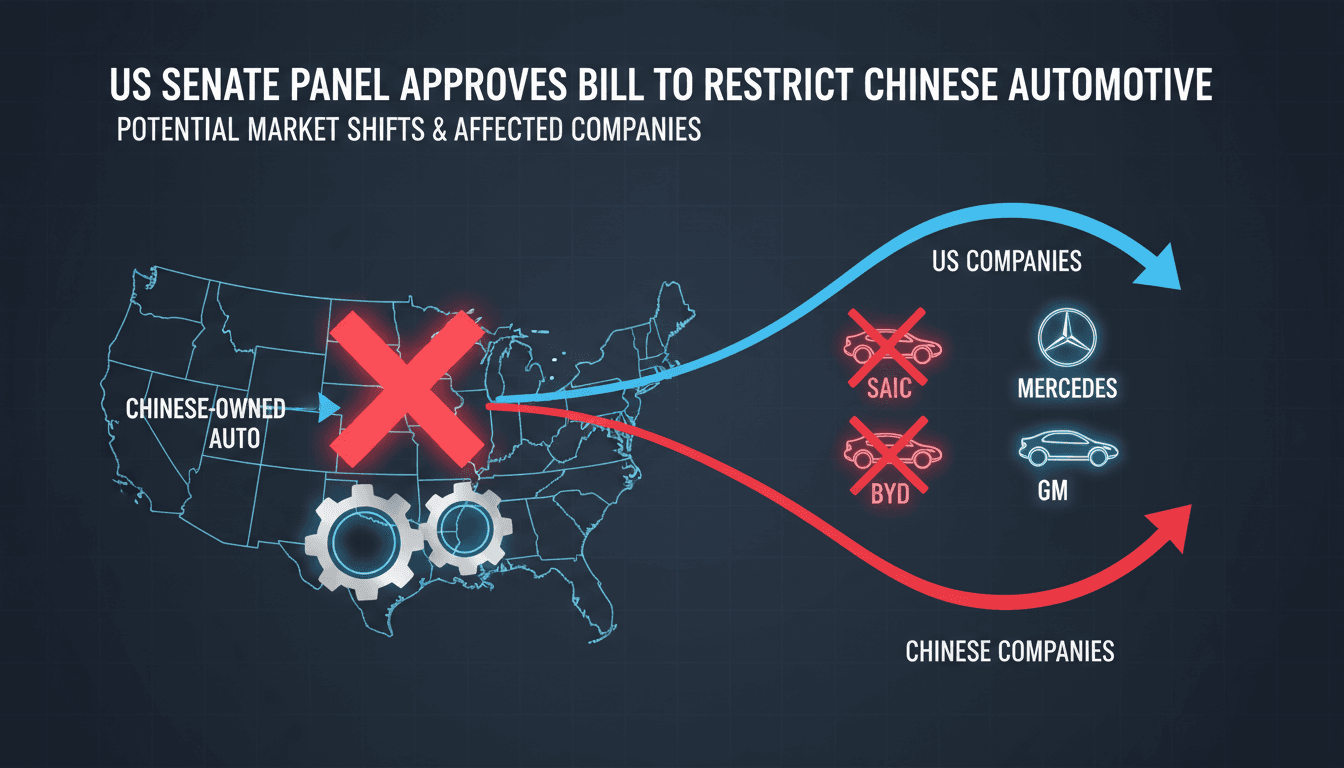
Here's what it means for you.
The recent approval of legislation by the US Senate Commerce panel signals a significant shift in the automotive market landscape. Companies with substantial Chinese ownership, including major players like Mercedes, may face severe sales restrictions if the bill becomes law. This move reflects growing national security concerns and a bipartisan effort to limit foreign influence in the US economy. As the bill progresses, stakeholders in the automotive industry will need to adapt to potential regulatory changes that could reshape competition and market dynamics. The implications for US-China relations will also be closely monitored as this situation unfolds.
What happened
The US Senate Commerce panel has approved a bill aimed at banning companies with significant Chinese ownership from the US automotive market. This legislation specifically targets Chinese-owned companies, reflecting escalating national security concerns. The approval occurred on July 22, 2026, and could lead to a sales ban affecting major automakers.
If enacted, the bill would significantly alter the competitive landscape of the automotive industry in the US. Major players like Mercedes could face substantial restrictions on their operations, impacting their market presence and sales strategies.
The Context
This legislative move is part of broader efforts to limit Chinese influence in the US market, driven by increasing bipartisan support for measures against Chinese economic practices. The scrutiny on Chinese investments has intensified, reflecting a growing consensus on the need to address national security concerns related to foreign ownership in critical sectors.
The timing of this bill comes amid ongoing economic tensions between the US and China, making it a pivotal moment for stakeholders in the automotive industry. As the bill progresses, it will be essential to consider how these changes will affect both domestic and international market dynamics.
Takeaway
As the bill moves forward, the potential full Senate vote will be a crucial next step to watch. Responses from affected companies and the Chinese government will also provide insight into the broader implications of this legislation. The automotive market may experience significant shifts as companies adapt to these regulatory changes.
Monitoring the fallout from this bill will be essential for understanding its impact on US-China relations and the future of the automotive industry. Stakeholders will need to prepare for a landscape that could be dramatically altered by these new restrictions.
Editor-curated FT homepage stories spanning markets, business, world, and opinion.
"The Financial Times is a globally respected business publication with a centrist/center-left tone and strong markets focus."
— A47 Editor
Mercedes risks US sales ban under Senate China bill
A US Senate panel has approved legislation that could lead to a sales ban on Mercedes in the US, targeting companies with significant Chinese ownership. This move is part of a broader crackdown on Chinese vehicles amid escalating tensions in US-China...
Market-moving headlines impacting equities, bonds, and related risk assets.
"Real-time catalysts and volatility drivers across indices and sectors."
— A47 Editor
US Senate panel approves bill to crack down on Chinese vehicles
A US Senate panel has approved a bill aimed at cracking down on Chinese vehicles, reflecting ongoing concerns about national security and economic competition with China. This legislative action is part of a broader effort to address trade practices ...
Market-moving headlines impacting equities, bonds, and related risk assets.
"Real-time catalysts and volatility drivers across indices and sectors."
— A47 Editor
US Senate panel to vote on Chinese vehicle crackdown bill
A US Senate panel is set to vote on a bill aimed at cracking down on Chinese vehicles, reflecting ongoing tensions in US-China trade relations. This legislative move comes as part of broader efforts to address concerns over trade practices and compet...