
U.S. Secretary of State Rubio Declares Iran Unprepared for Negotiations
What happened
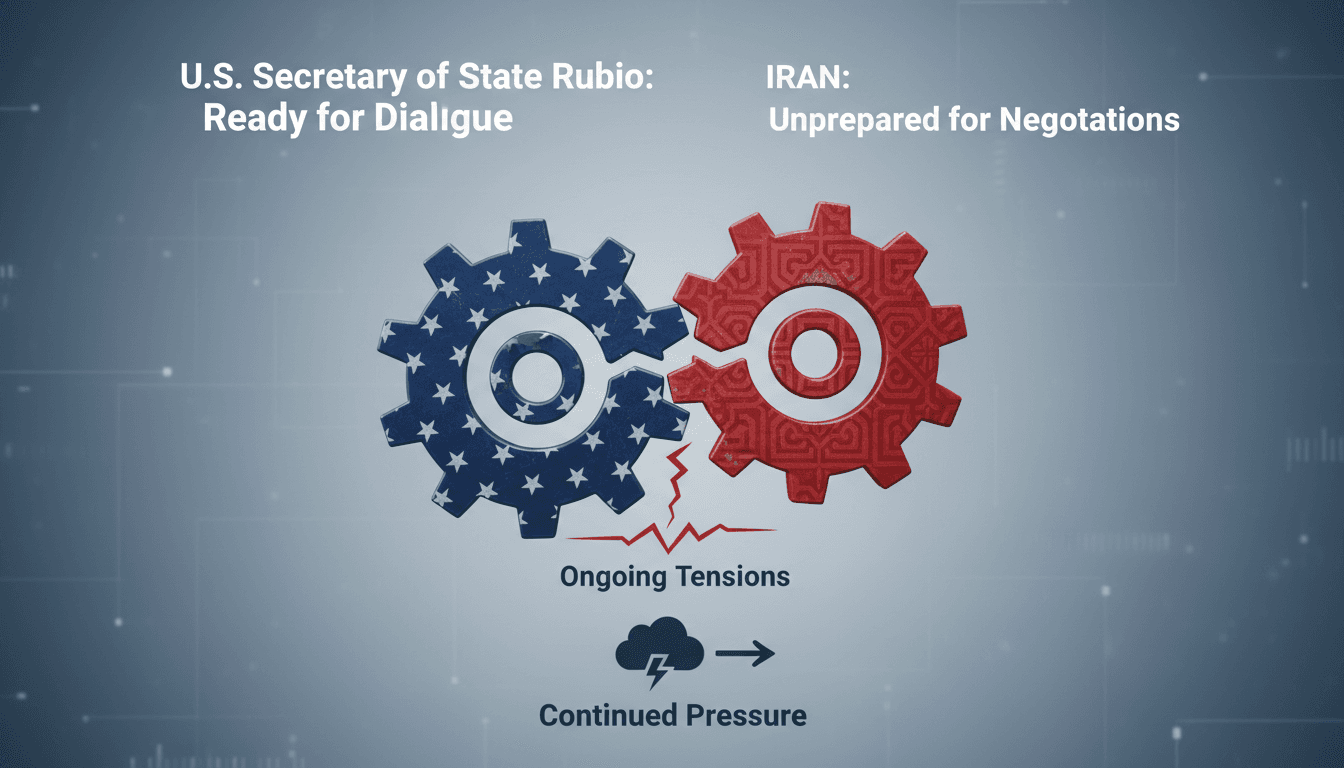
U.S. Secretary of State Marco Rubio announced that Iran is currently not prepared to negotiate a deal with the United States. He emphasized that Iran will face significant consequences for its unwillingness to engage in dialogue. This announcement was made during the ASEAN Foreign Ministers' meeting, where Rubio reiterated the U.S.'s openness to negotiations regarding Middle Eastern conflicts.
Rubio's remarks highlight a stark contrast between the U.S.'s willingness to engage and Iran's perceived lack of seriousness in negotiations. The statement reflects ongoing tensions between the two nations, suggesting that the U.S. may continue to apply pressure until a more favorable negotiating position is achieved.
The Context
The backdrop of Rubio's comments is a long-standing and complex relationship between the U.S. and Iran, characterized by mutual distrust and geopolitical rivalry. The U.S. has consistently expressed its readiness to negotiate, yet Iran's recent actions have raised concerns about its commitment to dialogue. The timing of these remarks, during a significant international meeting, amplifies their importance in the context of global diplomacy.
As the U.S. navigates its foreign policy in the Middle East, the implications of Rubio's statements could resonate beyond bilateral relations, affecting alliances and regional stability. Stakeholders in international relations are closely monitoring these developments, as they may influence future negotiations and conflict dynamics in the region.
Takeaway
Looking ahead, the U.S. may continue to exert pressure on Iran until it demonstrates a willingness to engage in serious negotiations. Observers should watch for potential shifts in U.S. foreign policy and Iran's responses to Rubio's statements, as these could shape the future of diplomatic relations. The situation remains tense, and the outcome will largely depend on Iran's readiness to participate in dialogue.
As developments unfold, the international community will be keenly interested in how both nations navigate this impasse and what it means for broader Middle Eastern diplomacy.
Arabic-language political and world news coverage for UAE readers.
"Emarat Al Youm world coverage usually presents international developments through a UAE and Arab audience lens."
— A47 Editor
روبيو: سياسة ترامب «العين بالعين» وإيران ستدفع ثمناً باهظاً روبيو: سياسة ترامب «العين بالعين» وإيران ستدفع ثمناً باهظاً
U.S. Secretary of State Marco Rubio stated that Iran is unlikely to be ready to finalize an agreement, emphasizing that the Trump administration's 'eye for an eye' policy will result in Iran facing significant consequences. This statement was made du...
Arabic-language coverage of international news and geopolitics.
"RT Arabic is a Russian state-funded outlet often criticized for promoting Kremlin-aligned narratives."
— A47 Editor
روبيو: إيران ليست مستعدة لإبرام صفقة معنا في الوقت الحالي وستدفع الثمن
U.S. Secretary of State Marco Rubio stated on Thursday that Iran is currently not prepared to strike a deal with the United States, indicating that the country will face significant consequences.
Pan-Arab news coverage spanning politics, business, sports, and regional affairs.
"Asharq Al-Awsat reflects a broad Arab editorial perspective with strong attention to regional geopolitics."
— A47 Editor
روبيو: واشنطن مستعدة للتفاوض وطهران غير جادة
U.S. Secretary of State Marco Rubio stated that the United States is open to dialogue regarding the Middle East conflict and is willing to negotiate and resolve differences with Iran.