
U.S. Congress Divided Over Military Actions Against Iran
What happened
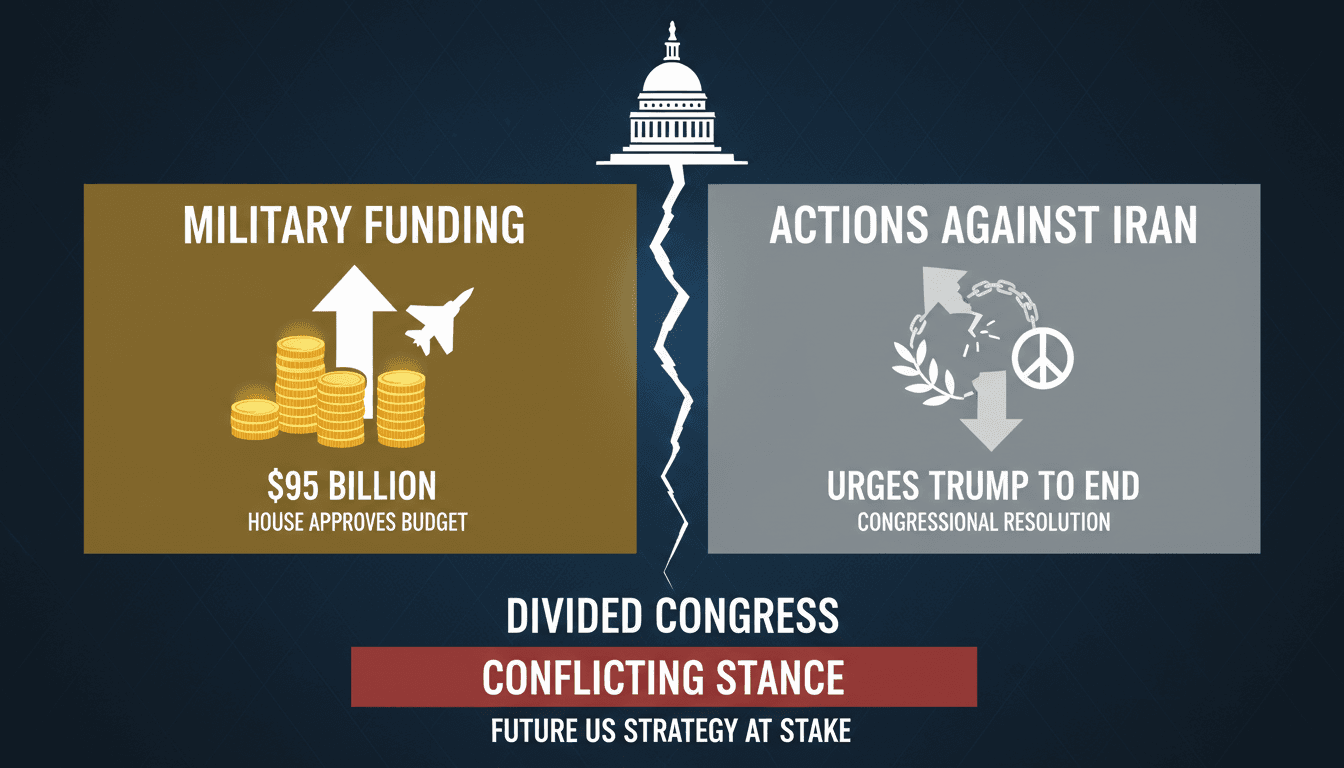
The U.S. House of Representatives has passed a budget framework that includes a total allocation of $95 billion for military operations. This framework designates $73 billion specifically for military forces, underscoring the government's commitment to defense spending. In a contrasting move, the House also passed a resolution urging President Trump to end military actions against Iran, highlighting a significant internal conflict.
This dual approach reflects the ongoing debate within U.S. politics regarding military engagement in the region. The Senate has yet to take action on the House's budget framework, which may lead to delays in military funding and further complicate the situation.
The Context
The budget framework approved by the House comes amid growing concerns over U.S. involvement in Iran, which has become a contentious issue among lawmakers. The resolution calling for an end to military actions indicates a shift in public sentiment and political priorities, as many Americans question the effectiveness and necessity of military interventions abroad.
The timing of these developments is crucial, as they may influence upcoming elections and the broader discourse on U.S. foreign policy. With the Senate's response pending, the future of military funding and operations remains uncertain, leaving both domestic and international stakeholders on edge.
Takeaway
As Congress continues to debate military funding and actions, the implications for U.S. involvement in Iran are significant. Observers should watch for the Senate's response to the House budget framework, as this will shape the trajectory of military strategy in the region. Additionally, the potential impact of the resolution on U.S.-Iran relations could redefine diplomatic efforts moving forward.
The ongoing conflict within Congress may lead to a reevaluation of military priorities and strategies, influencing how the U.S. engages with Iran and other nations in the Middle East.
Pan-Arab news coverage spanning politics, business, sports, and regional affairs.
"Asharq Al-Awsat reflects a broad Arab editorial perspective with strong attention to regional geopolitics."
— A47 Editor
مجلس الشيوخ يعرقل مشروعاً لتقييد صلاحيات ترمب في حرب إيران
The U.S. Congress has sent conflicting messages regarding the war with Iran, as the House of Representatives approved a $95 billion budget framework that includes funding for military operations. Meanwhile, the Senate has obstructed a proposal aimed ...
Arabic-language coverage of international news and geopolitics.
"RT Arabic is a Russian state-funded outlet often criticized for promoting Kremlin-aligned narratives."
— A47 Editor
النواب الأمريكي يصدر قرارا يطالب ترامب بإنهاء الحرب على إيران
The U.S. House of Representatives has passed a resolution demanding President Donald Trump to cease military operations against Iran. This decision reflects growing concerns among lawmakers regarding the ongoing conflict and its implications for U.S....
Jordanian news and regional updates.
"Roya News is a Jordanian outlet focused on breaking news and local affairs."
— A47 Editor
النواب الأمريكي يقر إطار ميزانية بقيمة 95 مليارا يتضمن تمويلا للحرب على إيران
The U.S. House of Representatives has approved a budget framework amounting to $95 billion, which includes $73 billion allocated for military forces and agencies, specifically aimed at funding operations related to Iran. This decision reflects ongoin...