
US House Approves Record $1.15 Trillion Defense Budget in NDAA Vote
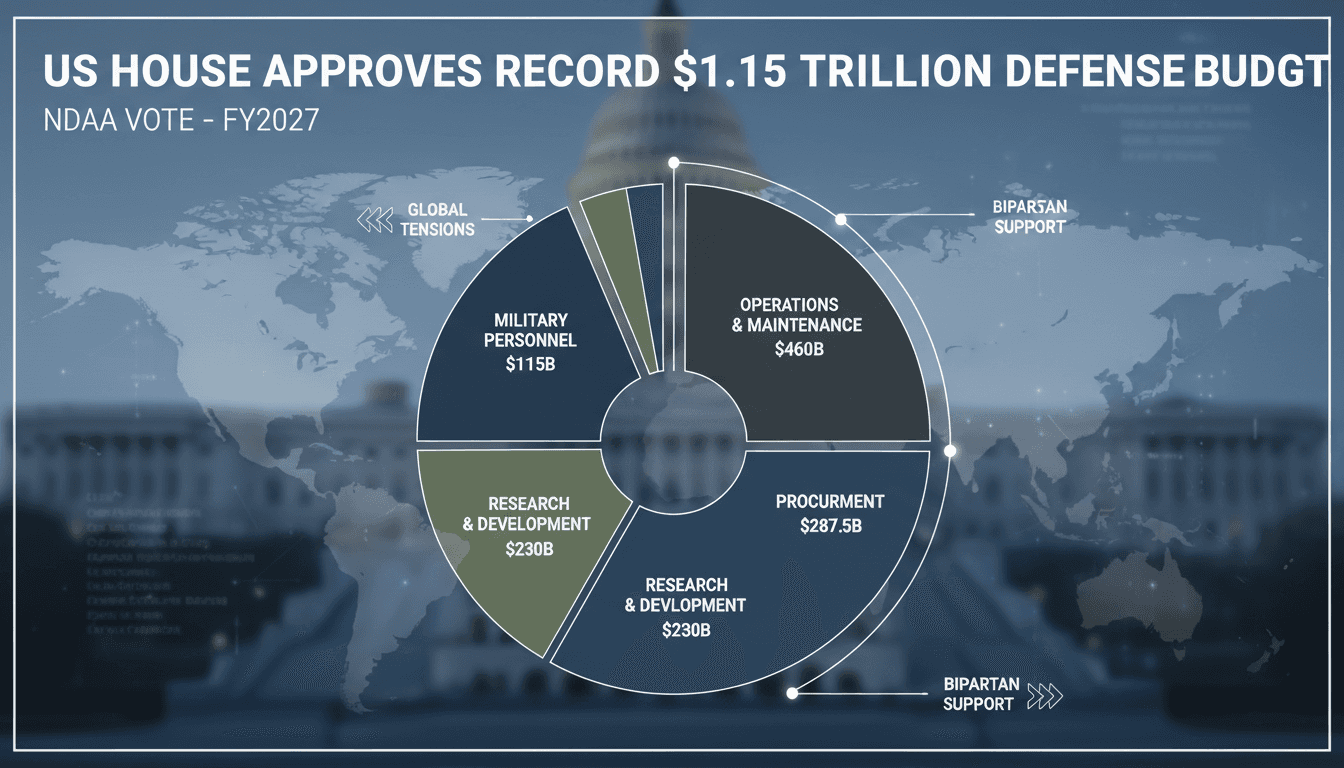
Here's what it means for you.
The passage of the National Defense Authorization Act (NDAA) signals a robust commitment to military funding, reflecting bipartisan support amid rising global tensions. This historic budget allocation of $1.15 trillion underscores the prioritization of national security in U.S. legislative agendas. As the bill progresses to the Senate, stakeholders in defense and military sectors will closely monitor potential amendments and their implications.
What happened
The U.S. House of Representatives has passed the NDAA for fiscal year 2027, approving a record budget of $1.15 trillion for military funding. The vote concluded with a narrow margin of 216 to 212, showcasing the contentious nature of the decision. Notably, six Democrats joined Republicans in supporting the bill, highlighting a rare moment of bipartisan agreement on defense spending.
This legislation outlines the budget and expenditures for the Department of Defense, emphasizing the government's commitment to military readiness. The approval marks a significant step in the annual process of determining defense priorities and funding levels.
The Context
The NDAA is an essential annual bill that shapes the financial landscape for the U.S. military, reflecting ongoing bipartisan support for defense initiatives despite political divisions. The record budget allocation indicates a substantial commitment to national defense, particularly in light of escalating global tensions that necessitate a strong military presence.
As the bill moves to the Senate, discussions will likely center on specific allocations and potential amendments, which could further influence military strategy and funding. The timing of this legislation is critical, as it aligns with heightened concerns over international security challenges.
Takeaway
The passage of the NDAA signals continued bipartisan support for military funding as the U.S. navigates complex global security challenges. Observers should watch for potential debates in the Senate regarding the NDAA provisions, which may shape the final outcome of the budget. Additionally, reactions from military and defense contractors to the increased budget will provide insights into the broader implications for the defense industry.
As discussions unfold, the focus will likely remain on how this historic funding will be allocated and its impact on future military strategies.
News from the United States including domestic politics, society, and culture.
"The Guardian is known for its progressive editorial stance and in-depth analysis, often advocating for social justice, environmental issues, and liberal values."
— A47 Editor
Democrats criticize Trump’s new tariffs as ‘end-run around the supreme court and Congress’ – as it happened
The House of Representatives passed a war powers resolution aimed at limiting President Trump's military actions in Iran, with a vote of 214-208, where four Republicans joined Democrats in support. This vote reflects a growing bipartisan effort to ch...
International coverage from The Guardian's global desks.
"The Guardian is known for its progressive editorial stance and in-depth analysis."
— A47 Editor
Democrats criticize Trump’s new tariffs as ‘end-run around the supreme court and Congress’ – as it happened
The House of Representatives passed a war powers resolution aimed at limiting President Trump's military actions in Iran, with a vote of 214-208, where four Republicans joined Democrats in support. This vote reflects a growing bipartisan effort to ch...
English-language news from Qatar covering domestic and regional affairs.
"Gulf Times reflects Qatari perspectives on regional developments."
— A47 Editor
US House of Representatives passes defence bill with ecord $1.15 Trillion Budget
The US House of Representatives has passed the National Defence Authorization Act for fiscal year 2027, approving a historic budget of $1.15 trillion for the US military with a narrow vote of 216 to 212. This significant allocation underscores the go...
Capitol Hill news, legislation, and policy insight.
"The Hill specializes in U.S. politics and policy, with a focus on Capitol Hill developments and a reputation for insider reporting."
— A47 Editor
6 Democrats cross aisle, join GOP to back annual defense policy bill
Six Democratic House lawmakers crossed party lines to support the nearly $1.15 trillion National Defense Authorization Act (NDAA), joining a majority of Republicans in its passage. This move reflects a trend among certain Democrats who have previousl...