
Residents of Zawtar al-Gharbiyeh Begin Returning Home After Israeli Troop Withdrawal
What happened
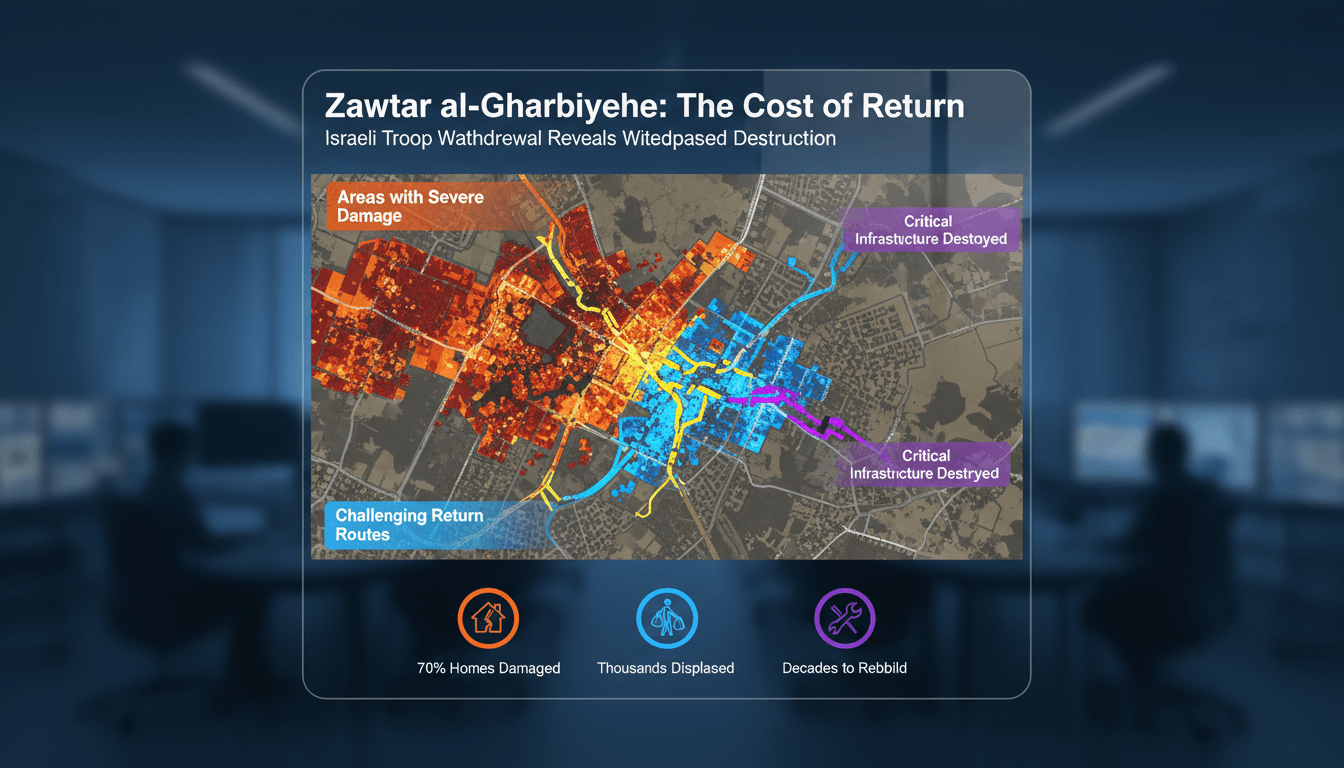
Israeli troops have withdrawn from Zawtar al-Gharbiyeh, enabling residents to return and inspect their homes. This development follows a U.S.-brokered agreement aimed at stabilizing the region. Many residents, however, are confronted with the harsh reality of significant destruction, as more than half of the town has been damaged or destroyed.
Local officials have reported that many homes remain uninhabitable, complicating the return process for families. The situation is described as tentative, with residents facing numerous challenges as they navigate the aftermath of conflict.
The Context
The withdrawal of Israeli troops is a pivotal moment in the ongoing tensions between Israel and Lebanon. The U.S.-brokered agreement that facilitated this withdrawal reflects broader geopolitical interests in the region. However, the destruction in Zawtar al-Gharbiyeh underscores the severe impact of conflict on local communities.
With over 50% of the town destroyed, the return of residents is fraught with uncertainty. Local officials are grappling with the immediate needs of the community, while the potential for political developments looms in the background.
Takeaway
The situation in Zawtar al-Gharbiyeh remains precarious as residents begin to assess the damage and seek to rebuild their lives. Ongoing monitoring of rebuilding efforts will be essential to understanding the community's recovery trajectory. Additionally, potential political developments regarding Israeli-Lebanese relations could further influence the region's stability.
As the community navigates this challenging period, support from both local and international entities will be crucial in facilitating recovery and rebuilding efforts.
RT is a Russian state-funded network covering global events from a Russian perspective.
"RT is widely criticized for promoting pro-Kremlin narratives and is considered by many to be a state propaganda outlet."
— A47 Editor
RT speaks to Lebanese displaced by Israeli occupation (VIDEO)
Residents of Zawtar El Gharbiyeh in southern Lebanon expressed feelings of betrayal as they remain unable to return home despite the withdrawal of Israeli Defense Forces (IDF). The ongoing displacement highlights the unresolved humanitarian crisis af...
Regional coverage and analysis focused on politics, diplomacy, and business across the Middle East.
"Al-Monitor is known for analytical reporting on Middle East politics and policy developments."
— A47 Editor
Residents enter shattered south Lebanon town after Israeli withdrawal
Residents have begun to enter the southern Lebanese town of Zawtar al-Gharbiyeh following the withdrawal of Israeli troops, with many inspecting their damaged homes and searching for belongings. The Lebanese army has deployed in the area under a U.S....
UAE-based English-language newspaper covering regional politics, economics, and global affairs.
"The National reflects Emirati policy perspectives while maintaining international editorial standards."
— A47 Editor
Inside Lebanon's 'pilot zones': Zawtar Al Gharbiyeh residents' return blocked despite Israeli withdrawal
Residents of Zawtar Al Gharbiyeh in southern Lebanon are facing obstacles in returning to their homes despite the withdrawal of Israeli forces, as the Lebanese army has taken control under a U.S.-backed pilot zone initiative. The situation highlights...