
Trump mediates conflict between Apple and Micron over Chinese memory chips
What happened
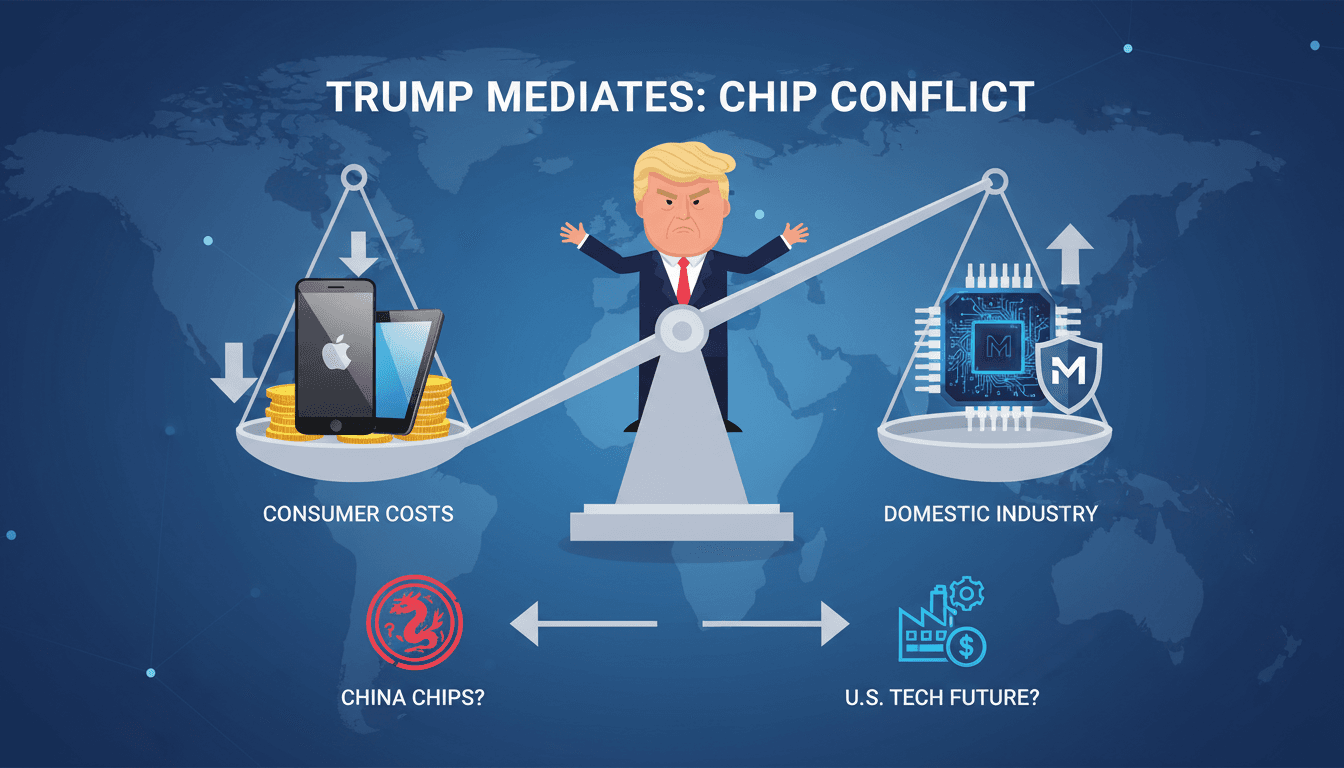
President Trump is currently navigating a conflict between Apple and Micron regarding the use of Chinese memory chips in products sold outside the U.S. Apple has proposed utilizing these chips to reduce consumer costs, while Micron has raised alarms about the potential harm to the domestic semiconductor industry. This clash places Trump in a challenging position as he seeks to balance competing interests.
On July 25, 2026, Apple pitched the idea of using Chinese memory chips to Trump, emphasizing the benefits of lower product prices. In response, Micron warned that such a plan could jeopardize the future of the U.S. chip industry. This situation underscores the complexities of U.S. technology policy amid ongoing tensions with China.
The Context
The conflict between Apple and Micron reflects broader issues of trade and technology in U.S.-China relations. Apple, a major player in the consumer electronics market, is advocating for cost-effective solutions to maintain its competitive edge. Conversely, Micron, a key domestic semiconductor manufacturer, is concerned about the long-term implications of relying on foreign components.
This dispute highlights the tension between consumer pricing and national industry interests, as both companies represent significant facets of the U.S. economy. The timing of this conflict is critical, given the current landscape of international trade and the ongoing scrutiny of technology supply chains.
Takeaway
As the situation develops, it will be crucial to monitor how the U.S. government addresses the competing interests of major tech companies. Potential government responses could significantly impact the semiconductor industry and consumer prices. Observers should also keep an eye on further developments in U.S.-China trade relations, as these dynamics will likely influence the outcome of this conflict.
The resolution of this dispute may set important precedents for future technology policy and trade negotiations, shaping the landscape for both consumers and industry stakeholders.
Macro commentary, policy analysis, growth/inflation themes, and global outlooks.
"Contextual macro coverage that complements day-to-day market headlines."
— A47 Editor
Trump faces Apple-Micron clash over Chinese memory chips - WSJ
Former President Donald Trump is facing a significant clash involving Apple and Micron over the importation of Chinese memory chips, which has implications for the semiconductor market amid ongoing trade tensions.
Curated tech headlines including AI stories.
"Influential aggregator surfacing the day’s top tech/AI links."
— A47 Editor
Sources: Apple has pitched Trump on using Chinese memory chips in its products sold outside the US; Micron warned such a plan could destroy the US chip industry (Wall Street Journal)
Apple has reportedly proposed to former President Trump the use of Chinese memory chips in its products sold outside the United States, a move that has raised concerns from Micron Technology about potential detrimental effects on the U.S. chip indust...
Tech business coverage, major deals, product launches, and Silicon Valley trends.
"WSJ’s tech section offers authoritative reporting on the intersection of technology and business, including exclusive industry analysis."
— A47 Editor
Trump Caught Between Apple and Micron in Fight Over Chinese Chips
President Trump is navigating a complex situation as he balances two key priorities: reducing consumer prices in the U.S. and boosting domestic semiconductor production. This conflict arises amid ongoing tensions with China, particularly concerning t...