
CFTC Issues Second Warning to Prediction Markets Over Self-Certification Practices
What happened
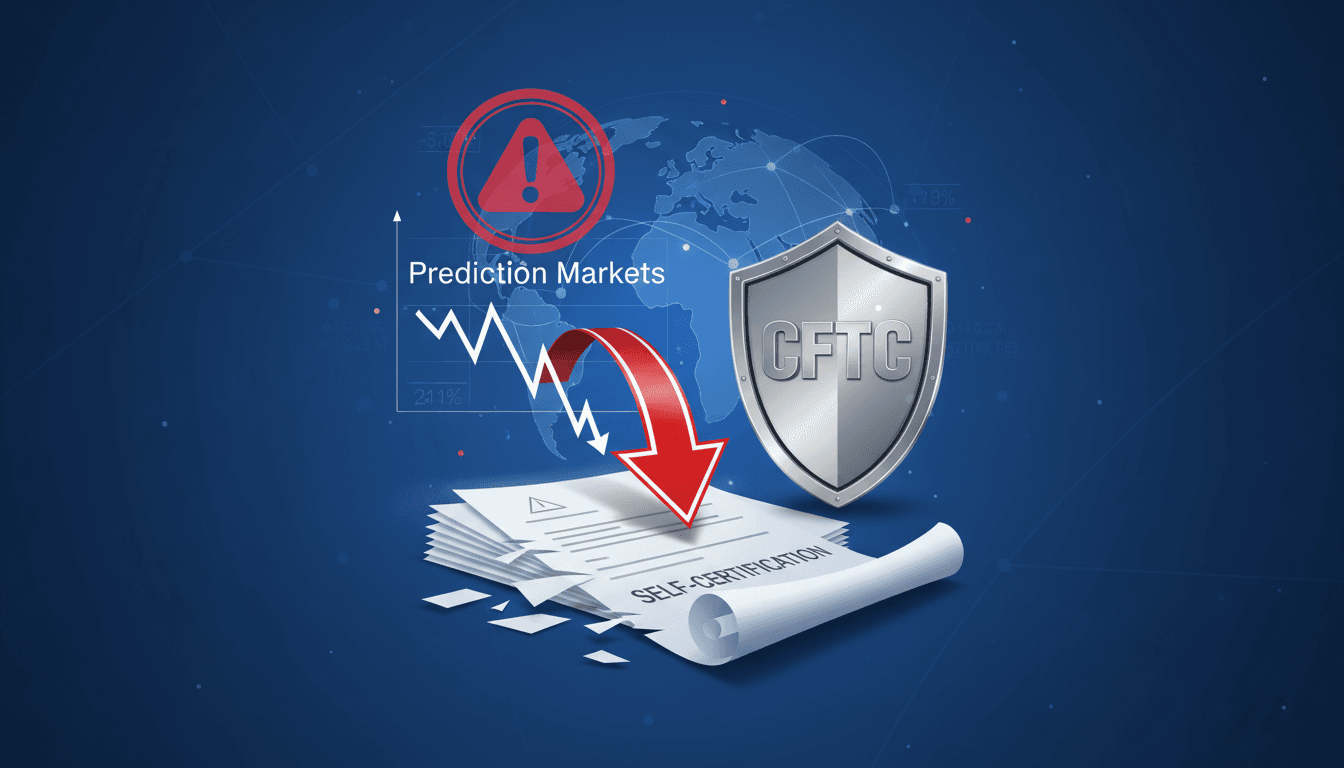
On July 26, 2026, the CFTC issued a second warning to prediction markets regarding their use of overly broad, template-style self-certifications for event contracts. This advisory specifically targets the practice of employing cookie-cutter self-certifications, which the CFTC believes undermines compliance with regulatory standards. The warning follows an initial advisory issued just two days prior, highlighting the urgency of the situation.
The CFTC's ongoing efforts aim to ensure that event contracts are properly certified, thereby maintaining market integrity. This advisory reflects a growing concern over compliance practices within the prediction market sector, indicating that firms may be cutting corners in their regulatory obligations.
The Context
The CFTC's warnings come amid a broader regulatory landscape where compliance is increasingly scrutinized. This is the second warning issued by the CFTC in 2026, underscoring a heightened focus on self-certification practices in the prediction market industry. The agency's role is crucial, as it oversees and regulates derivatives markets, including prediction markets, to ensure fair and transparent operations.
The timing of these advisories suggests that the CFTC is taking proactive measures to address potential compliance issues before they escalate. By targeting the use of boilerplate contracts, the CFTC aims to foster a more robust regulatory environment that upholds market integrity and protects participants.
Takeaway
Looking ahead, prediction markets may need to revise their self-certification processes to align with the CFTC's regulatory expectations. Firms should prepare for potential regulatory changes that could impact their operational practices and compliance strategies. Increased enforcement actions by the CFTC against non-compliant firms may also be on the horizon, prompting a reevaluation of existing practices.
As the CFTC continues to monitor compliance in the prediction market sector, stakeholders must stay informed and adapt to evolving regulatory requirements. This ongoing scrutiny could reshape the landscape of prediction markets, emphasizing the need for rigorous adherence to certification standards.
Covers blockchain, cryptocurrency news, project analysis, and market insights.
"Cointelegraph is a leading crypto-focused media outlet known for timely news, analysis, and educational content related to blockchain and digital assets."
— A47 Editor
CFTC issues second warning to prediction markets on cookie-cutter self-certifications
The Commodity Futures Trading Commission (CFTC) has issued a second warning to prediction markets, instructing them to cease the practice of issuing broad, template-style self-certifications for event contracts. This warning follows a previous notice...
Covers blockchain, cryptocurrency news, project analysis, and market insights.
"CoinDesk is a well-established cryptocurrency and blockchain news provider, offering comprehensive insights, market data, and industry research."
— A47 Editor
U.S. regulator warns prediction markets against cutting corners in event contracts
The Commodity Futures Trading Commission (CFTC) has issued a warning to prediction markets, indicating that firms are increasingly engaging in cookie-cutter self-certification for event contracts, which raises regulatory concerns.
Technology business and AI-related headlines.
"Data-driven tech newsroom with global scope."
— A47 Editor
CFTC Warns Prediction Markets Over Blanket Self-Certifications
The Commodity Futures Trading Commission (CFTC) has issued a warning to prediction markets regarding their practice of self-certifying contracts that could apply to various events. This move indicates a regulatory push to ensure that these markets op...
Technology business news, market impacts, and innovation trends.
"Bloomberg is a premier financial and tech news provider, respected for its in-depth reporting and analytical rigor."
— A47 Editor
CFTC Warns Prediction Markets Over Blanket Self-Certifications
The Commodity Futures Trading Commission (CFTC) has issued a warning to prediction markets regarding their practice of self-certifying contracts that could apply to various events. This move indicates a regulatory push to ensure that these markets op...