
Israel expands military operations in the West Bank under Netanyahu's directive
What happened
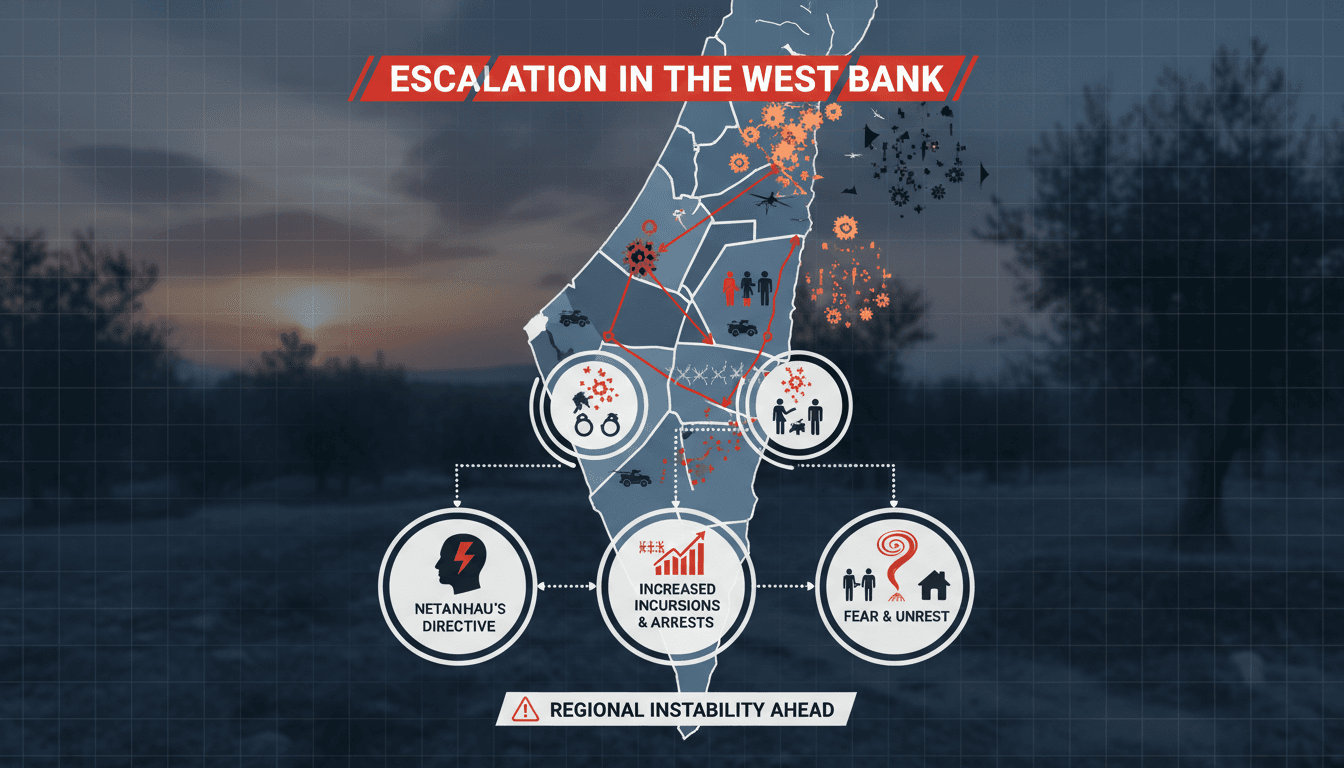
Israeli Prime Minister Benjamin Netanyahu has authorized the military to expand operations in the West Bank, which includes entering Palestinian villages for searches and arrests. This directive comes amid rising tensions and fears among local residents regarding potential military and settler violence. Reports indicate that these incursions have already begun, with increased military presence noted in various Palestinian areas.
The Israeli military's actions are part of a broader strategy aimed at addressing security concerns in the region. As operations intensify, the situation on the ground remains volatile, with ongoing clashes reported between Israeli forces and Palestinian residents. The escalation reflects the Israeli government's approach to perceived threats in the West Bank.
The Context
The Israeli military has been conducting operations in the West Bank for some time, but Netanyahu's recent directive marks a notable intensification of these efforts. His government has faced criticism for its handling of the Israeli-Palestinian conflict, and this latest move may be seen as an attempt to assert control amid growing unrest. The volatile environment in the West Bank has led to ongoing clashes, raising concerns about the safety of local residents.
The implications of these military operations extend beyond immediate security concerns, as they may further entrench divisions between Israelis and Palestinians. The situation is compounded by fears of potential violence from both military forces and settlers, which could escalate tensions even further. Understanding the dynamics at play is crucial for stakeholders invested in regional stability.
Takeaway
As military operations continue in the West Bank, the likelihood of increased violence and unrest remains high. Observers should watch for potential international reactions to Israel's military actions, which could influence diplomatic relations and policy responses. Additionally, updates on the humanitarian situation for Palestinian residents will be critical in assessing the broader impact of these developments.
The ongoing military presence and operations may lead to a cycle of violence that complicates efforts for peace in the region. Stakeholders must remain vigilant as the situation evolves, considering both immediate and long-term implications for local communities and regional stability.
Arabic-language coverage of international news and geopolitics.
"RT Arabic is a Russian state-funded outlet often criticized for promoting Kremlin-aligned narratives."
— A47 Editor
نتنياهو يصعّد في الضفة الغربية
Israeli Prime Minister Benjamin Netanyahu has instructed the military to enter Palestinian villages in the West Bank to conduct searches, seize weapons, and arrest suspects. This escalation reflects ongoing tensions in the region and highlights the I...
Pan-Arab news coverage spanning politics, business, sports, and regional affairs.
"Asharq Al-Awsat reflects a broad Arab editorial perspective with strong attention to regional geopolitics."
— A47 Editor
نتنياهو يطلق يد الجيش في الضفة... وتلويح بإخلاء بلدات كاملة
Israeli Prime Minister Benjamin Netanyahu has authorized the Israeli army to expand its operations in the West Bank, instructing forces to enter additional areas and arrest Palestinians. This decision marks a significant escalation in military action...
Comprehensive coverage of Middle Eastern and global issues.
"Al Jazeera is a prominent voice from the Global South, especially the Middle East, with an emphasis on underreported stories."
— A47 Editor
Israel raids West Bank live: PM Netanyahu threatens ‘more broad action’
Israeli Prime Minister Benjamin Netanyahu has threatened to take broader military action in the West Bank as Israeli forces continue their raids, leading to numerous arrests and heightened tensions among Palestinian residents. This escalation follows...