
Escalating Protests in Tripoli Demand Resignation of Interim Government
What happened
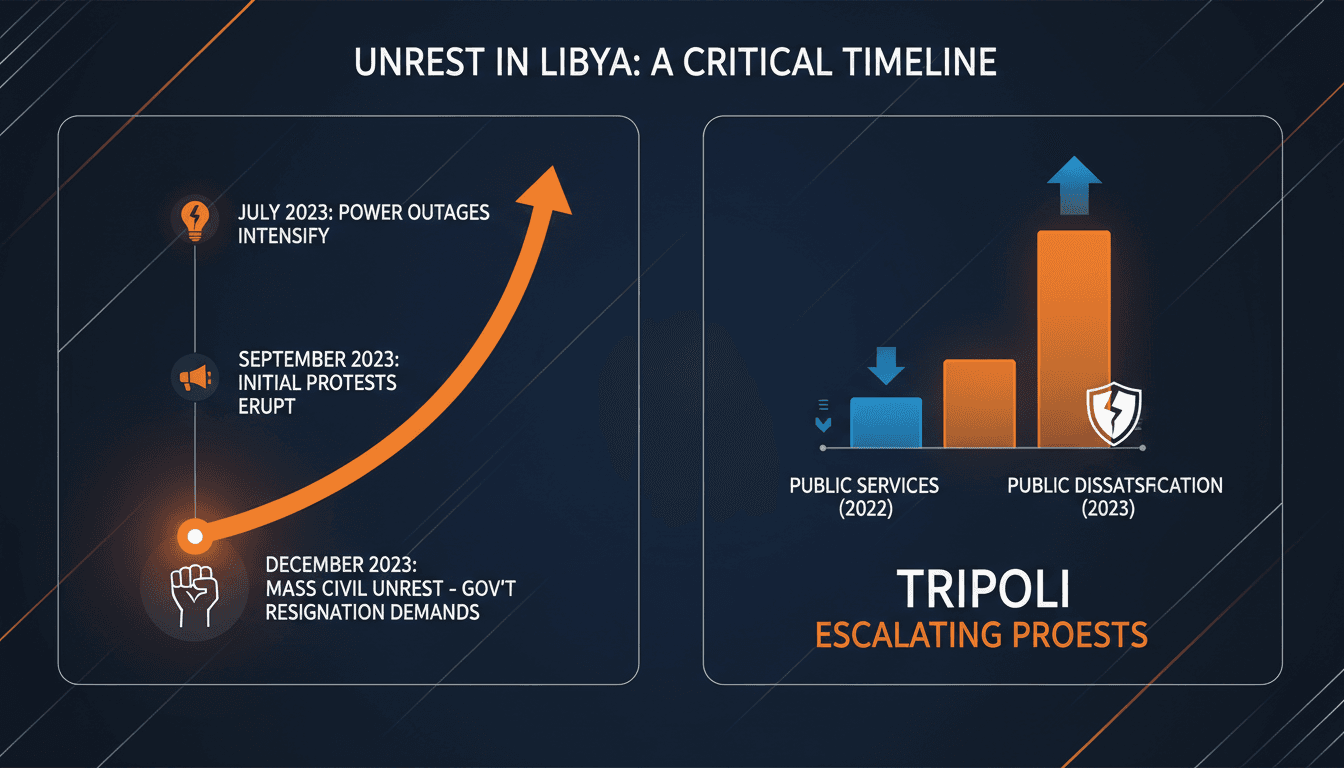
Protests in Tripoli have intensified, with demonstrators demanding the resignation of Prime Minister Abdul Hamid Dbeibah's interim government. Citizens have initiated a civil disobedience campaign, closing several government offices, including the Ministry of Foreign Affairs, and blocking major roads. This surge in protests reflects a growing frustration with the government's inability to address critical public service issues, particularly ongoing electricity shortages.
The demonstrations have gained momentum, marking one of the largest public mobilizations in recent months. Protesters are voicing their discontent over worsening economic conditions and the government's failure to provide essential services. The situation has escalated rapidly, with significant disruptions to daily life in the capital.
The Context
The protests are rooted in widespread dissatisfaction with the Dbeibah government's handling of public services, particularly regarding electricity shortages. Since its formation in 2021, the interim government has struggled with legitimacy issues, lacking recognition from the eastern-based parliament. This ongoing crisis has fueled public discontent, culminating in the current wave of protests.
The demonstrations represent a significant shift in public sentiment, as citizens increasingly demand accountability and better governance. The backdrop of economic challenges further complicates the situation, as many Libyans face deteriorating living conditions. The protests highlight the fragile political landscape in Libya, where efforts for a stable government remain ongoing.
Takeaway
As protests continue, the Dbeibah government faces increasing pressure to respond to public demands effectively. The potential for further unrest remains high if the underlying issues, such as electricity shortages and public service failures, are not addressed. Observers should watch for the government's response to the protests and any measures taken to alleviate public grievances.
The impact of these protests on ongoing political negotiations for a stable government in Libya will also be crucial. The situation is fluid, and the outcomes could significantly influence the future of governance in the country.
Pan-Arab news coverage spanning politics, business, sports, and regional affairs.
"Asharq Al-Awsat reflects a broad Arab editorial perspective with strong attention to regional geopolitics."
— A47 Editor
محتجون يعلنون «العصيان المدني» في غرب ليبيا
Angry Libyans have closed government facilities and the vital coastal road in Tripoli, demanding the resignation of the interim Government of National Unity led by Abdul Hamid Dbeibeh. This civil disobedience reflects widespread dissatisfaction with ...
Arabic-language coverage of political affairs and current events.
"Okaz political coverage typically follows mainstream Saudi framing on national and regional affairs."
— A47 Editor
عصيان مدني يشل مؤسسات حكومية في طرابلس ويصعّد الضغط على الدبيبة
Protests in Tripoli have escalated as residents of Tajoura have initiated a civil disobedience campaign, closing several government institutions in response to deteriorating services and ongoing electricity shortages. The closures include the municip...
Arabic-language coverage of international news and geopolitics.
"RT Arabic is a Russian state-funded outlet often criticized for promoting Kremlin-aligned narratives."
— A47 Editor
تصعيد جديد في طرابلس.. محتجون يغلقون مقر وزارة الخارجية الليبية وسط اتساع الاحتجاجات
Protests in Tripoli escalated as demonstrators closed the Libyan Foreign Ministry, reflecting a growing public movement demanding the resignation of the Government of National Unity led by Abdul Hamid Dbeibah. This action signifies a significant incr...