
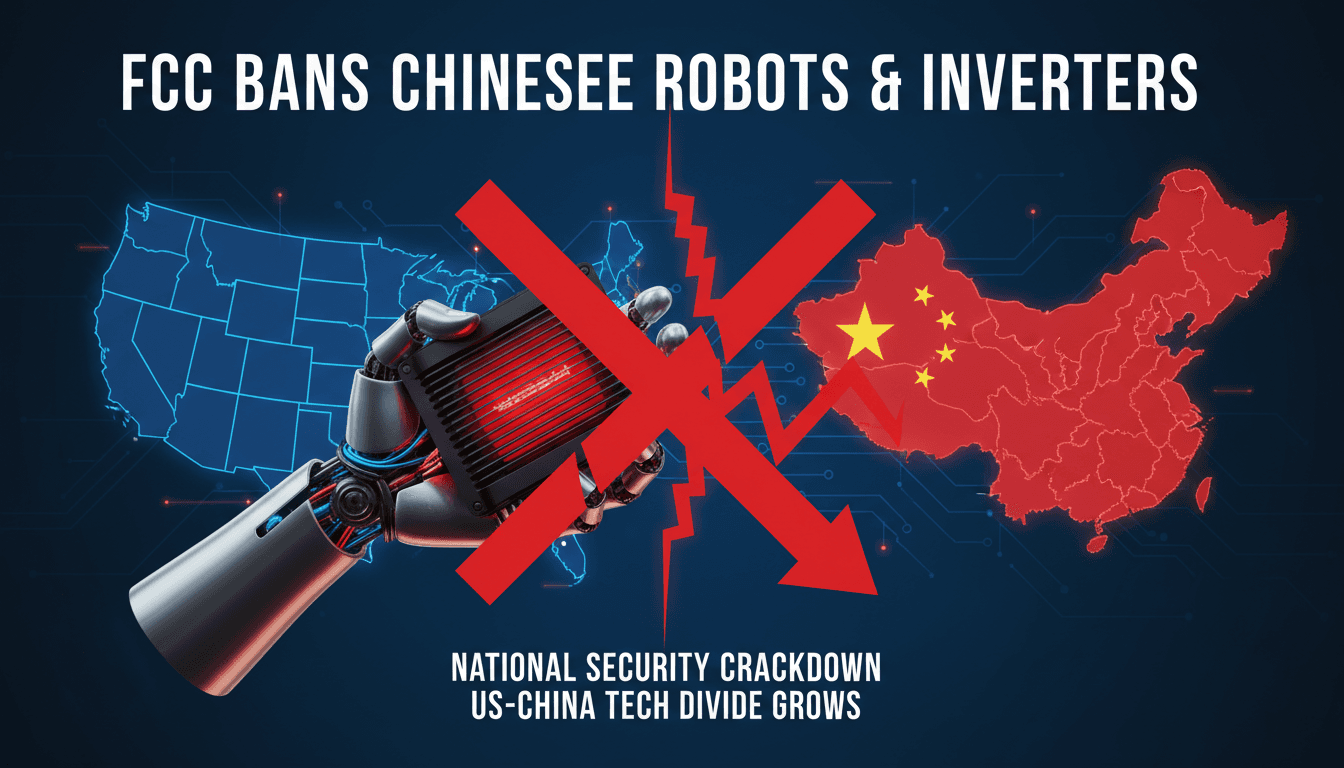
FCC bans import of Chinese humanoid robots and power inverters citing national security
What happened
The Federal Communications Commission (FCC) has enacted a ban on the import of humanoid robots and power inverters from China, citing national security risks. This decision was officially announced on July 28, 2026, and is part of a broader strategy by the Trump administration to limit Chinese technology in the U.S. market. The ban specifically targets advanced robotic devices, including humanoids and quadrupeds, which have raised concerns about potential espionage and remote control by hostile entities.
As a result of this ban, the total number of new Chinese humanoid robots and power inverters allowed into the U.S. market will be zero. This move reflects growing apprehensions regarding the influence of foreign technology on American security and technological independence. The FCC's decision aims to protect the U.S. AI supply chain and ensure that advanced technologies remain secure from foreign interference.
The Context
The FCC's ban is a continuation of the Trump administration's efforts to restrict Chinese technology, particularly in the fields of robotics and artificial intelligence. By defining banned devices to include advanced robotic systems, the FCC is addressing concerns that these technologies could be exploited for espionage or other malicious purposes. The timing of this announcement aligns with ongoing tensions between the U.S. and China in the tech sector, highlighting the strategic importance of safeguarding American technological advancements.
Stakeholders in the robotics and AI industries will need to navigate this new regulatory landscape, which may lead to increased innovation and domestic production. The implications of this ban extend beyond immediate market changes, potentially affecting U.S.-China relations and the broader technology ecosystem. As the U.S. seeks to bolster its own capabilities, the impact on international trade and collaboration in technology sectors will be significant.
Takeaway
Looking ahead, it will be crucial to monitor China's response to this ban and its potential repercussions on U.S.-China relations in technology. The FCC's decision may catalyze a shift towards greater domestic production of robotics and AI technologies, fostering innovation within the U.S. market. As companies adapt to these changes, the landscape of robotics and artificial intelligence in the U.S. could evolve, leading to new opportunities and challenges.
The ongoing developments in this area will be essential to watch, particularly as they relate to national security and technological independence. Stakeholders should prepare for a dynamic environment as the U.S. government continues to prioritize the protection of its technological assets.
International coverage of politics, culture, and current affairs.
"BBC News is widely regarded as a reputable international news organization, known for its impartial tone and public service mandate."
— A47 Editor
Trump administration bans new Chinese humanoid robots
The Trump administration has implemented a ban on new humanoid robots from China, reflecting ongoing tensions between the US and China in the fields of robotics and artificial intelligence. This decision is part of a broader strategy to limit the inf...
Corporate news, economic trends, and markets with UK and global scope.
"BBC News is widely regarded as reputable and impartial, with a public service mandate."
— A47 Editor
Trump administration bans new Chinese humanoid robots
The Trump administration has implemented a ban on new Chinese humanoid robots, intensifying the ongoing competition between the US and China in the fields of robotics and artificial intelligence. This decision reflects a broader strategy to limit Chi...
Opinionated AI coverage for general audiences.
"TNW’s AI vertical covering tools, ethics, and trends."
— A47 Editor
The US just banned ‘foreign’ robots and inverters, and it means China
The United States has enacted a ban on new imports of foreign-made robots and power inverters, a move primarily aimed at preventing potential espionage and remote sabotage by hostile entities, implicitly targeting China. This decision was formalized ...
Tech culture, product news, and critical takes on the tech industry's social impact.
"The Guardian's tech coverage blends mainstream news, critical analysis, and cultural commentary on emerging technologies and digital trends."
— A47 Editor
US bans humanoid robots from China, citing ‘unacceptable risks’
The Federal Communications Commission (FCC) has announced a ban on humanoid robots from China, citing 'unacceptable risks' to national security. This decision aligns with the Trump administration's ongoing efforts to limit the influence of Chinese te...
News from the United States including domestic politics, society, and culture.
"The Guardian is known for its progressive editorial stance and in-depth analysis, often advocating for social justice, environmental issues, and liberal values."
— A47 Editor
FCC bans humanoid robots from China, citing ‘unacceptable risks’
The Federal Communications Commission (FCC) has announced a ban on humanoid robots from China, citing 'unacceptable risks' to national security. This decision aligns with the Trump administration's ongoing efforts to limit Chinese technology's presen...
International coverage from The Guardian's global desks.
"The Guardian is known for its progressive editorial stance and in-depth analysis."
— A47 Editor
US bans humanoid robots from China, citing ‘unacceptable risks’
The Federal Communications Commission (FCC) has announced a ban on humanoid robots from China, citing 'unacceptable risks' to national security. This decision aligns with the Trump administration's ongoing efforts to limit the influence of Chinese te...
Consumer tech and culture with frequent AI coverage.
"Influential tech outlet covering AI products and policy."
— A47 Editor
The US is banning foreign robots
The US government has announced a new import ban targeting advanced robotic devices and power inverters manufactured in foreign countries, specifically aimed at China. The Federal Communications Commission stated that the ban will encompass mobile ro...
Tech news, reviews, and analysis of consumer electronics, science, art, and culture.
"The Verge is a technology-focused media outlet known for in-depth reporting, product reviews, and coverage of the intersection between technology and culture."
— A47 Editor
The US is banning foreign robots
The US government has announced a new import ban targeting advanced robotic devices and power inverters manufactured in foreign countries, specifically aimed at China. The Federal Communications Commission stated that the ban will encompass mobile ro...
Business and tech news excluding paywalled content.
"High-volume business/tech outlet with frequent AI coverage."
— A47 Editor
The Trump administration has banned imports of new Chinese humanoid robots and power inverters
The Trump administration has implemented a ban on imports of new Chinese humanoid robots and power inverters, which are essential for data centers, as part of efforts to safeguard the domestic artificial intelligence supply chain. This decision refle...
Curated tech headlines including AI stories.
"Influential aggregator surfacing the day’s top tech/AI links."
— A47 Editor
The US FCC bans importing Chinese humanoid robots and power inverters to protect the US AI buildout from national security threats and to reshore key industries (Reuters)
The US Federal Communications Commission (FCC) has announced a ban on the importation of new Chinese humanoid robots and power inverters, a move aimed at safeguarding the domestic artificial intelligence (AI) supply chain from national security threa...