
Netanyahu and Trump meet to address Iranian nuclear issue amid strained relations
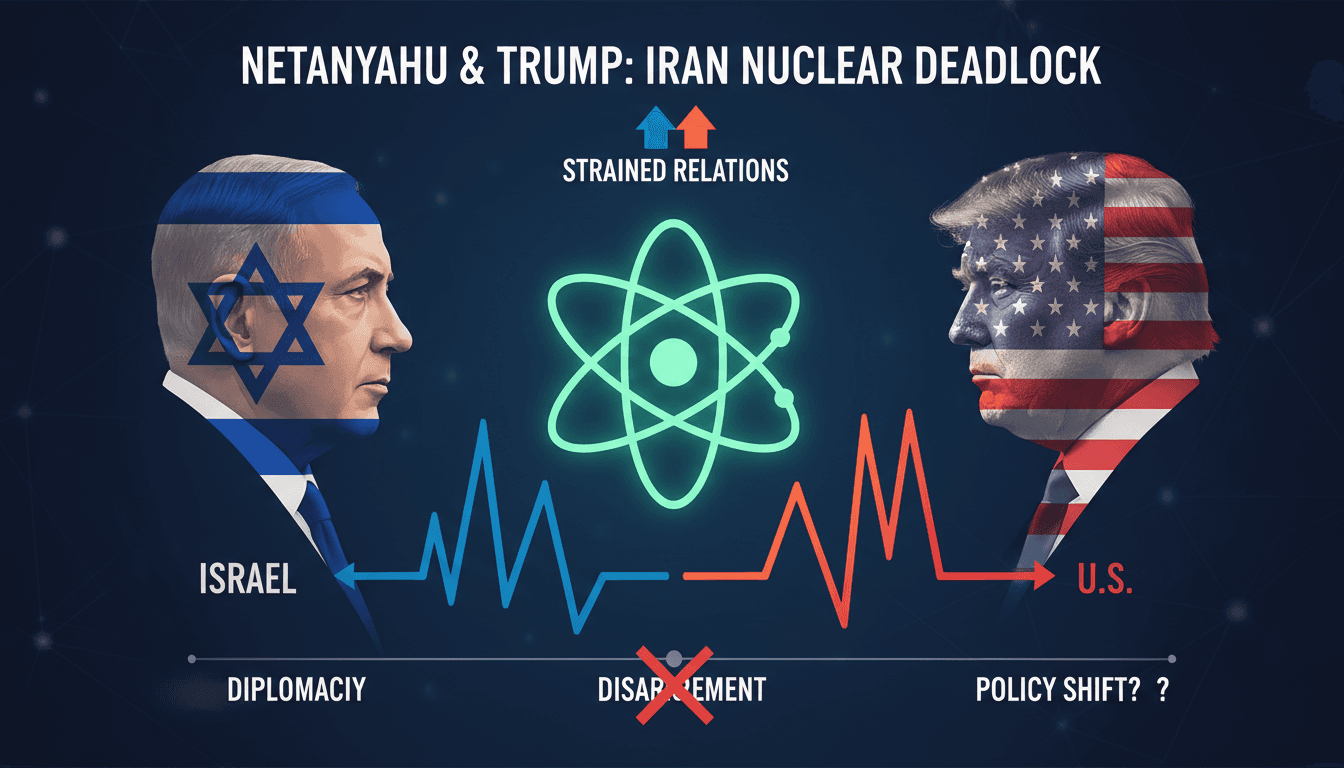
What happened
Netanyahu and Trump convened at the White House to discuss various issues, with a primary focus on the Iranian nuclear threat. The meeting took place on July 28, 2026, and included key U.S. officials such as Vice President JD Vance and Secretary of State Marco. Notably, the absence of formal ceremonies during the visit indicated a less favorable view from the U.S. administration.
Disagreements emerged regarding the approach to the Iranian nuclear file, underscoring the complexities in their alliance. This singular focus on Iran reflects its critical importance in U.S.-Israel relations.
The Context
The meeting comes at a time of heightened tensions surrounding Iran's nuclear program, with Netanyahu describing his alliance with Trump as a "granite wall" against Iranian threats. However, the lack of media coverage and formal reception suggests a shift in the U.S. administration's stance, which may not align fully with Israel's approach.
As both leaders grapple with their differing strategies, the implications for regional stability and international diplomatic efforts are profound. The evolving dynamics of U.S.-Israel relations will be crucial in shaping future policies towards Iran.
Takeaway
Looking ahead, potential shifts in U.S. policy towards Iran may emerge as a result of this meeting. Observers will be keen to see how both leaders navigate their differing approaches and whether future meetings will occur to reassess their diplomatic strategies.
The outcomes of this engagement could significantly influence the geopolitical landscape in the Middle East, affecting not only U.S.-Israel relations but also broader international diplomatic efforts.
Pan-Arab political news and analysis.
"Al-Quds Al-Arabi is a London-based Arabic newspaper known for political coverage."
— A47 Editor
لقاء نتنياهو – ترامب: ما بين النووي وهرمز
Israeli Prime Minister Benjamin Netanyahu visited the White House last Monday, entering through the back door without formal reception or media coverage, indicating that Washington does not view his visit as a significant event. During this visit, he...
Pan-Arab news coverage spanning politics, business, sports, and regional affairs.
"Asharq Al-Awsat reflects a broad Arab editorial perspective with strong attention to regional geopolitics."
— A47 Editor
نتنياهو: تحالفنا مع ترمب «جدار من الغرانيت» ضد إيران
Israeli Prime Minister Benjamin Netanyahu stated that his alliance with U.S. President Donald Trump remains strong, describing their relationship as a 'granite wall' against Iran. This assertion highlights the ongoing collaboration between Israel and...
Arabic-language coverage of international news and geopolitics.
"RT Arabic is a Russian state-funded outlet often criticized for promoting Kremlin-aligned narratives."
— A47 Editor
ترامب يلتقي نتنياهو في البيت الأبيض
U.S. President Donald Trump met with Israeli Prime Minister Benjamin Netanyahu at the White House to discuss various issues, primarily focusing on the Iranian file, amid disagreements on how to address it.