
U.S. and Saudi Forces Conduct Airstrikes Against Iranian-Backed Militias in Iraq
What happened
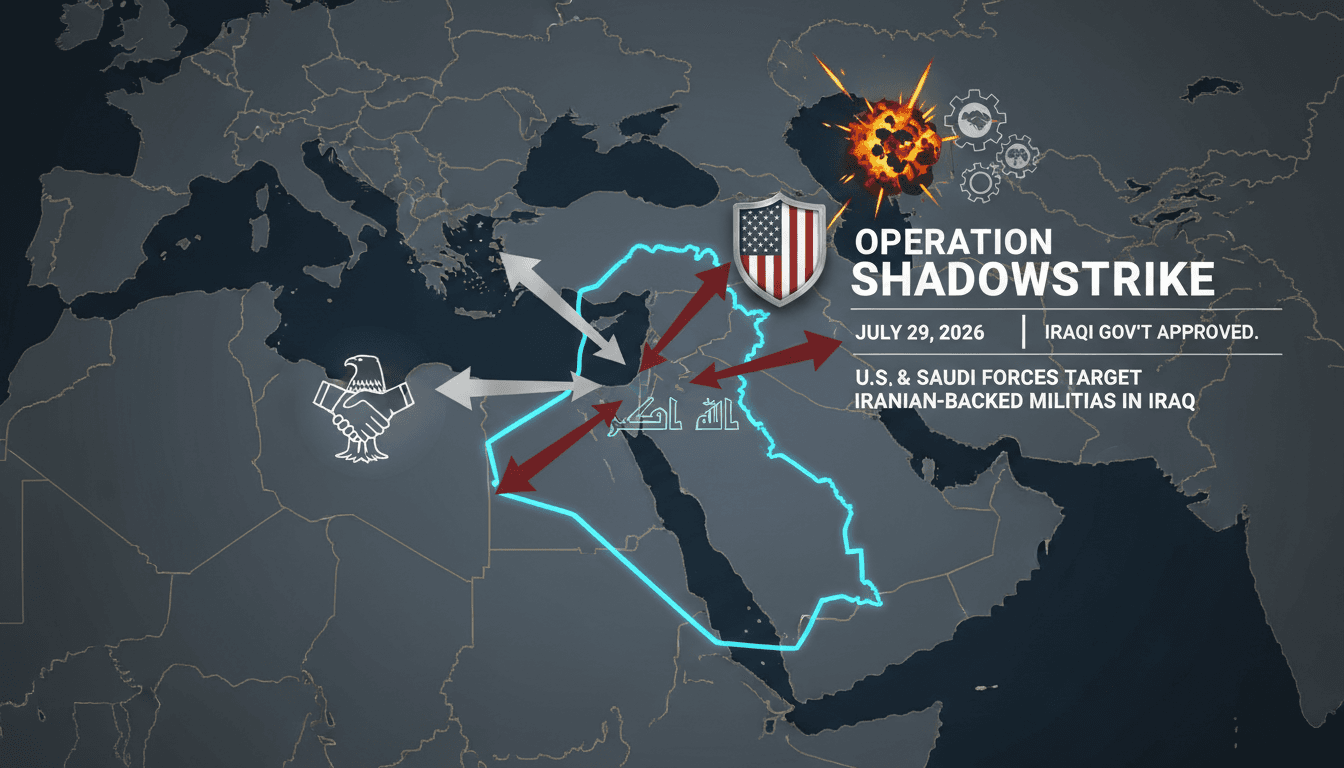
On July 29, 2026, U.S. and Saudi forces executed coordinated airstrikes targeting Iranian-backed militias operating within Iraq. President Donald Trump confirmed that these military operations were conducted in collaboration with the Iraqi government, highlighting a strategic partnership in addressing shared security threats. The strikes represent a unified effort by U.S. and Saudi forces against a common adversary in the region.
This military action reflects ongoing tensions involving Iranian influence and U.S. interests in Iraq. The targeted groups are known for their alignment with Iranian objectives, making this operation a critical step in countering their activities.
The Context
The airstrikes were coordinated with the Iraqi government, indicating a level of cooperation in military operations that is essential for addressing regional security challenges. The collaboration between the U.S. and Saudi Arabia underscores their alliance in countering Iranian militias, which have been a source of instability in the region.
As the geopolitical landscape evolves, the effectiveness of these strikes will be closely monitored. The operation not only aims to diminish Iranian influence but also reinforces the commitment of U.S. allies to work together in the face of shared threats.
Takeaway
The coordinated airstrikes may lead to increased military collaboration between the U.S. and its allies in the region. As tensions continue to rise, the potential for retaliatory actions from Iranian-backed groups in Iraq will be a critical factor in shaping future military strategies.
Further developments in U.S.-Iraq relations following these strikes will also be significant, as they may influence the broader regional security framework. Stakeholders should prepare for a dynamic response landscape as the situation unfolds.
Pan-Arab news coverage spanning politics, business, sports, and regional affairs.
"Asharq Al-Awsat reflects a broad Arab editorial perspective with strong attention to regional geopolitics."
— A47 Editor
ترمب: استهداف ميليشيات إيران نُفّذ بالتنسيق مع الحكومة العراقية
On Wednesday, U.S. President Donald Trump stated that the American-Saudi strikes targeting Iranian-backed Iraqi militias were coordinated with the Iraqi government. This development highlights the ongoing military collaboration between the U.S. and I...
Jordanian news and regional updates.
"Roya News is a Jordanian outlet focused on breaking news and local affairs."
— A47 Editor
الدفاع السعودية: غارات مشتركة مع واشنطن ضد ميليشيات في العراق
The Saudi Ministry of Defense announced joint airstrikes with Washington targeting militias in Iraq. This operation highlights the ongoing collaboration between Saudi Arabia and the United States in addressing security threats in the region.
Jordanian news and regional updates.
"Roya News is a Jordanian outlet focused on breaking news and local affairs."
— A47 Editor
ضربات أمريكية سعودية مشتركة تستهدف الميليشيات الإيرانية في العراق
Joint American and Saudi strikes targeted Iranian militias in Iraq, marking a significant military action against these groups. The operation reflects ongoing tensions in the region and the strategic partnership between the United States and Saudi Ar...