
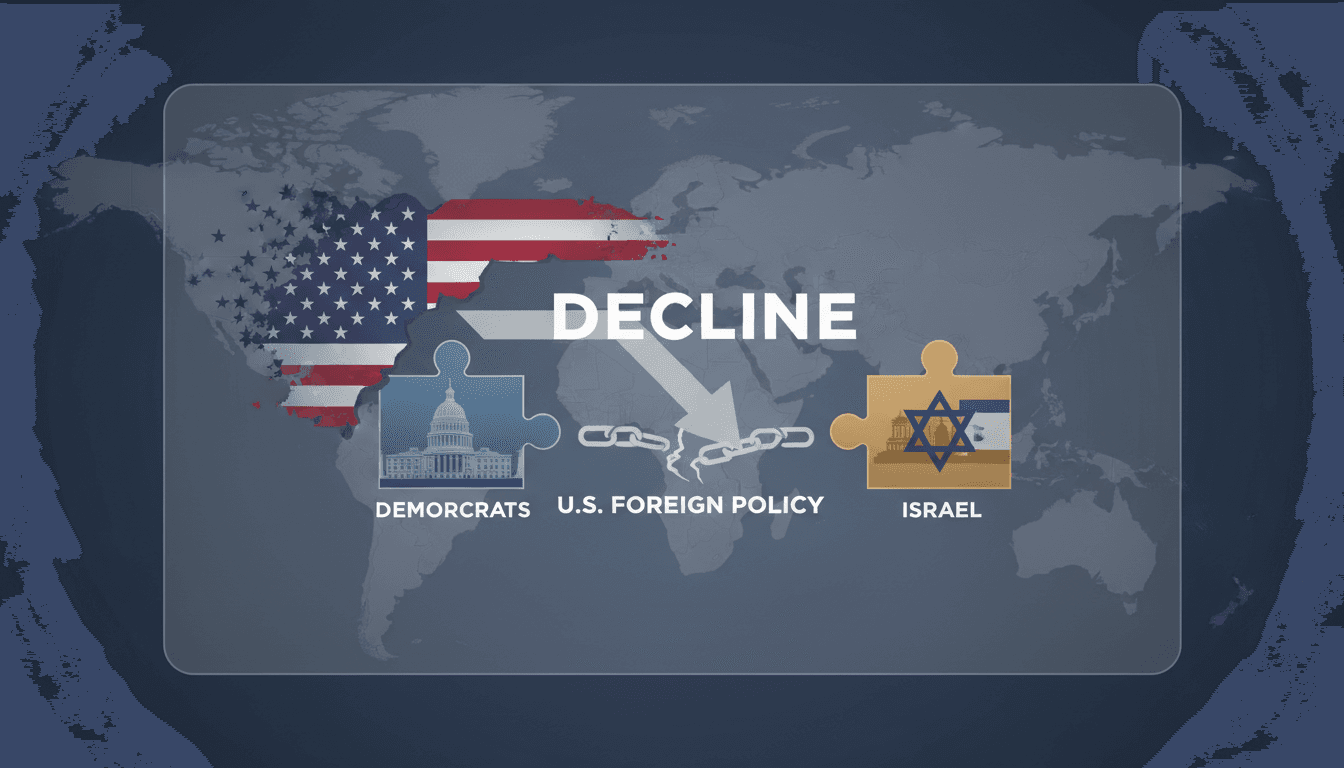
Decline in Democratic Support for Israel Signals Potential Shift in U.S. Foreign Policy
What happened
Democratic support for Israel is experiencing a notable decline, primarily due to Israel's controversial military actions in Gaza and the ongoing conflict with Iran. This shift is further exacerbated by Prime Minister Netanyahu's close ties with U.S. Republicans, which have alienated some Democrats. The erosion of bipartisan support threatens to create a significant divide in what has historically been a united front in Washington.
Recent discussions highlight the implications of this changing dynamic, with many Democrats expressing growing discontent over Israel's military strategies. As these sentiments gain traction, the traditional alliance between the U.S. and Israel faces unprecedented challenges.
The Context
The backdrop of this decline includes Israel's military actions in Gaza, which have sparked criticism from within the Democratic Party. Additionally, the ongoing conflict with Iran is influencing U.S. political opinions on Israel, complicating the relationship further. Netanyahu's alignment with U.S. Republicans is creating friction, as many Democrats feel increasingly alienated from a partnership they once supported.
This shift in sentiment is significant, as support for Israel has historically united both parties in Washington. The potential for a partisan divide raises questions about the future of U.S.-Israel relations and the broader implications for foreign policy.
Takeaway
As the political climate evolves, it is crucial to monitor shifts in Democratic Party positions on foreign policy. Responses from Israeli leadership regarding U.S. support will also be pivotal in shaping future relations. The changing landscape may redefine the U.S.-Israel alliance, necessitating a reevaluation of strategies and alliances within both countries.
The implications of this decline in support could resonate for generations, marking a significant turning point in U.S. foreign policy towards Israel.
English-language news from Qatar covering domestic and regional affairs.
"Gulf Times reflects Qatari perspectives on regional developments."
— A47 Editor
Israel’s decades-old US support risks losing Democrat backers
Support for Israel, historically a unifying factor in U.S. politics, is increasingly at risk as Democratic backing wanes due to Israel's military actions in Gaza and Prime Minister Benjamin Netanyahu's alignment with Republican leaders.
Pan-Arab news coverage spanning politics, business, sports, and regional affairs.
"Asharq Al-Awsat reflects a broad Arab editorial perspective with strong attention to regional geopolitics."
— A47 Editor
الدعم الأميركي لإسرائيل... هل بدأ يفقد تأييد الديمقراطيين؟
Recent Israeli attacks on Gaza, the ongoing conflict with Iran, and Prime Minister Benjamin Netanyahu's ties with American Republicans are contributing to a decline in support for Israel among Democrats.
Arabic-language coverage of international news and geopolitics.
"RT Arabic is a Russian state-funded outlet often criticized for promoting Kremlin-aligned narratives."
— A47 Editor
"رويترز": الدعم الأمريكي لإسرائيل يواجه فقد تأييد الديمقراطيين
Reuters reports that the ongoing Israeli war in Gaza, military confrontations with Iran, and Prime Minister Benjamin Netanyahu's ties with Republicans have led to a decline in Democratic support for Israel.
Pan-Arab political news and analysis.
"Al-Quds Al-Arabi is a London-based Arabic newspaper known for political coverage."
— A47 Editor
الدعم الأمريكي لإسرائيل يواجه فقدان تأييد الديمقراطيين
American support for Israel, historically a unifying factor in Washington, is now facing a decline among Democrats due to Israel's actions in Gaza, the war with Iran, and Prime Minister Benjamin Netanyahu's close ties with American Republicans. This ...
Regional coverage and analysis focused on politics, diplomacy, and business across the Middle East.
"Al-Monitor is known for analytical reporting on Middle East politics and policy developments."
— A47 Editor
Israel's decades-old US support risks losing Democrats
Recent actions by Israel, including military operations in Gaza and Prime Minister Benjamin Netanyahu's alignment with U.S. Republicans, are causing a rift in the traditionally bipartisan support for Israel in Washington, particularly among Democrats...