
Moqtada al-Sadr urges Iranian forces to cease operations in Iraq
Here's what it means for you.
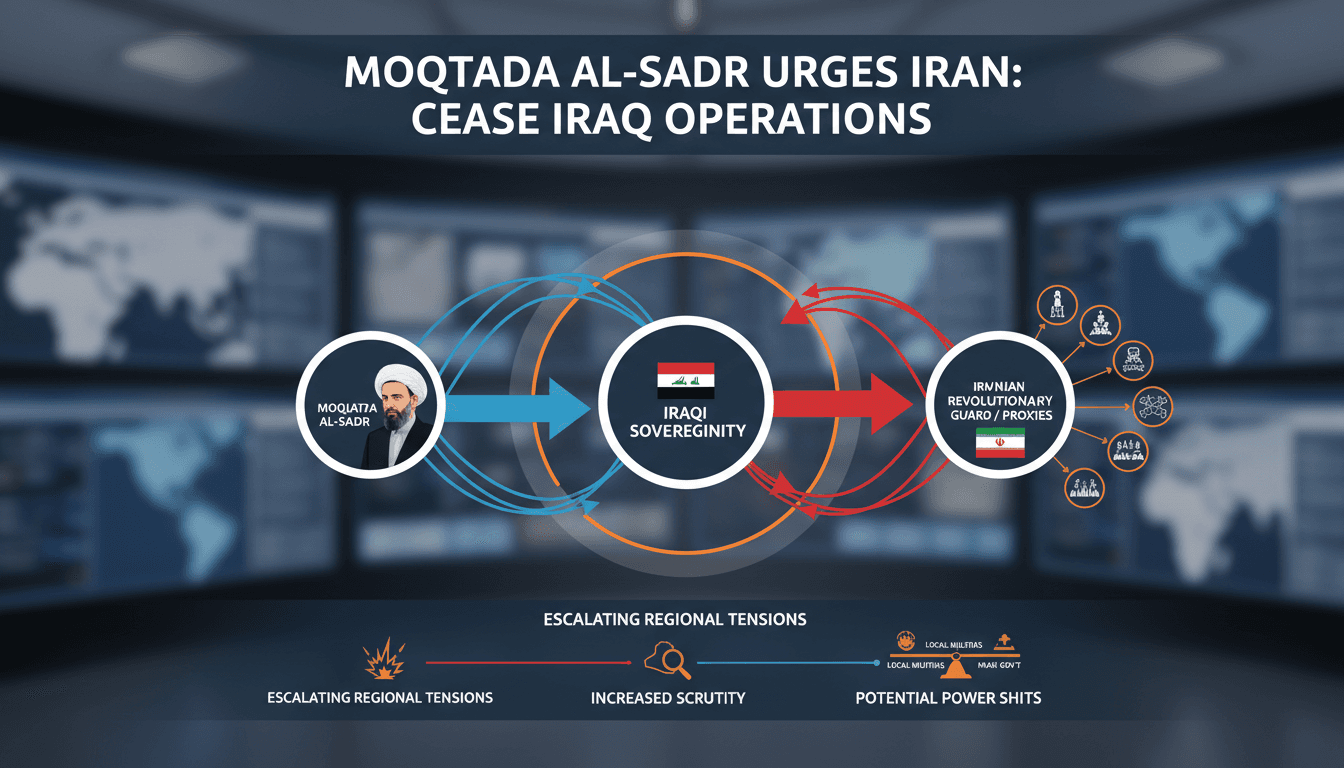
Moqtada al-Sadr's recent appeal to the Iranian Revolutionary Guard underscores a critical moment for Iraq's sovereignty amidst rising regional tensions. His call for neutrality may influence the behavior of Iranian forces and local militias, potentially reshaping the power dynamics within Iraq. Stakeholders, including the Iraqi government and various militia groups, will need to navigate this evolving landscape carefully.
What happened
On July 29, 2026, Moqtada al-Sadr, the leader of the Sadrist movement in Iraq, urged the Iranian Revolutionary Guard to stop targeting Iraqi territory. He emphasized the importance of keeping Iraq neutral in regional conflicts and called for the protection of its sacred land from external aggression. Al-Sadr specifically requested that Iranian forces refrain from using Iraq as a base for attacks, addressing both the Revolutionary Guard and "unruly militias" operating within the country.
This statement reflects al-Sadr's ongoing concerns regarding the influence of Iranian militias in Iraq and highlights his role as a protector of national integrity. His appeal comes at a time when tensions are escalating in the region, particularly involving Iran and its proxies.
The Context
Al-Sadr's remarks are set against a backdrop of increasing regional instability, where Iranian activities have drawn scrutiny from various factions within Iraq. His assertion that Iraq is a sacred land signifies a broader sentiment among many Iraqis who wish to see their country free from foreign intervention. The timing of this appeal is crucial, as it coincides with heightened tensions involving Iran's military actions and its influence over local militias.
The call for neutrality also reflects the complex relationship between Iraq and Iran, where local factions often find themselves caught in the crossfire of larger geopolitical conflicts. Al-Sadr's position may resonate with a populace weary of external influence, potentially galvanizing support for his movement.
Takeaway
Al-Sadr's appeal could lead to increased scrutiny of Iranian activities in Iraq, impacting the dynamics among local militias and the Iraqi government. Observers should watch for potential responses from the Iranian Revolutionary Guard and affiliated militias, as well as reactions from the Iraqi government regarding al-Sadr's statements. The situation remains fluid, and the implications of al-Sadr's call for unity against external aggression may unfold in various ways.
As the political landscape evolves, the balance of power among local factions could shift, influencing Iraq's future direction and its relationships with neighboring countries.
Pan-Arab political news and analysis.
"Al-Quds Al-Arabi is a London-based Arabic newspaper known for political coverage."
— A47 Editor
الصدر دعا الحرس الثوري والفصائل للنأي بالعراق عن الصراع
Muqtada al-Sadr, the leader of the Sadrist movement, called on the Iranian Revolutionary Guard and armed factions to keep Iraq out of regional conflicts. In a press statement, he emphasized that Iraq is a land of sanctities and urged the Revolutionar...
Pan-Arab news coverage spanning politics, business, sports, and regional affairs.
"Asharq Al-Awsat reflects a broad Arab editorial perspective with strong attention to regional geopolitics."
— A47 Editor
الصدر: على «الحرس الثوري» الإيراني عدم استهداف العراق
Muqtada al-Sadr, the leader of the Sadrist movement, called on the Iranian Revolutionary Guard and unruly militias to refrain from targeting Iraqi territory during a statement made on Wednesday. This appeal highlights ongoing tensions regarding Irani...
Jordanian news and regional updates.
"Roya News is a Jordanian outlet focused on breaking news and local affairs."
— A47 Editor
مقتدى الصدر يطالب الحرس الثوري الإيراني بالتوقف فورا عن قصف الأراضي العراقية
Muqtada al-Sadr, the leader of the Sadrist movement, has called on the Iranian Revolutionary Guard to immediately cease its bombardment of Iraqi territory. This demand was made on Wednesday, highlighting ongoing tensions regarding Iranian military ac...