
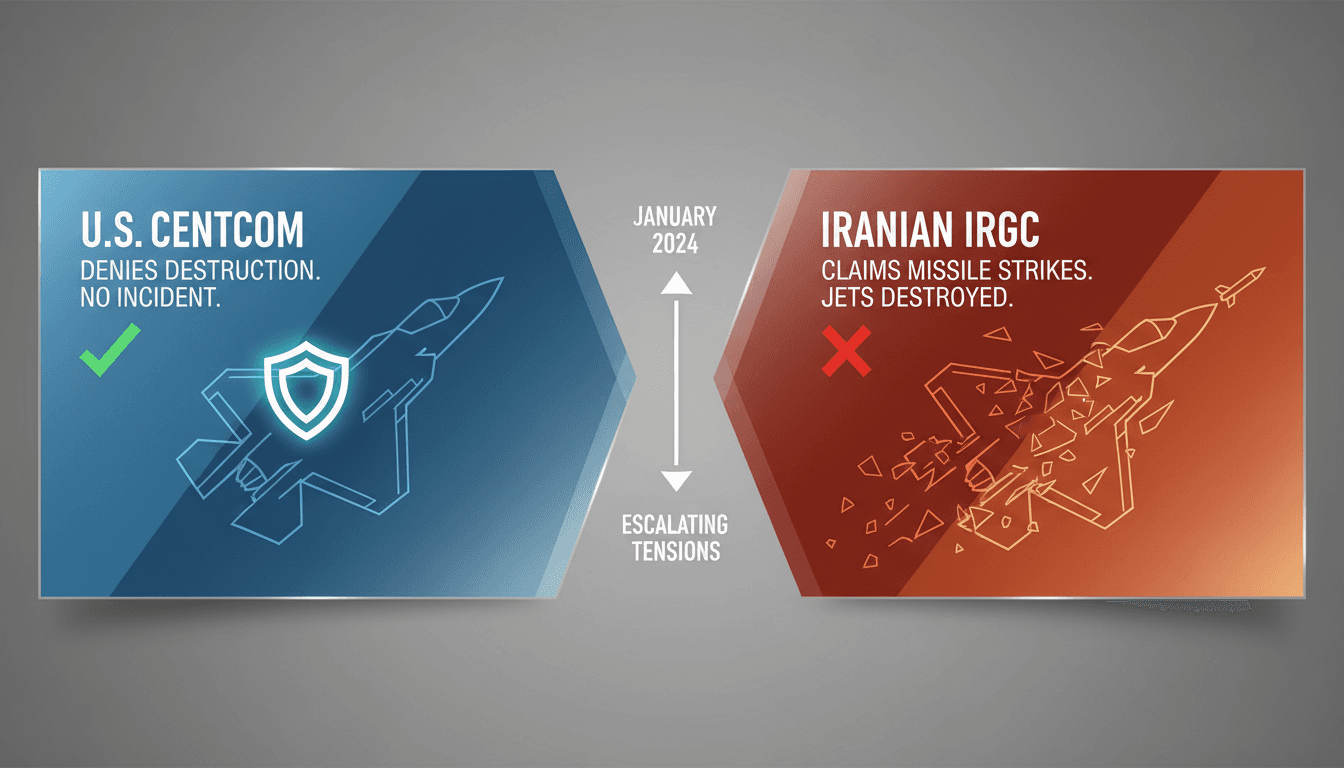
CENTCOM Denies Iranian Claims of F-35 Destruction in Jordan Amid Rising Tensions
Here's what it means for you.
The recent denial from U.S. Central Command (CENTCOM) regarding the destruction of F-35 fighter jets in Jordan underscores the escalating tensions between the U.S. and Iran. This incident highlights the potential for increased military posturing and rhetoric, which could have significant implications for regional stability. Stakeholders in defense and international relations should remain vigilant as developments unfold. As both nations exchange conflicting claims, the situation may influence U.S. military strategy and diplomatic efforts in the Middle East. Observers should prepare for possible repercussions in military engagements and policy decisions.
What happened
U.S. Central Command has firmly rejected Iranian claims that American F-35 fighter jets were destroyed in Jordan. This denial follows assertions from the Iranian Revolutionary Guard Corps (IRGC) that they successfully targeted U.S. aircraft in the region with missile strikes. CENTCOM stated that no such incident occurred, emphasizing the integrity of its operations.
The IRGC released a video purportedly showing missile strikes on U.S. targets, further complicating the narrative. The incident reportedly took place on July 30, 2026, marking a significant moment in the ongoing conflict between the two nations.
The Context
The IRGC's claims reflect the heightened tensions between the U.S. and Iran, particularly in the context of military operations in the Middle East. CENTCOM, which oversees U.S. military activities in the region, has consistently denied any damage to its aircraft, reinforcing its position amid these allegations. The conflicting narratives illustrate the complex and volatile nature of military engagements in the area.
As both sides continue to assert their narratives, the potential for escalation remains a concern. The situation is indicative of broader geopolitical dynamics, where military posturing can lead to unintended consequences.
Takeaway
The denial from CENTCOM suggests a potential escalation in rhetoric and military posturing between the U.S. and Iran. Observers should monitor further developments from CENTCOM regarding military operations in the region, as well as any responses from Iranian officials concerning the U.S. denial.
As tensions rise, the likelihood of further military engagements or retaliatory actions could increase, necessitating close observation of both U.S. and Iranian military movements. The situation remains fluid, and stakeholders should prepare for evolving dynamics.
Conservative-leaning political and national coverage.
"The Washington Times is a conservative-leaning newspaper known for its political coverage and advocacy of right-of-center viewpoints."
— A47 Editor
CENTCOM rejects IRGC claims of destroyed jets in Jordan strikes
U.S. Central Command (CENTCOM) has dismissed claims made by the Iranian Revolutionary Guard Corps (IRGC) that three F-35 fighter jets were destroyed in recent strikes in Jordan. CENTCOM emphasized that these assertions are unfounded and reiterated th...
UAE-based English-language newspaper covering regional politics, economics, and global affairs.
"The National reflects Emirati policy perspectives while maintaining international editorial standards."
— A47 Editor
Iran war latest: US denies Iranian claim that attack damaged six military aircraft
The United States has denied claims made by Iran that a recent attack resulted in damage to six military aircraft. This denial comes amid escalating tensions following a series of missile strikes by Iran's Revolutionary Guard Corps (IRGC) targeting U...
Global news coverage with extensive reporting on Middle Eastern conflicts and geopolitics.
"Al Jazeera is a Qatar-based broadcaster known for wide regional coverage and alternative perspectives."
— A47 Editor
IRGC video of retaliatory strikes on US targets in Jordan
The Iranian Revolutionary Guard Corps (IRGC) has released a video claiming responsibility for missile strikes targeting U.S. aircraft stationed in Jordan. This incident marks a significant escalation in military tensions between Iran and the United S...
Comprehensive coverage of Middle Eastern and global issues.
"Al Jazeera is a prominent voice from the Global South, especially the Middle East, with an emphasis on underreported stories."
— A47 Editor
IRGC video of retaliatory strikes on US targets in Jordan
The Islamic Revolutionary Guard Corps (IRGC) released a video claiming responsibility for missile strikes targeting U.S. aircraft stationed in Jordan, marking a significant escalation in the ongoing conflict between Iran and the United States.