
Hamas Agrees to Second Phase of Ceasefire Agreement with Mediators
What happened
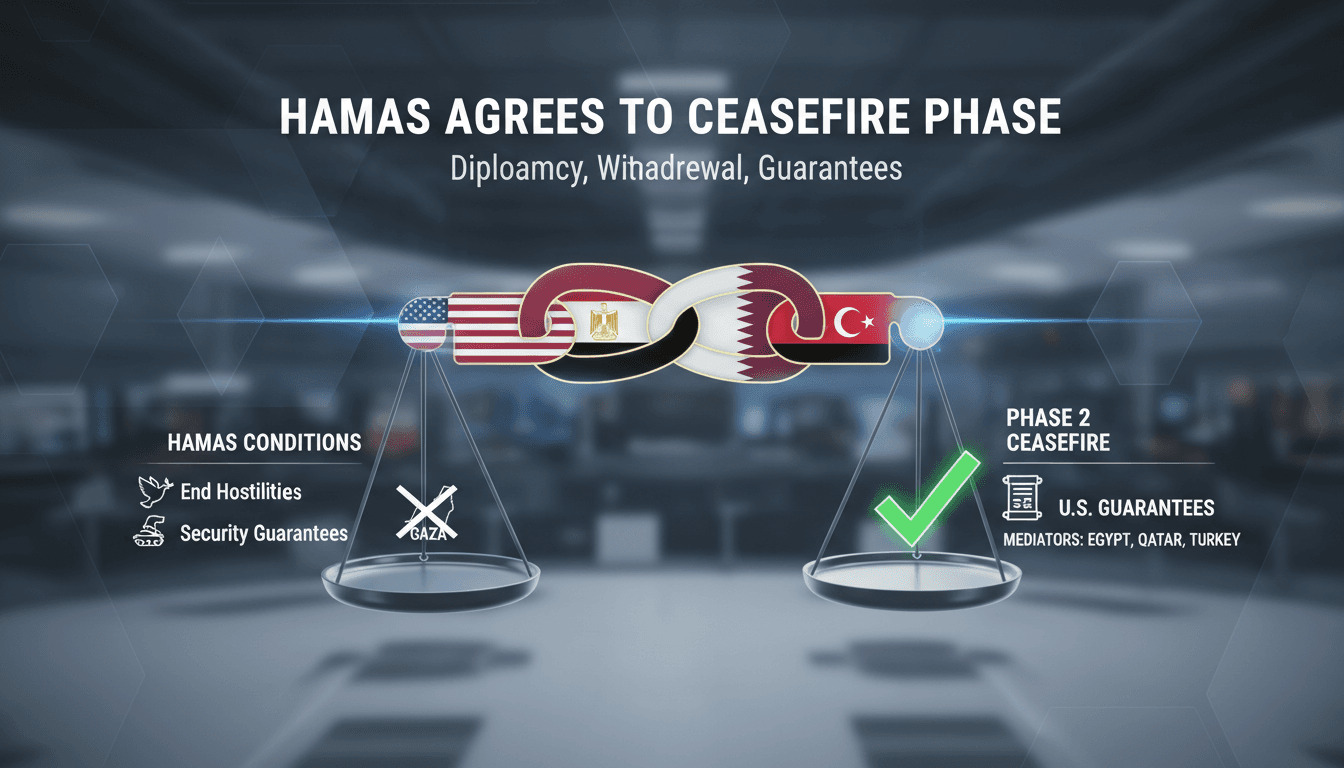
Hamas has accepted a final draft for the second phase of a ceasefire agreement, contingent on specific conditions. This agreement was reached with the involvement of mediators from Egypt, Qatar, and Turkey, emphasizing the need for an end to hostilities and the withdrawal of Israeli forces from Gaza. The agreement was finalized on July 31, 2026, marking a significant step in the ongoing conflict.
Hamas's conditions for the ceasefire include a halt to aggression, which they believe is essential for the implementation of the agreement. The involvement of the United States in providing guarantees adds another layer of complexity to the negotiations.
The Context
The ceasefire agreement aims to stabilize the situation in Gaza following prolonged conflicts that have caused significant humanitarian distress. The mediators—Egypt, Qatar, and Turkey—play a crucial role in facilitating dialogue and ensuring that both parties adhere to the terms of the agreement. Their involvement underscores the international community's interest in achieving peace in the region.
The timing of this agreement is critical, as tensions have escalated in recent months. The withdrawal of Israeli forces from Gaza is a key demand from Hamas, and its fulfillment will be closely watched by both local and international stakeholders.
Takeaway
The success of the ceasefire agreement will largely depend on the cooperation of all parties involved, particularly the adherence to Hamas's conditions. Observers should monitor the response from Israeli authorities regarding these conditions, as their actions will significantly impact the ceasefire's longevity.
Additionally, developments in the humanitarian situation in Gaza will be crucial in assessing the effectiveness of this agreement. Continued diplomatic efforts will be essential to ensure that this ceasefire leads to a more stable and peaceful environment in the region.
Pan-Arab news coverage spanning politics, business, sports, and regional affairs.
"Asharq Al-Awsat reflects a broad Arab editorial perspective with strong attention to regional geopolitics."
— A47 Editor
«حماس» تقبل «صياغة نهائية» للمرحلة الثانية من اتفاق غزة بضمانات أميركية
Hamas has reached an agreement with mediators from Egypt, Qatar, and Turkey regarding the transition to the second phase of the ceasefire agreement, backed by American guarantees. This development signifies a step forward in the ongoing negotiations ...
Arabic-language coverage of international news and geopolitics.
"RT Arabic is a Russian state-funded outlet often criticized for promoting Kremlin-aligned narratives."
— A47 Editor
"حماس" تعلن شرطها لتنفيذ المرحلة الثانية من اتفاق وقف إطلاق النار
Hamas has announced that the continuation of the second phase of the ceasefire agreement is contingent upon the cessation of aggression and the withdrawal of occupation forces from Gaza, indicating a positive engagement with mediator proposals.
Jordanian news and regional updates.
"Roya News is a Jordanian outlet focused on breaking news and local affairs."
— A47 Editor
مجلس السلام يعلن موافقة حماس على تنفيذ المرحلة الثانية من اتفاق وقف إطلاق النار في قطاع غزة
The Peace Council has announced that Hamas has agreed to implement the second phase of the ceasefire agreement in the Gaza Strip, with mediation from Egypt, Qatar, and Turkey. This development marks a significant step towards reducing hostilities in ...