
Escalating Protests in Tripoli Demand Political Reform and Service Improvements
Here's what it means for you.
The escalating protests in Tripoli signal a critical juncture for Libya's political landscape, as citizens increasingly demand accountability and reform from their leaders. The closure of key government buildings indicates a growing frustration with inadequate public services, particularly in electricity provision. Stakeholders, including international observers, should monitor these developments closely, as they may influence Libya's political stability and governance. As public discontent mounts, the potential for significant political change looms large. The situation could prompt responses from both local authorities and the international community, impacting Libya's future trajectory.
What happened
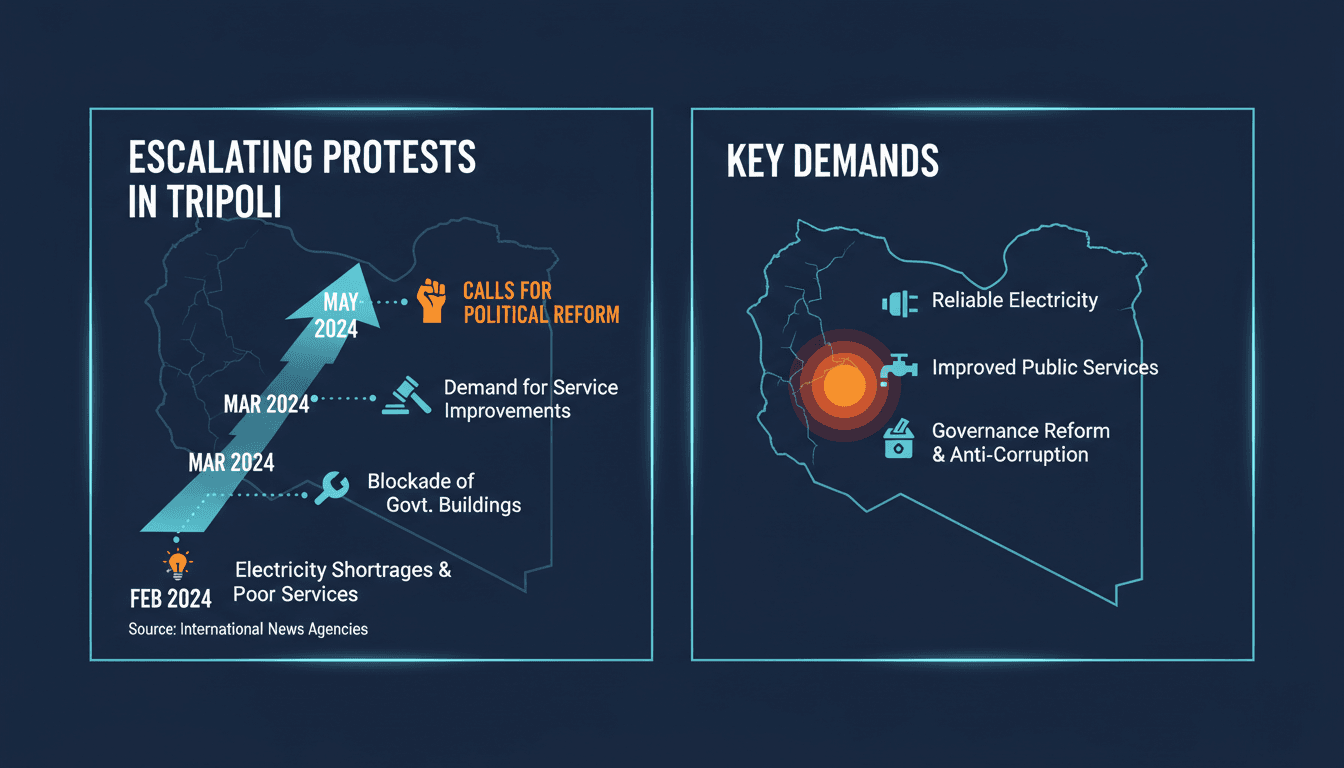
Protests in Tripoli have intensified, with demonstrators closing key government buildings, including the Presidential Council and the House of Representatives. This escalation reflects a shift in focus from demands for improved public services to calls for political reform and the resignation of current political bodies. The immediate catalyst for these protests has been ongoing electricity shortages, which have severely impacted daily life.
On July 30, 2026, protesters closed five ministries, escalating their actions further the following day. The protests highlight a growing dissatisfaction with the political status quo in Libya, as citizens express their frustration over inadequate services and governance.
The Context
The protests were initially sparked by severe electricity shortages, with a reported loss of 1,350 megawatts of generation capacity exacerbating public unrest. Demonstrators are now calling for the organization of elections and the dissolution of existing political bodies, reflecting a broader desire for change. Libya remains politically divided, with the Government of National Unity in the west facing a rival administration in the east.
This division complicates the political landscape, as various factions vie for power and influence. The protests underscore the urgent need for reform in a country grappling with ongoing instability and dissatisfaction among its citizens.
Takeaway
The ongoing protests in Tripoli are likely to continue as public dissatisfaction grows, potentially leading to significant political changes if demands for reform are not met. Observers should watch for potential escalations targeting more government institutions, as well as responses from the international community and the United Nations regarding the political situation in Libya. The situation remains fluid, with the possibility of further unrest challenging existing power structures.
As the protests unfold, the implications for Libya's governance and public services will be critical to monitor, as they may shape the country's future direction.
Arabic-language coverage of political affairs and current events.
"Okaz political coverage typically follows mainstream Saudi framing on national and regional affairs."
— A47 Editor
احتجاجات طرابلس تتصاعد.. المحتجون يغلقون مقري المجلس الرئاسي ومجلس النواب
Protests in Tripoli have escalated as demonstrators closed the Presidential Council's headquarters in the Nawfaliyah area and the House of Representatives in Zawiyat al-Dahmani. This move marks a shift from protesting service deterioration to targeti...
Arabic-language coverage of international news and geopolitics.
"RT Arabic is a Russian state-funded outlet often criticized for promoting Kremlin-aligned narratives."
— A47 Editor
احتجاجات طرابلس تتصاعد.. المحتجون يغلقون مقر المجلس الرئاسي ومقر مجلس النواب الليبي (فيديو)
Protests in Tripoli have intensified as demonstrators closed the Presidential Council's headquarters in the Nawfaliyah area and the Libyan Parliament's building in the Zawiyat al-Dahmani area on Friday. This escalation reflects growing discontent amo...
Arabic-language coverage of international news and geopolitics.
"RT Arabic is a Russian state-funded outlet often criticized for promoting Kremlin-aligned narratives."
— A47 Editor
ليبيا.. احتجاجات طرابلس تتصاعد ومطالبات بـ"إسقاط الأجسام السياسية دون استثناء" (فيديوهات)
Protests in Tripoli have intensified as demonstrators closed five ministries in response to deteriorating public services and a severe electricity crisis, demanding the removal of all political bodies without exception.