
Israeli military clashes with Hezbollah in southern Lebanon despite ceasefire
What happened
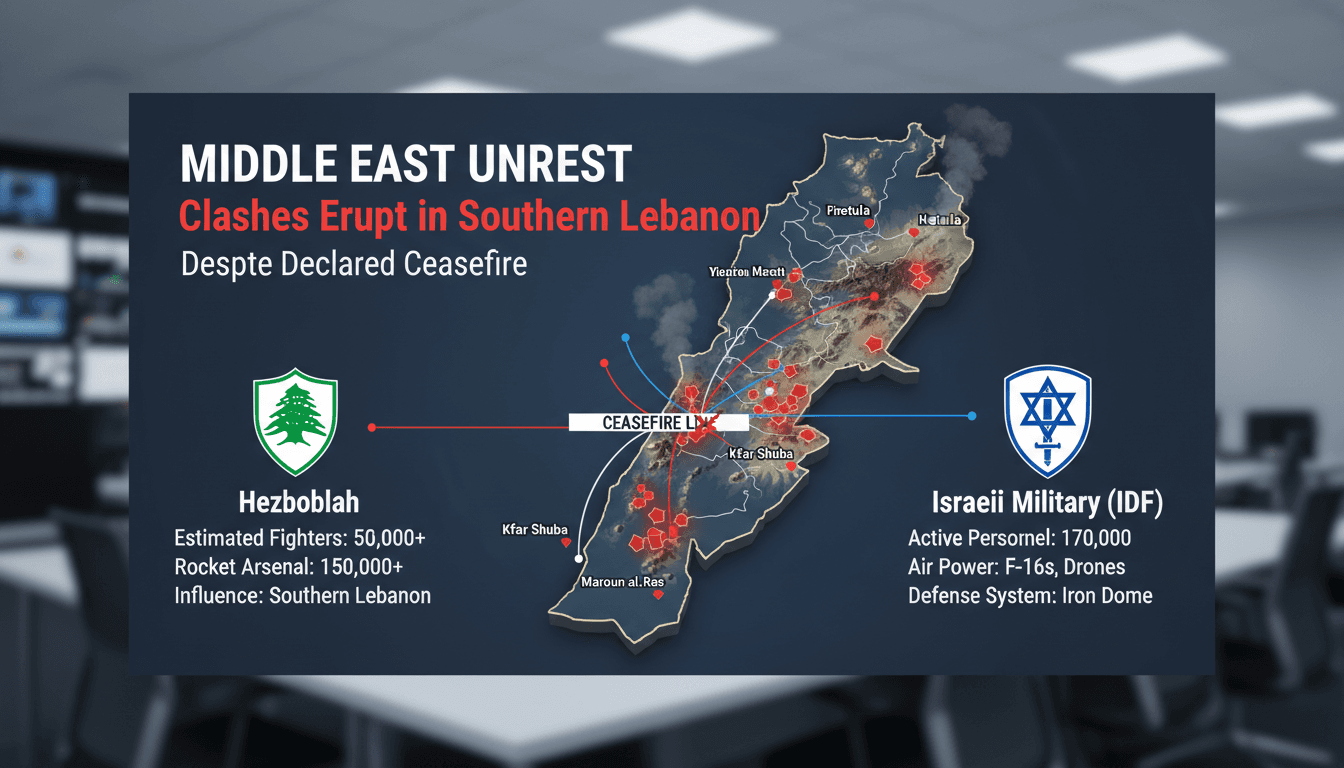
The Israeli army reported engaging Hezbollah forces in southern Lebanon, resulting in multiple casualties on both sides. During the clashes, several Hezbollah members were killed, and an Israeli officer sustained moderate injuries, necessitating hospitalization. This incident unfolded in the Ali al-Tahir heights area, a region known for its strategic significance.
Despite the announcement of a ceasefire, the violence underscores the fragility of the current security situation. The Israeli military's actions reflect ongoing hostilities and a breakdown in the ceasefire agreement, raising alarms about the potential for further military engagements.
The Context
The clashes highlight the persistent tensions between Israel and Hezbollah, a militant group based in Lebanon. The situation remains volatile, with both sides exhibiting a readiness to engage militarily despite diplomatic efforts to maintain peace. The failure of the ceasefire to hold serves as a stark reminder of the challenges facing regional stability.
As the conflict continues, the involvement of international actors may become increasingly likely. The dynamics between Israel, Hezbollah, and the Lebanese government will be crucial in determining the next steps in this ongoing confrontation.
Takeaway
The recent escalation in violence suggests that the conflict between Israel and Hezbollah may intensify if ceasefire agreements are not upheld. Observers should watch for potential responses from Hezbollah and the Lebanese government, as these could significantly influence the trajectory of the conflict. Additionally, international reactions to the renewed violence will be critical in shaping future diplomatic efforts.
As tensions rise, the likelihood of further military engagements increases, which could draw in regional and international actors. The situation warrants close attention as it develops, given its implications for broader geopolitical stability.
Pan-Arab news coverage spanning politics, business, sports, and regional affairs.
"Asharq Al-Awsat reflects a broad Arab editorial perspective with strong attention to regional geopolitics."
— A47 Editor
الجيش الإسرائيلي: قتلنا العديد من عناصر «حزب الله» في جنوب لبنان
The Israeli army announced that it killed several members of Hezbollah in the Ali al-Tahir heights area of southern Lebanon, despite a declared ceasefire, and reported that one of its soldiers was injured in the incident.
Arabic-language coverage of international news and geopolitics.
"RT Arabic is a Russian state-funded outlet often criticized for promoting Kremlin-aligned narratives."
— A47 Editor
الجيش الإسرائيلي يعلن استهداف عناصر من حزب الله في مرتفعات علي الطاهر
The Israeli army announced the killing of several Hezbollah members during a clash in the Ali al-Taher heights in southern Lebanon, noting that an Israeli officer sustained moderate injuries and was transported to the hospital.
Arabic-language coverage of international news and geopolitics.
"RT Arabic is a Russian state-funded outlet often criticized for promoting Kremlin-aligned narratives."
— A47 Editor
الجيش الإسرائيلي يعترف بإصابة ضابط في صفوفه خلال اشتباكات مع "حزب الله" جنوبي لبنان
The Israeli army announced on Saturday that it targeted elements of the Lebanese Hezbollah in southern Lebanon, confirming that one of its officers was injured during the clashes. This incident highlights the ongoing tensions between Israel and Hezbo...