
U.S. and Iran negotiations on peace deal face conflicting messages
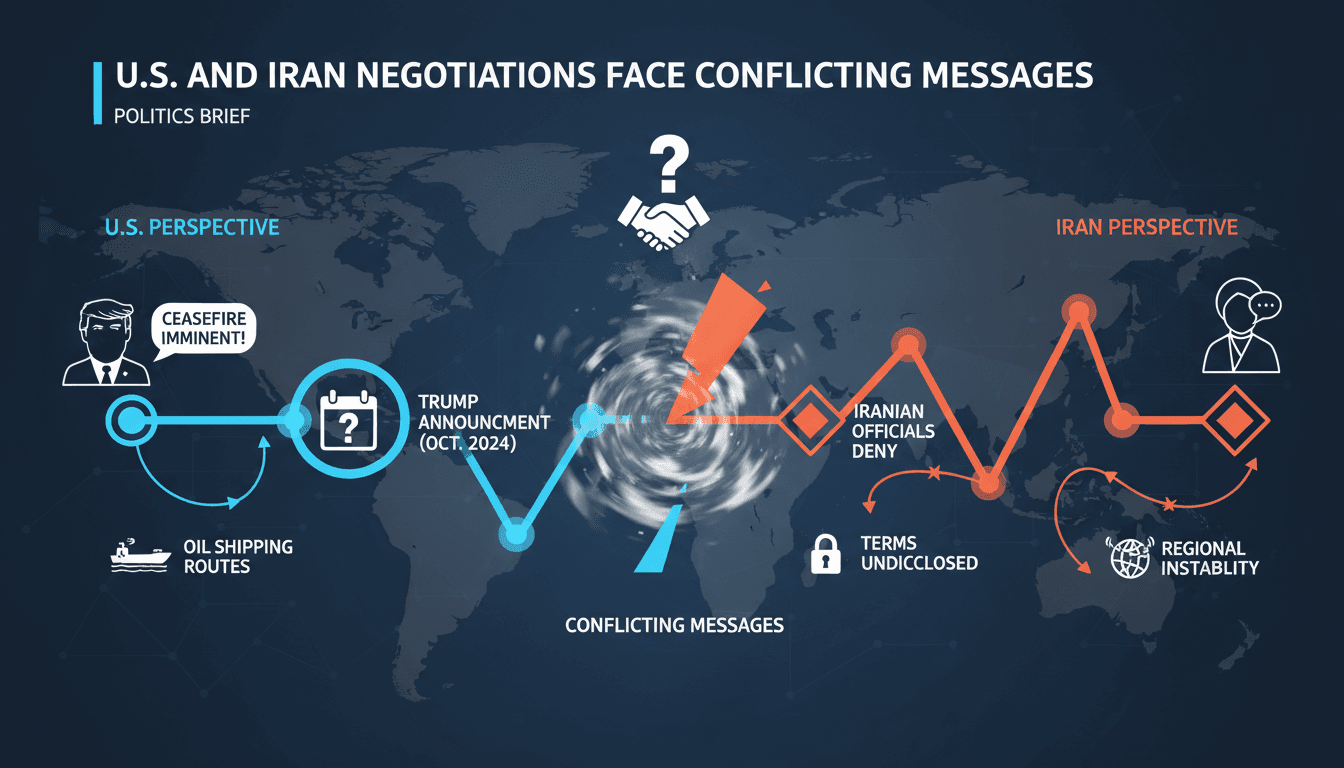
Here's what it means for you.
The ongoing negotiations between the U.S. and Iran over a potential peace deal are critical for regional stability, particularly concerning oil shipping routes. The conflicting messages from both sides create uncertainty that could impact market perceptions and geopolitical strategies. Stakeholders should remain vigilant as developments unfold, as the outcome may reshape U.S.-Iran relations and broader Middle Eastern dynamics.
What happened
The U.S. and Iran are currently at odds regarding the timing and details of a proposed peace deal. President Trump announced that a ceasefire would be finalized soon, but Iranian officials have not confirmed this assertion. This lack of consensus has led to differing interpretations of the agreement's status, complicating the negotiations.
Iran's state-run media has reported that Tehran has not finalized its position on the proposed deal. As a result, the conflicting narratives from both nations raise questions about the potential for a swift resolution to the ongoing tensions.
The Context
The negotiations are taking place against a backdrop of heightened tensions between the U.S. and Iran, with both countries presenting divergent versions of the proposed ceasefire. The situation is further complicated by the strategic importance of the Strait of Hormuz, a vital shipping route for oil. The lack of clarity surrounding the deal's terms could prolong these tensions and impact regional stability.
As both sides continue to engage in dialogue, the implications of their negotiations extend beyond bilateral relations. The outcome could influence not only U.S.-Iran relations but also the broader geopolitical landscape in the Middle East, affecting various stakeholders involved in the region.
Takeaway
The outcome of the U.S.-Iran negotiations could significantly impact future diplomatic relations between the two nations. Observers should monitor further statements from both U.S. and Iranian officials regarding the peace deal, as these will provide insights into the evolving situation. Additionally, developments in shipping activities through the Strait of Hormuz may serve as indicators of broader geopolitical tensions.
As the negotiations progress, the potential for a ceasefire remains uncertain, and the differing interpretations of the deal's terms highlight the complexities involved. Stakeholders should prepare for a range of scenarios as the situation unfolds.
Macro commentary, policy analysis, growth/inflation themes, and global outlooks.
"Contextual macro coverage that complements day-to-day market headlines."
— A47 Editor
Trump says ships loaded with oil sailing through Strait of Hormuz
President Trump announced that ships loaded with oil are currently sailing through the Strait of Hormuz, a critical waterway for global oil transportation. This development comes amid ongoing negotiations for a peace deal with Iran, which is expected...
Corporate leadership, finance, technology, and market trends.
"Fortune covers financial trends, leadership, and innovation with a pragmatic editorial approach."
— A47 Editor
Iran pushes differing versions of deal as U.S. sticks to timeline
The U.S. and Iran are advancing negotiations towards a potential peace deal, with differing versions of the agreement complicating assessments of its benefits for both sides. U.S. President Donald Trump has indicated that a deal could be finalized so...
Capitol Hill news, legislation, and policy insight.
"The Hill specializes in U.S. politics and policy, with a focus on Capitol Hill developments and a reputation for insider reporting."
— A47 Editor
US, Iran offer mixed messages on peace deal timing
The U.S. and Iran are currently exchanging mixed messages regarding the timing of a potential peace deal, with Iranian officials disputing President Trump's announcement that a ceasefire would be finalized on Sunday. Iran's state-run Fars News Agency...