
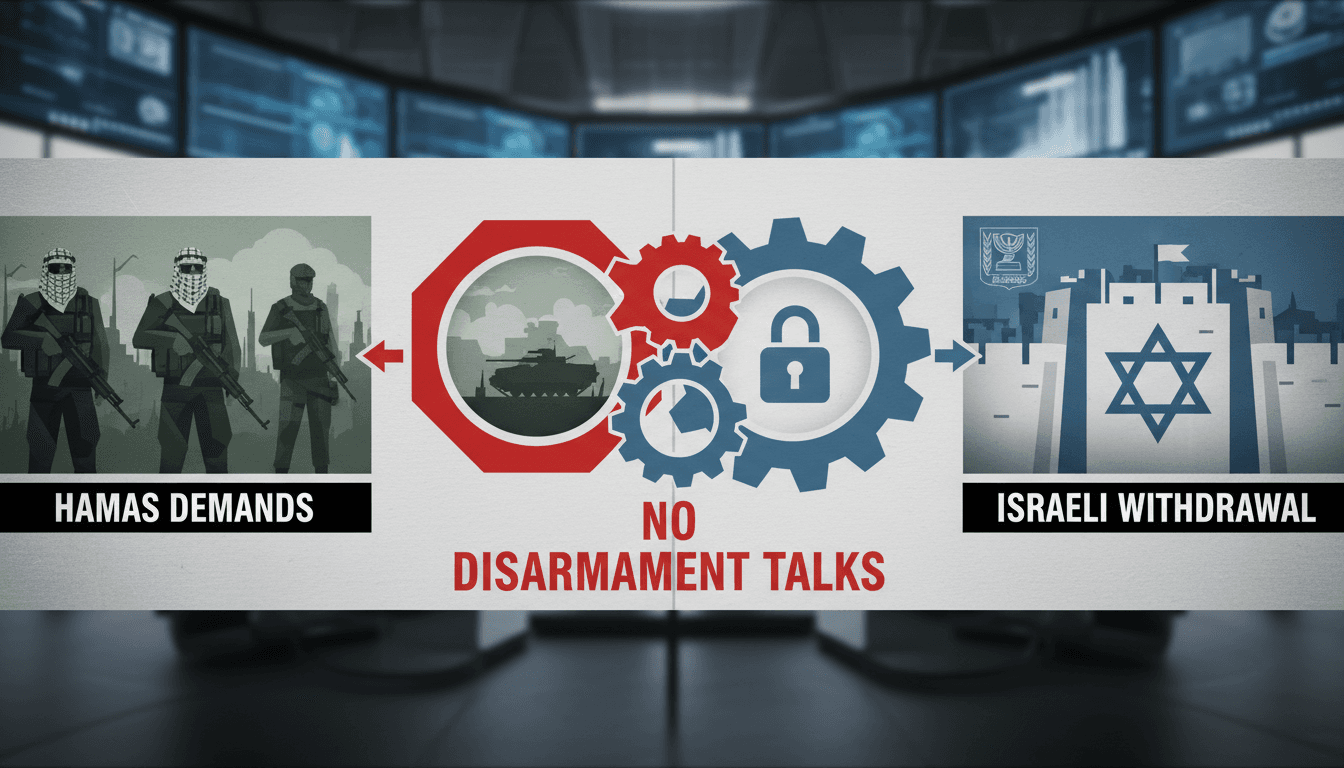
Hamas Demands Israeli Withdrawal as Preconditions for Disarmament Talks
Here's what it means for you.
Hamas has made it clear that disarmament discussions are contingent upon a complete withdrawal of Israeli forces from Gaza. This stance complicates the already intricate dynamics of the ongoing conflict and peace negotiations. Stakeholders in the region must now consider how this ultimatum will influence future diplomatic efforts and security arrangements. The implications of this demand extend beyond immediate negotiations, potentially affecting regional stability and international relations. As both sides grapple with these demands, the path to peace appears increasingly fraught with challenges.
What happened
Hamas leader Ghazi Hamad has stated that the group will not engage in disarmament talks until Israeli forces fully withdraw from Gaza. This declaration underscores Hamas's insistence on preconditions for any disarmament agreement. The group is currently negotiating terms for a potential deal, emphasizing that any agreement must include provisions for storing weapons rather than outright surrender.
The ultimatum highlights a significant stalemate in negotiations, as Hamas has made it clear that disarmament will not proceed without a complete Israeli military withdrawal. This situation complicates the ongoing discussions and reflects the broader tensions in the region.
The Context
The backdrop of this ultimatum is the ongoing conflict and occupation of Gaza, which has created a complex environment for disarmament discussions. Hamas is negotiating terms that reflect its strategic interests, while Israel's military presence remains a contentious issue. The dynamics between these two parties are influenced by various regional and international factors, making the prospect of a peaceful resolution increasingly challenging.
Hamas's position is rooted in a desire for security and autonomy, while Israel's military presence is justified by its security concerns. This clash of priorities complicates the peace process and raises questions about the feasibility of reaching a consensus on security arrangements in the region.
Takeaway
The future of disarmament talks hinges on Israel's response to Hamas's demands regarding military withdrawal. Observers should watch for potential reactions from Israeli officials as they navigate this complex situation. Further developments in negotiations will likely be influenced by regional dynamics and international pressure, which could either facilitate or hinder progress.
As both sides continue to grapple with these issues, the potential for escalation remains high. The outcome of these discussions will be critical in shaping the future of peace efforts in the region.
Jordanian news and regional updates.
"Roya News is a Jordanian outlet focused on breaking news and local affairs."
— A47 Editor
حماس: اتفاق غزة ينص على تخزين السلاح وليس تسليمه للاحتلال
Dr. Ghazi Hamad, a leader in Hamas, stated that the Gaza agreement emphasizes the storage of weapons rather than their surrender to the occupying forces. This declaration highlights the ongoing tensions surrounding disarmament discussions in the regi...
Pan-Arab news coverage spanning politics, business, sports, and regional affairs.
"Asharq Al-Awsat reflects a broad Arab editorial perspective with strong attention to regional geopolitics."
— A47 Editor
قيادي في «حماس»: يجب أن توافق إسرائيل على اتفاق نزع السلاح قبل أن تنفذه الحركة
Ghazi Hamad, a leader in Hamas, stated to Reuters that Israel must agree to a phased disarmament deal before the movement can implement it. This statement highlights ongoing tensions and the complexities surrounding disarmament discussions in the reg...
Arabic-language coverage of international news and geopolitics.
"RT Arabic is a Russian state-funded outlet often criticized for promoting Kremlin-aligned narratives."
— A47 Editor
"حماس": لا نزع للسلاح قبل انسحاب الاحتلال
Dr. Ghazi Hamad, a member of the Hamas negotiating delegation, stated that the movement will not take any steps regarding disarmament until the complete withdrawal of occupation forces from the Gaza Strip. This declaration underscores Hamas's firm st...