
Kuwaiti military intercepts Iranian drone attacks for third consecutive day
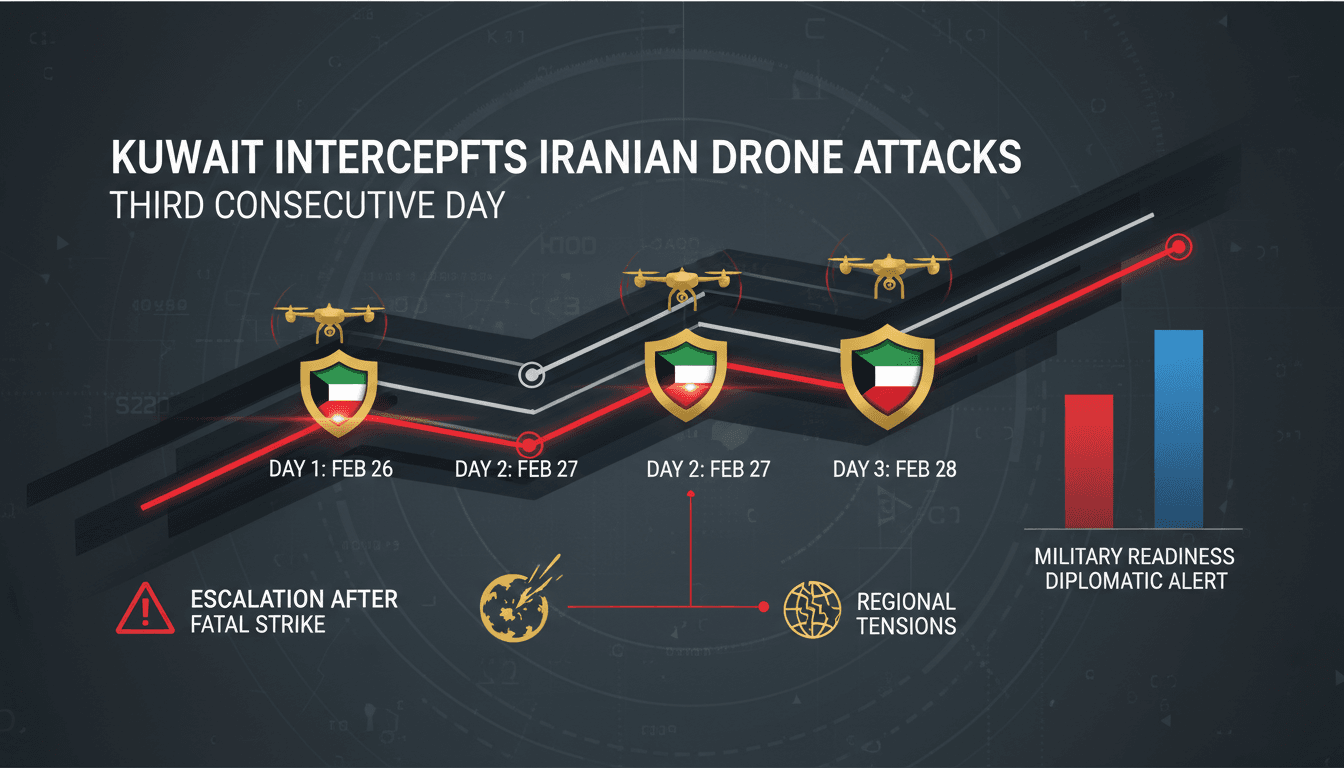
Here's what it means for you.
The ongoing drone attacks from Iran pose significant implications for regional security and military readiness in Kuwait. As the Kuwaiti military actively intercepts these threats, the potential for heightened diplomatic tensions increases, impacting both local and international stakeholders. Businesses and policymakers should remain vigilant as the situation evolves, considering the broader ramifications for stability in the Gulf region.
What happened
Kuwait's military has been engaged in intercepting Iranian drone attacks targeting vital installations for the third consecutive day. The air defense systems are currently deployed to repel these assaults, which have intensified following a recent Iranian strike that resulted in casualties in Kuwait. The Ministry of Defense has confirmed the ongoing nature of these drone incursions, indicating a serious escalation in hostilities.
The Iranian attacks began after a strike on a Chinese company in Kuwait, which resulted in a fatality. This incident has heightened tensions between Kuwait and Iran, leading to a robust military response from the Kuwaiti side. The situation underscores the fragile security dynamics in the region.
The Context
The backdrop of these drone attacks is marked by a recent Iranian strike that has raised alarms in Kuwait. The incident involving the Chinese company has not only resulted in loss of life but has also triggered a series of retaliatory measures from the Kuwaiti military. This escalation reflects the ongoing volatility in the region, particularly in the relationship between Kuwait and Iran.
As the conflict unfolds, it is essential to consider the broader implications for regional stability. The ongoing military readiness in Kuwait may signal a shift in defense strategies, potentially affecting diplomatic relations with Iran and other neighboring countries. The situation is fluid, and the responses from both sides will be critical in shaping future interactions.
Takeaway
The continued drone assaults from Iran may provoke a stronger military response from Kuwait, raising the stakes for regional security. Observers should monitor further developments in Kuwaiti air defense responses, as well as potential diplomatic reactions from Iran and other regional players. The situation remains precarious, with the potential for escalation into broader tensions.
As the conflict progresses, the implications for military readiness and diplomatic relations will be significant. Stakeholders should remain alert to the evolving dynamics, as the potential for further military engagement or diplomatic fallout looms large.
Pan-Arab political news and analysis.
"Al-Quds Al-Arabi is a London-based Arabic newspaper known for political coverage."
— A47 Editor
الجيش الكويتي يعلن التصدي لهجمات إيرانية جديدة استهدفت “منشآت حيوية”- (تدوينة)
The Kuwaiti military announced on Saturday that it has intercepted Iranian drones targeting vital facilities for the third consecutive day, following Tehran's declaration of strikes on the Gulf nation. This escalation comes after an Iranian attack on...
Arabic-language coverage of international news and geopolitics.
"RT Arabic is a Russian state-funded outlet often criticized for promoting Kremlin-aligned narratives."
— A47 Editor
الكويت تعلن التصدي لهجمات مسيرات إيرانية
The Kuwaiti Ministry of Defense announced that its forces are responding to what it described as an 'unjust Iranian aggression by drones,' clarifying that the sounds heard in the air are a result of air defense operations.
Jordanian news and regional updates.
"Roya News is a Jordanian outlet focused on breaking news and local affairs."
— A47 Editor
الجيش الكويتي: منظومات الدفاع الجوي تتصدى لهجمات إيرانية بطائرات مسيّرة
The Kuwaiti Army announced on Saturday that its air defense systems successfully intercepted Iranian drone attacks, highlighting ongoing tensions in the region. This incident underscores the military readiness of Kuwait in the face of potential threa...