
Tripoli government institutions reopen amid ongoing protests over services
What happened
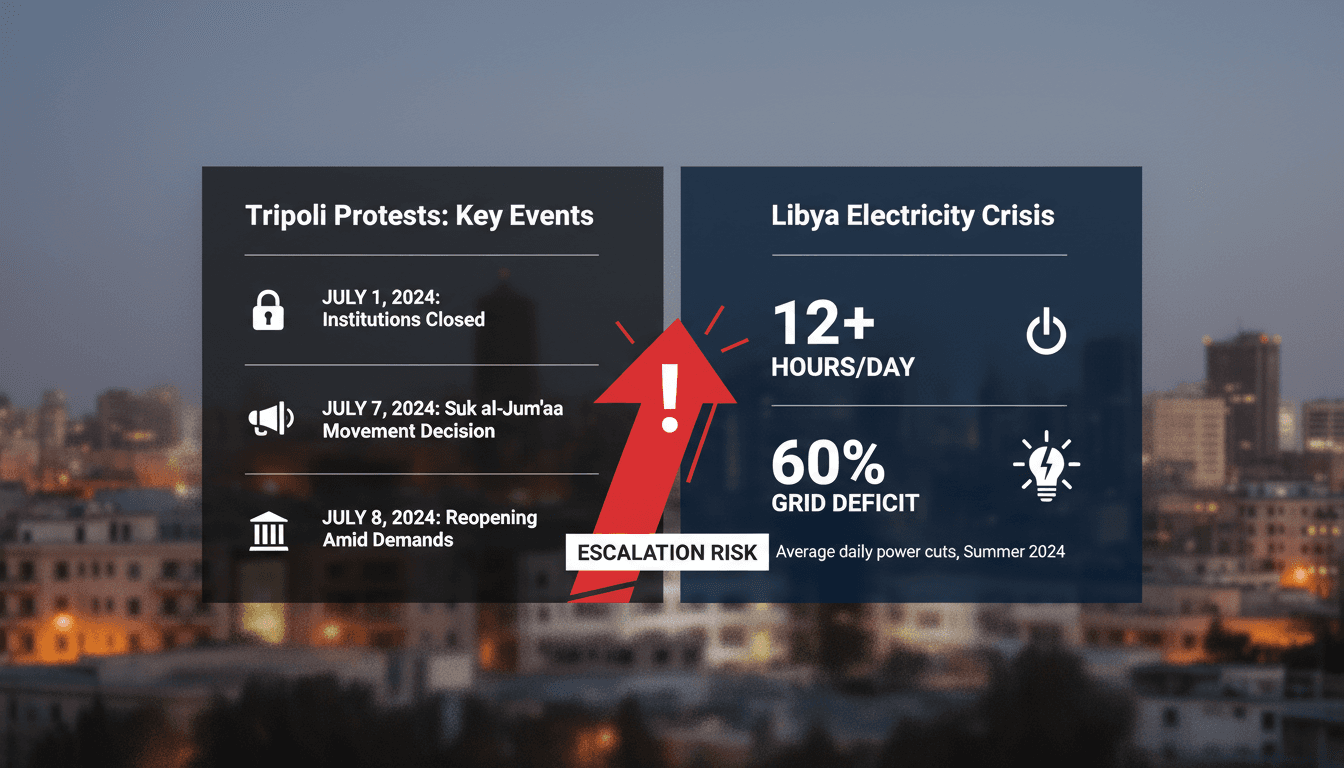
In response to public protests over deteriorating services and frequent power outages, the 'Suk al-Jum'aa Movement' in Tripoli announced the reopening of government institutions that had been closed for about a week. This move aims to alleviate the burden on citizens while maintaining pressure for necessary reforms. The protests were primarily focused on the ongoing electricity crisis and poor public services, which have plagued the region for years.
Despite the reopening, the movement emphasizes that their demands for reform remain unchanged. The institutions were closed for a week, highlighting the urgency of the public's grievances. This decision marks a significant moment in the ongoing struggle for better public services in Libya.
The Context
The protests in Tripoli were sparked by chronic electricity shortages and deteriorating public services, issues that have persisted due to infrastructure decay and political divisions within Libya. The 'Suk al-Jum'aa Movement' has emerged as a significant group leading these protests, advocating for immediate improvements in essential services. The reopening of institutions is seen as a response to citizen demands rather than a withdrawal of protest efforts.
The situation reflects broader challenges facing Libya, including political instability and the need for comprehensive reforms. As citizens continue to express dissatisfaction, the government's ability to address these issues will be crucial in determining the region's stability moving forward.
Takeaway
As the public continues to demand improvements in essential services, the potential for renewed protests remains high. The government's responses to the ongoing electricity crisis and public dissatisfaction will be critical in shaping the future landscape of governance in Libya. Observers should watch for any significant actions taken by the government in the coming weeks, as these will likely influence the trajectory of public sentiment and protest activity.
The reopening of government institutions does not signify an end to the protests, as the underlying issues persist. The situation in Libya remains tense, and the coming days will be pivotal in determining whether the government can effectively address the citizens' grievances.
Pan-Arab news coverage spanning politics, business, sports, and regional affairs.
"Asharq Al-Awsat reflects a broad Arab editorial perspective with strong attention to regional geopolitics."
— A47 Editor
محتجون يعيدون فتح مؤسسات أغلقوها بالعاصمة الليبية «استجابة للمواطنين»
A Libyan movement has announced the reopening of all institutions that were closed in recent days, attributing this decision to a response to citizens' demands and prioritizing the public interest.
Arabic-language coverage of political affairs and current events.
"Okaz political coverage typically follows mainstream Saudi framing on national and regional affairs."
— A47 Editor
ليبيا: حراك سوق الجمعة يعلن إعادة فتح المؤسسات بعد أيام من الإغلاق
The Souq Jumaa movement in Tripoli, Libya, has announced the reopening of institutions that were closed in recent days due to public protests against deteriorating public services and frequent power outages. The movement emphasized that this decision...
Pan-Arab political news and analysis.
"Al-Quds Al-Arabi is a London-based Arabic newspaper known for political coverage."
— A47 Editor
ليبيا.. محتجون ينهون إغلاق مؤسسات حكومية في طرابلس- (تدوينة)
Libyan protesters announced the reopening of government institutions in Tripoli on Sunday, following a week-long closure in response to declining public services. The announcement was made by the 'Suk al-Jumah Movement' via their Facebook account. Th...
Arabic-language coverage of international news and geopolitics.
"RT Arabic is a Russian state-funded outlet often criticized for promoting Kremlin-aligned narratives."
— A47 Editor
ليبيا.. حراك سوق الجمعة يعلن إعادة فتح المؤسسات بعد أيام من الإغلاق
The Souq Jumaa movement in Tripoli has announced the reopening of institutions that were closed due to protests against deteriorating services and frequent power outages. This decision comes after several days of disruption, signaling a response to p...