
CENTCOM Intensifies Maritime Operations Against Iran in Persian Gulf
What happened
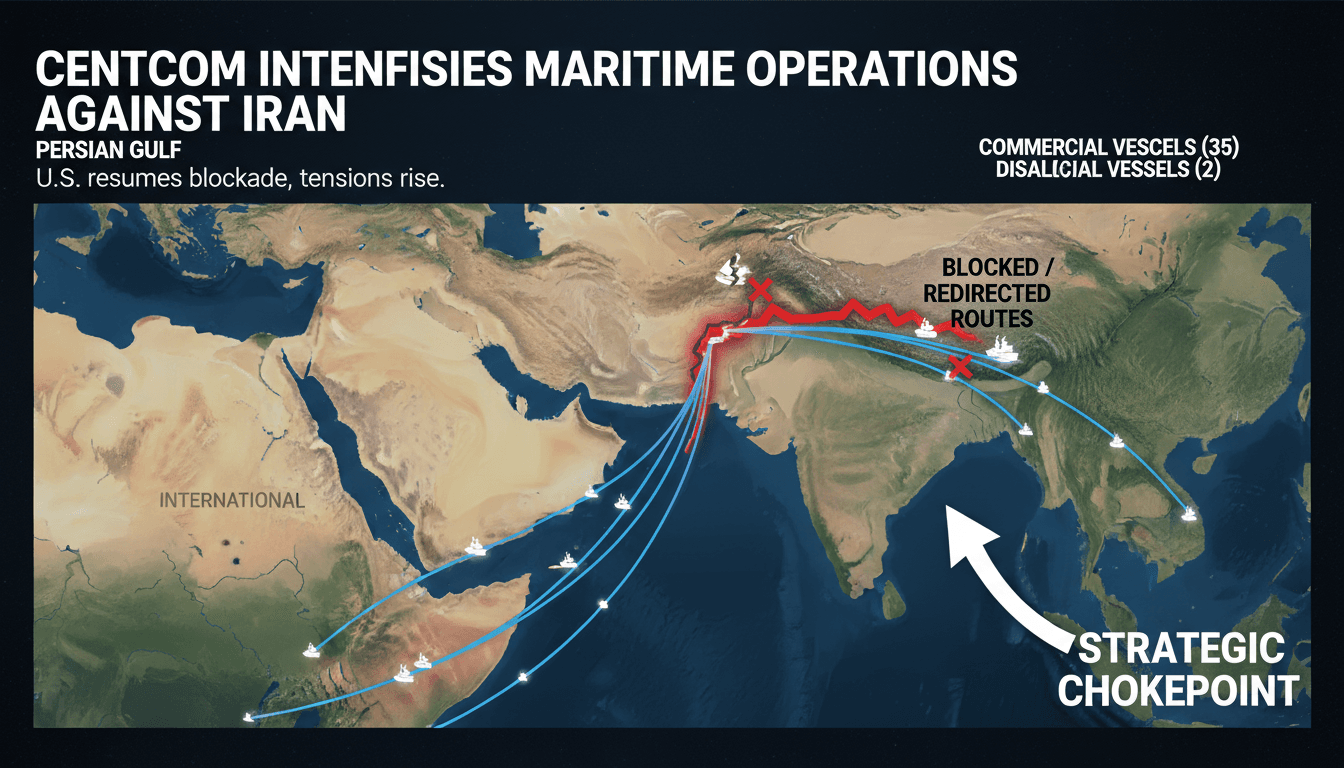
The U.S. Central Command (CENTCOM) has intensified its maritime operations in the Persian Gulf, redirecting 35 commercial vessels and disabling two as part of a resumed blockade against Iran. This action follows Iran's claims of having closed the Strait of Hormuz, which CENTCOM has publicly denied. The blockade aims to curb Iranian influence and activities in the region, reflecting ongoing tensions between the two nations.
Since the blockade's resumption, CENTCOM has taken decisive steps to enforce maritime security, highlighting the scale of U.S. operations. The redirection of vessels underscores the strategic importance of maintaining open shipping routes in the face of Iranian assertions.
The Context
The U.S. has long enforced a maritime blockade on Iran to limit its regional influence, particularly concerning its military activities. The Strait of Hormuz is a vital shipping route, and Iran's claims of closure pose significant risks to global trade and energy supplies. CENTCOM's denial of these claims illustrates the ongoing strategic rivalry and the complexities of maritime security in the region.
As tensions escalate, the U.S. and Iran remain key stakeholders in a broader geopolitical landscape that includes various international interests. The situation is further complicated by the potential for Iranian military responses to U.S. actions, which could lead to increased instability in the Persian Gulf.
Takeaway
Looking ahead, the U.S. is likely to continue its maritime operations in the Persian Gulf, maintaining pressure on Iran amidst rising tensions. Observers should monitor further developments in U.S.-Iran maritime interactions, particularly any Iranian responses to the blockade. The situation may evolve rapidly, with implications for regional security and international shipping.
As the U.S. reinforces its presence, the potential for military posturing from Iran could increase, raising the stakes for all parties involved. Stakeholders should remain vigilant and prepared for any shifts in the maritime landscape.
Arabic-language coverage of international news and geopolitics.
"RT Arabic is a Russian state-funded outlet often criticized for promoting Kremlin-aligned narratives."
— A47 Editor
القيادة المركزية الأمريكية: حولنا مسار 35 سفينة وعطلنا سفينتين منذ استئناف الحصار على موانئ إيران
The U.S. Central Command announced on Sunday that its forces have redirected 35 commercial vessels and disabled two ships while boarding two others since the resumption of the maritime blockade on Iranian ports. This action highlights the ongoing ten...
Arabic-language political and world news coverage for UAE readers.
"Emarat Al Youm world coverage usually presents international developments through a UAE and Arab audience lens."
— A47 Editor
الحصار الأميركي على إيران.. "سنتكوم" تعلن تغيير مسار 30 سفينة الحصار الأميركي على إيران.. "سنتكوم" تعلن تغيير مسار 30 سفينة
The U.S. Central Command (CENTCOM) announced on Friday that American forces have redirected the course of 30 commercial vessels as of July 31, amid ongoing tensions related to the U.S. sanctions on Iran. This action highlights the strategic maneuvers...
Pan-Arab political news and analysis.
"Al-Quds Al-Arabi is a London-based Arabic newspaper known for political coverage."
— A47 Editor
“سنتكوم” تنفي إغلاق إيران مضيق هرمز وتدعي إعادة توجيه 30 سفينة
The U.S. Central Command (CENTCOM) denied Iran's claim of closing the Strait of Hormuz to commercial shipping, stating that the strait remains open for vessel movement. CENTCOM's statement, shared via the social media platform X, refuted Iran's asser...