
Iran executes 56 individuals amid crackdown on dissent linked to protests
Here's what it means for you.
The recent surge in executions in Iran signals a troubling escalation in the government's efforts to suppress dissent. This crackdown is likely to draw increased scrutiny from the international community, particularly regarding human rights practices. As the situation unfolds, stakeholders in global politics and human rights advocacy will need to monitor Iran's actions closely. The implications of these executions extend beyond immediate human rights concerns, potentially affecting regional stability and international relations. The Iranian government's use of capital punishment as a tool of fear may lead to heightened tensions both domestically and abroad.
What happened
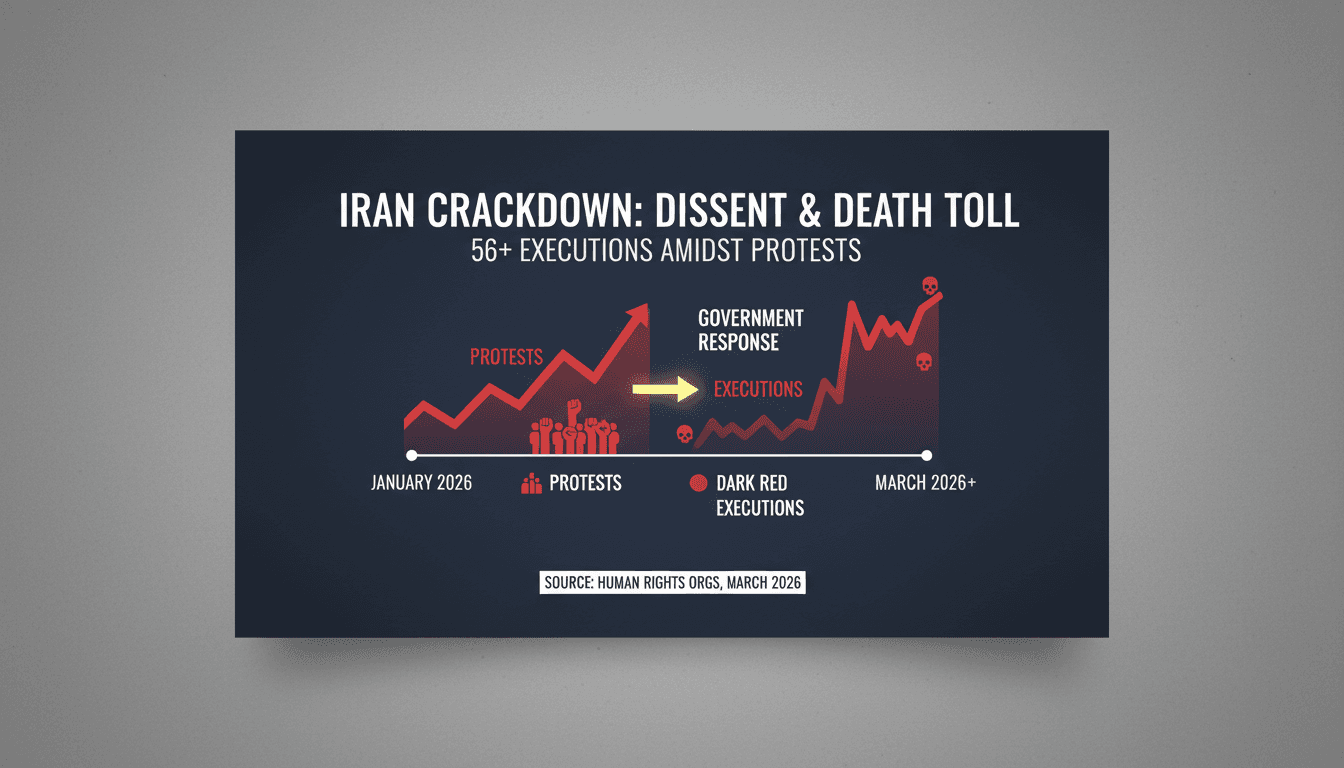
Since March 2026, Iran has executed at least 56 individuals on charges related to national security. This alarming trend includes 27 executions directly linked to protests that erupted in January 2026. The Iranian government appears to be employing these measures as part of a broader strategy to quell dissent and maintain control over the population.
The executions have raised significant concerns among human rights advocates and international observers. The United Nations human rights chief, Volker Türk, has expressed particular alarm over the rise in capital punishment as a means of instilling fear among the populace.
The Context
The recent executions are part of a larger crackdown on dissent that began following widespread protests in January 2026. These protests have highlighted the growing discontent among the Iranian population regarding governmental policies and practices. The timing of the executions suggests a calculated effort by the Iranian authorities to suppress any potential uprisings.
Volker Türk's warnings underscore the severity of the situation, as the use of capital punishment is seen as a direct violation of human rights. The international community is likely to respond with increased pressure on Iran, which may have implications for the country's diplomatic relations and regional stability.
Takeaway
As the situation in Iran continues to evolve, it is crucial to watch for potential responses from the Iranian government to international criticism. The ongoing human rights advocacy related to Iran will likely gain momentum as global awareness of these issues increases.
The implications of these executions may extend beyond immediate human rights concerns, potentially affecting Iran's standing in the international community and its relationships with neighboring countries. Stakeholders should remain vigilant as developments unfold.
International coverage of politics, culture, and current affairs.
"BBC News is widely regarded as a reputable international news organization, known for its impartial tone and public service mandate."
— A47 Editor
UN rights chief alarmed by rise in Iran executions since March
The UN rights chief, Volker Türk, has expressed alarm over the execution of at least 56 individuals in Iran since March, with 27 of these cases linked to protests that erupted in January. This surge in executions is seen as part of the Iranian govern...
Global news coverage with extensive reporting on Middle Eastern conflicts and geopolitics.
"Al Jazeera is a Qatar-based broadcaster known for wide regional coverage and alternative perspectives."
— A47 Editor
UN rights chief says Iran executed at least 56 people since March
The UN rights chief, Volker Turk, has reported that Iran has executed at least 56 individuals since March, a surge attributed to the government's efforts to suppress dissent following the January uprising.
Comprehensive coverage of Middle Eastern and global issues.
"Al Jazeera is a prominent voice from the Global South, especially the Middle East, with an emphasis on underreported stories."
— A47 Editor
UN rights chief says Iran executed at least 56 people since March
The UN rights chief, Volker Turk, has reported that Iran has executed at least 56 individuals since March, a surge attributed to the government's efforts to suppress dissent following the January uprising.
Pan-Arab news coverage spanning politics, business, sports, and regional affairs.
"Asharq Al-Awsat reflects a broad Arab editorial perspective with strong attention to regional geopolitics."
— A47 Editor
الأمم المتحدة تحذر من إعدامات إيران
The United Nations High Commissioner for Human Rights, Volker Turk, warned on Wednesday about the accelerating executions in Iran since March, stating that the authorities are using capital punishment to instill fear among the population.
Regional coverage and analysis focused on politics, diplomacy, and business across the Middle East.
"Al-Monitor is known for analytical reporting on Middle East politics and policy developments."
— A47 Editor
UN rights chief says Iran executed at least 56 people since March
The United Nations human rights chief, Volker Tuerk, reported that Iran has executed at least 56 individuals since March 19, with 27 of those executions linked to protests earlier this year. This alarming trend highlights the Iranian government's inc...