
US Lifts Sanctions on Fly Baghdad Airlines Linked to Iran
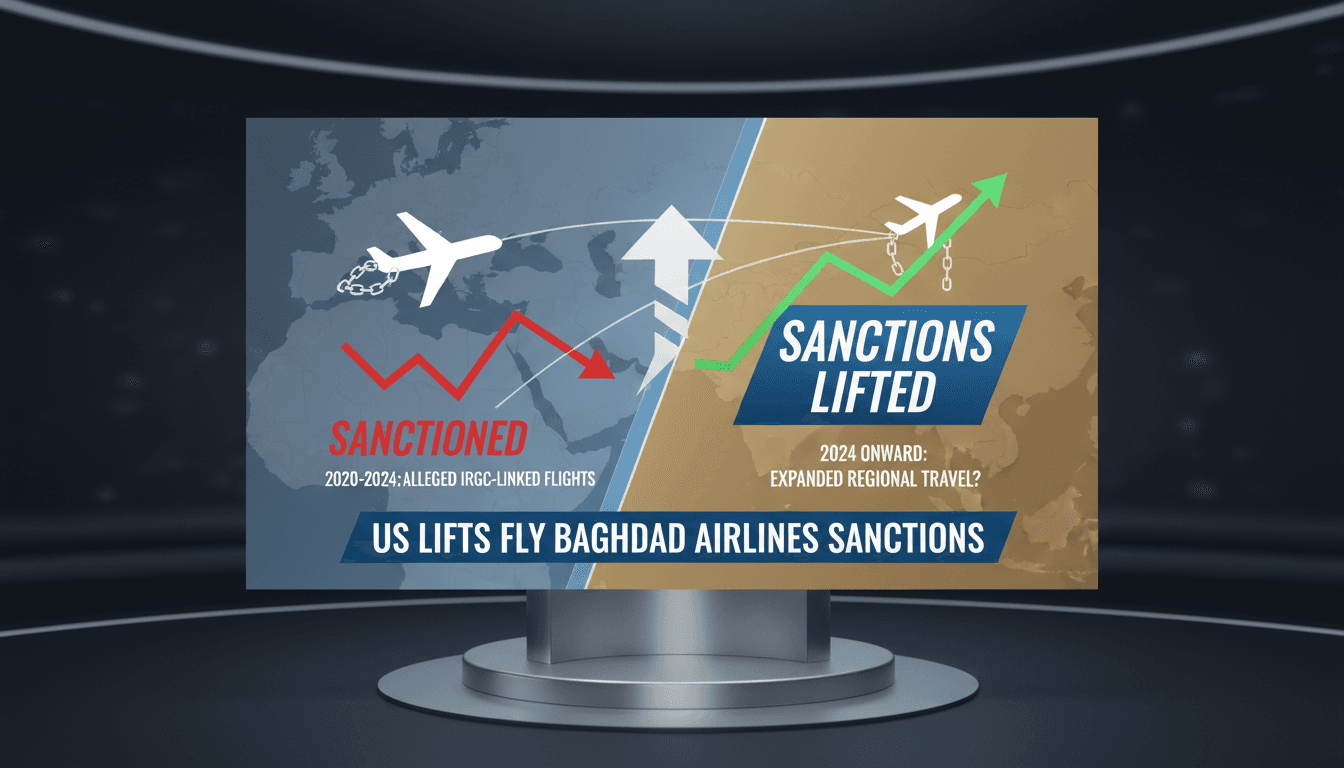
Here's what it means for you.
The recent lifting of sanctions on Fly Baghdad Airlines by the United States signals a potential shift in US foreign policy towards Iraq and its aviation sector. This decision may enhance the airline's operations in regional air travel, opening new avenues for growth and collaboration. Stakeholders in the aviation industry should closely monitor how this change affects regional dynamics, particularly concerning Iran's influence.
What happened
The United States has officially lifted sanctions on Fly Baghdad Airlines, which were previously imposed due to the airline's alleged connections to Iran's Islamic Revolutionary Guard Corps (IRGC). This decision, made on August 5, 2026, also includes the removal of sanctions on two of the airline's aircraft. The sanctions were initially enacted as part of a broader US strategy to counter Iranian influence in the region.
The lifting of these sanctions comes amid ongoing scrutiny of entities linked to Iran's military influence in Iraq, Syria, and Lebanon. Fly Baghdad Airlines had been accused of providing assistance to the IRGC and its proxy groups in these countries. This recent development marks a significant change in the US government's approach to entities associated with Iran.
The Context
The sanctions against Fly Baghdad Airlines were part of a larger effort by the US to limit Iranian influence in the Middle East. The IRGC's activities in Iraq, Syria, and Lebanon have raised concerns about regional stability and security. By lifting these sanctions, the US may be signaling a recalibration of its foreign policy, particularly regarding Iraq's aviation sector and its ties to Iran's military apparatus.
This decision could have broader implications for US-Iran relations, as it may indicate a willingness to engage with Iraqi entities previously viewed with suspicion. The timing of this move suggests a strategic shift that could reshape the landscape of regional air travel and influence.
Takeaway
The lifting of sanctions on Fly Baghdad Airlines could lead to increased operations for the airline, enhancing its role in regional air travel. Stakeholders should watch for any further changes in US sanctions policy regarding Iranian-linked entities, as these could impact the airline's future operations. Additionally, responses from regional governments will be crucial in understanding the implications of this decision for US-Iran relations and overall regional stability.
As the situation evolves, monitoring the reactions from both the airline and regional governments will provide insights into the potential shifts in dynamics within the Middle East.
UAE-based English-language newspaper covering regional politics, economics, and global affairs.
"The National reflects Emirati policy perspectives while maintaining international editorial standards."
— A47 Editor
US removes sanctions from Fly Baghdad after airline accused of IRGC ties
The United States has lifted sanctions on Fly Baghdad, an Iraqi airline previously accused of having ties to the Iranian Revolutionary Guard Corps (IRGC). This decision marks a significant shift in U.S. policy towards the airline, which had faced res...
Macro commentary, policy analysis, growth/inflation themes, and global outlooks.
"Contextual macro coverage that complements day-to-day market headlines."
— A47 Editor
US lifts sanctions on Fly Baghdad Airlines and two aircraft
The United States has lifted sanctions on Fly Baghdad Airlines and two of its aircraft, allowing the airline to operate without the restrictions previously imposed. This decision marks a significant change in the regulatory environment for the airlin...
Regional coverage and analysis focused on politics, diplomacy, and business across the Middle East.
"Al-Monitor is known for analytical reporting on Middle East politics and policy developments."
— A47 Editor
US lifts sanctions on Iraqi airline linked to Iran's IRGC: What to know
The United States has lifted sanctions on an Iraqi airline previously accused of providing support to the Iranian Revolutionary Guard Corps (IRGC) and its proxy groups operating in Iraq, Syria, and Lebanon. This decision marks a significant shift in ...