
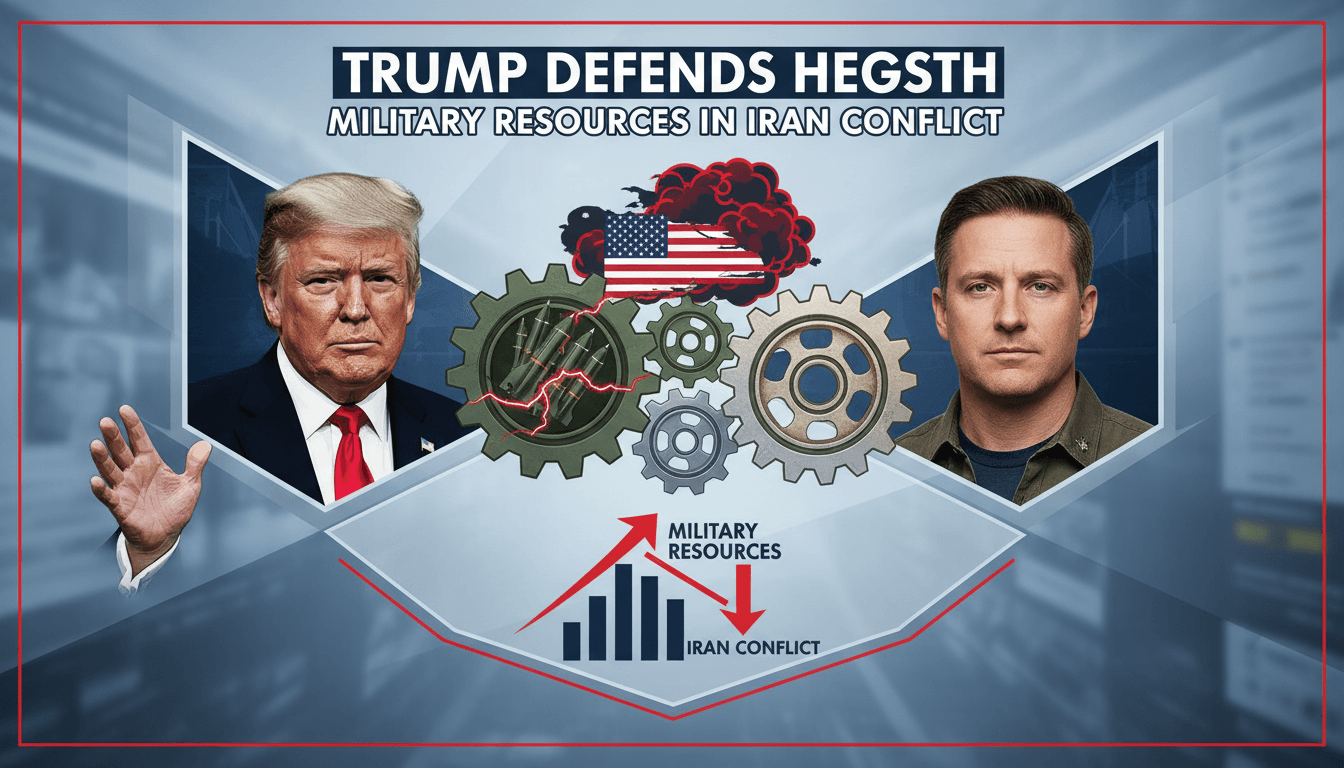
Trump Defends Hegseth Amid Controversy Over U.S. Military Resources in Iran Conflict
Here's what it means for you.
The ongoing support from President Trump for Pete Hegseth amid military resource disputes signals a potential shift in U.S. military strategy. As concerns grow over the depletion of munitions, the administration's approach to the Iran conflict may face increased scrutiny. This situation could influence future leadership decisions within the Pentagon and impact military operations. The implications of this controversy extend beyond personnel, affecting public perception and policy direction regarding military engagements. Stakeholders will be closely monitoring how these dynamics unfold in the coming weeks.
What happened
President Trump has publicly defended Pete Hegseth following reports of a dispute regarding U.S. military munitions amid the ongoing Iran conflict. This defense comes as Hegseth faces backlash for allegedly minimizing the war's impact and misrepresenting its objectives. Trump expressed satisfaction with Hegseth's performance, despite rising concerns about the management of military resources.
The disagreement reportedly centers on missile depletion and its implications for future military operations. As the situation develops, the administration's handling of military resources will likely remain a focal point for both public scrutiny and internal discussions within the Pentagon.
The Context
Hegseth has been accused of downplaying the impact of the Iran war, which has been described as having "decimated" the country. The relationship between Trump and Hegseth is under scrutiny as reports emerge of a clash over military resources. This controversy highlights the challenges faced by the administration in managing military stockpiles during an ongoing conflict.
As the Iran conflict continues, the implications of dwindling U.S. weapons stockpiles raise questions about the effectiveness of current military strategies. The timing of these developments is critical, as they coincide with heightened tensions in the region and ongoing debates about U.S. military engagement.
Takeaway
The ongoing tensions regarding military resources may influence future U.S. military operations and leadership decisions. Potential changes in Pentagon leadership could arise based on how effectively military resource management is addressed. Stakeholders will be watching for further developments in U.S. military strategy regarding Iran and Venezuela.
As the administration navigates these challenges, the focus will likely remain on the implications of military resource management and its impact on broader strategic objectives.
Business, investment, entrepreneurship, leadership, and innovation.
"Forbes is known for its coverage of business leaders, market trends, and entrepreneurial ventures with a pro-business editorial stance."
— A47 Editor
Trump Strongly Denies Feud With Hegseth—Amid Backlash Over Munitions
Former President Donald Trump has strongly denied any feud with Fox News host Pete Hegseth, amidst ongoing backlash regarding the U.S. munitions stockpiles in the context of the Iran conflict. Hegseth has faced criticism for allegedly downplaying the...
Global markets, investing, and macroeconomics from a premier financial newsroom.
"Bloomberg is respected for in-depth financial reporting and data-driven analysis."
— A47 Editor
Trump Backs Hegseth After Report of Dispute Over Stockpiles
President Donald Trump expressed strong support for Defense Secretary Pete Hegseth following reports of a dispute regarding the United States' dwindling weapons stockpiles. Trump praised Hegseth's performance, highlighting military actions in Venezue...
Global business headlines with AI angles.
"General business outlet that frequently covers AI."
— A47 Editor
Trump & Hegseth Reportedly Clashed Over Key Aspect Of Iran War: Missile Depletion
President Trump reportedly expressed concerns during a conversation with Hegseth regarding the depletion of U.S. missile stockpiles amid the ongoing conflict with Iran. This discussion highlights the potential impact of missile shortages on future mi...