
US and Iran Move Towards Peace Accord with Draft Agreement for Strait of Hormuz Reopening
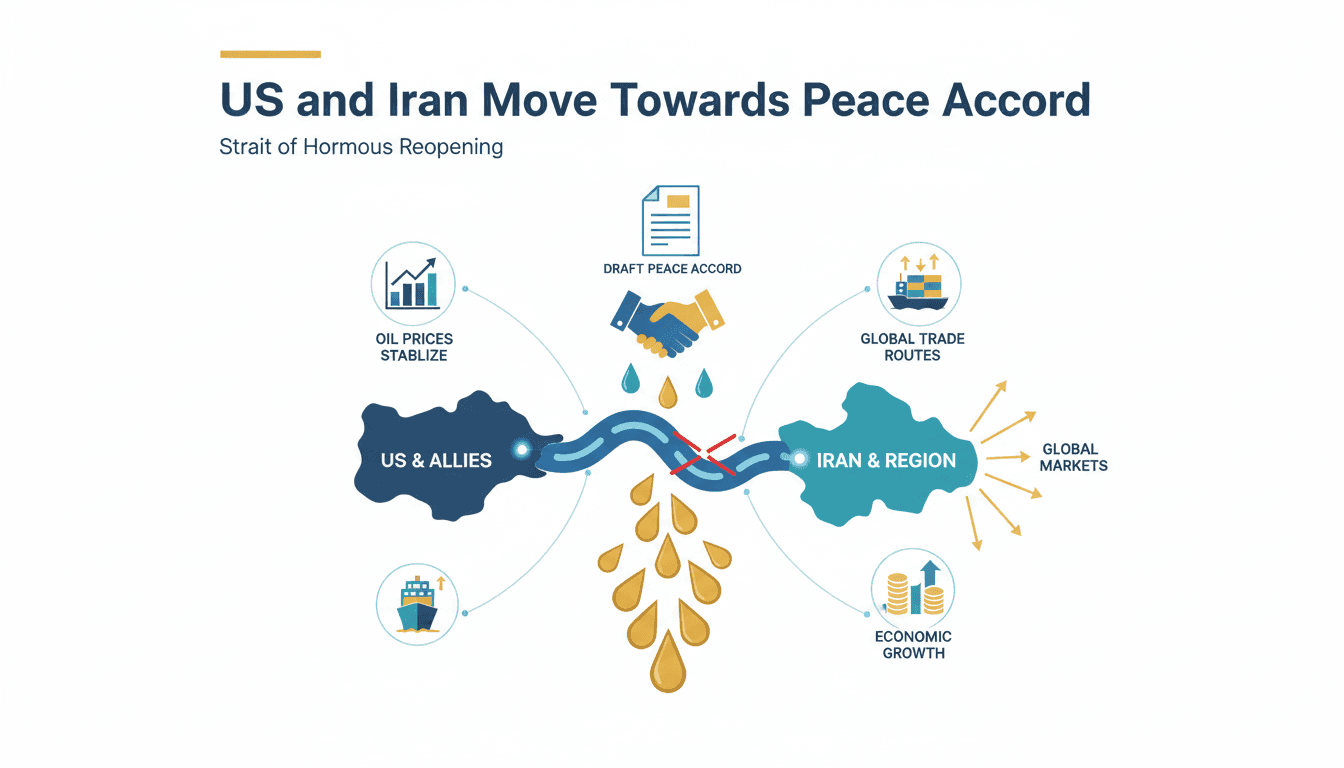
Here's what it means for you.
If the US and Iran finalize their peace agreement, it could lead to lower oil prices and increased trade stability in your region.
Why it matters
The Strait of Hormuz is a vital artery for global oil transportation, and its reopening could significantly impact energy markets and international trade.
What happened (in 30 seconds)
- U.S. and Iranian officials are nearing a peace agreement that includes a draft memorandum of understanding with 14 key points.
- The agreement proposes lifting U.S. oil sanctions and releasing half of Iran's frozen assets while Iran commits to reopening the Strait of Hormuz.
- Market reactions have been positive, with equities rising and oil prices falling in anticipation of renewed stability in the region.
The context you actually need
- The Strait of Hormuz is a critical maritime chokepoint, with approximately 20% of the world's oil passing through it.
- Tensions between the U.S. and Iran have escalated due to Iran's nuclear program and military activities, leading to sanctions that have severely impacted Iran's economy.
- Previous military confrontations and diplomatic efforts have set the stage for these negotiations, highlighting the fragile nature of peace in the region.
What's really happening
The ongoing negotiations between the U.S. and Iran represent a significant shift in the geopolitical landscape of the Middle East. The proposed 14-point draft memorandum of understanding aims to address long-standing hostilities and economic sanctions that have strained relations between the two nations. Central to the agreement is the lifting of U.S. oil sanctions, which have crippled Iran's economy and fueled regional tensions. By releasing half of Iran's frozen assets, the U.S. is incentivizing Iran to comply with the terms of the agreement, including reopening the Strait of Hormuz and addressing nuclear material concerns.
The Strait of Hormuz is not just a strategic military point; it is a critical artery for global oil transportation. The reopening of this waterway would stabilize oil prices, which have been volatile due to geopolitical tensions. For the U.S., this agreement could signal a shift towards a more diplomatic approach in the region, potentially reducing military expenditures and fostering economic ties. For Iran, the lifting of sanctions and access to frozen assets would provide much-needed relief to its struggling economy, allowing for increased trade and investment.
However, the situation remains fluid. Both sides have expressed optimism about a potential signing ceremony in Europe, but final approvals from Iranian leadership are still pending. The differing narratives from both parties regarding the details of the agreement add another layer of complexity. While the U.S. government has indicated a willingness to move forward, skepticism remains among international observers regarding the durability of the agreement, given the history of broken promises and renewed hostilities.
The implications of this agreement extend beyond just the U.S. and Iran. Countries that rely on oil imports, particularly in Europe and Asia, could see a decrease in energy costs, which would have a ripple effect on global markets. Additionally, the potential for increased trade routes through the Strait of Hormuz could benefit regional economies, particularly those in the Gulf Cooperation Council (GCC), including the UAE and Saudi Arabia.
Who feels it first (and how)
- Oil and gas companies: Expect fluctuations in stock prices based on the stability of oil prices.
- Consumers: Potentially lower fuel prices as oil supply stabilizes.
- Regional traders: Increased trade opportunities as shipping routes reopen.
- Investors: Positive market sentiment could lead to increased investments in the region.
- Governments: Economic relief for Iran could shift regional alliances and trade dynamics.
What to watch next
- Finalization of the agreement: Watch for the signing ceremony and any last-minute changes to the terms, as this will indicate the commitment level of both parties.
- Market reactions: Monitor oil prices and stock market trends following the announcement, as these will reflect investor confidence in the agreement's durability.
- Geopolitical developments: Keep an eye on any military confrontations or diplomatic efforts that could either bolster or undermine the peace process.
The U.S. and Iran are negotiating a peace agreement with significant implications for oil markets.
The reopening of the Strait of Hormuz could stabilize oil prices and enhance trade routes.
The long-term durability of the agreement and its impact on regional geopolitics remain uncertain.
Frequently Asked Questions
- Why it matters?
- The Strait of Hormuz is a vital artery for global oil transportation, and its reopening could significantly impact energy markets and international trade.
- What happened (in 30 seconds)?
- U.S. and Iranian officials are nearing a peace agreement that includes a draft memorandum of understanding with 14 key points. The agreement proposes lifting U.S. oil sanctions and releasing half of Iran's frozen assets while Iran commits to reopening the Strait of Hormuz. Market reactions have been positive, with equities rising and oil prices falling in anticipation of renewed stability in the region.
- What's really happening?
- The ongoing negotiations between the U.S. and Iran represent a significant shift in the geopolitical landscape of the Middle East. The proposed 14-point draft memorandum of understanding aims to address long-standing hostilities and economic sanctions that have strained relations between the two nations. Central to the agreement is the lifting of U.S. oil sanctions, which have crippled Iran's economy and fueled regional tensions. By releasing half of Iran's frozen assets, the U.S. is incentivizi
- Who feels it first (and how)?
- Oil and gas companies: Expect fluctuations in stock prices based on the stability of oil prices. Consumers: Potentially lower fuel prices as oil supply stabilizes. Regional traders: Increased trade opportunities as shipping routes reopen. Investors: Positive market sentiment could lead to increased investments in the region. Governments: Economic relief for Iran could shift regional alliances and trade dynamics.
- What to watch next?
- Finalization of the agreement: Watch for the signing ceremony and any last-minute changes to the terms, as this will indicate the commitment level of both parties. Market reactions: Monitor oil prices and stock market trends following the announcement, as these will reflect investor confidence in the agreement's durability. Geopolitical developments: Keep an eye on any military confrontations or diplomatic efforts that could either bolster or undermine the peace process.
Business and economy coverage focused on Dubai, the UAE, Saudi Arabia, and the wider Middle East.
"Arabian Business is a well-known regional business outlet with strong focus on Gulf markets, leadership, and investment stories."
— A47 Editor
US, Iran signal war-ending deal is close as Strait of Hormuz reopening emerges in draft agreement
The United States and Iran have indicated that they are nearing a significant peace agreement aimed at ending their ongoing conflict, with draft terms suggesting the reopening of the strategically vital Strait of Hormuz and potential sanctions relief...
Capitol Hill news, legislation, and policy insight.
"The Hill specializes in U.S. politics and policy, with a focus on Capitol Hill developments and a reputation for insider reporting."
— A47 Editor
Iran deal could include reopening Hormuz
A senior official from the Trump administration announced that a deal with Iran is approximately 75% complete, with expectations for a signing within the next few days. This deal could potentially include the reopening of the strategically important ...
Breaking news, politics, business, and entertainment from the U.S. and around the world.
"The New York Post is a tabloid-format newspaper known for its sensationalist headlines and conservative-leaning editorial tone."
— A47 Editor
Inside the Iran deal that is ‘75-80%’ there, could be done in ‘next few days,’ official says
A senior U.S. official indicated that a deal with Iran is approximately 75-80% complete and could be finalized within the next few days. This announcement follows President Trump's recent claims of imminent peace and the cancellation of planned milit...
Regional coverage and analysis focused on politics, diplomacy, and business across the Middle East.
"Al-Monitor is known for analytical reporting on Middle East politics and policy developments."
— A47 Editor
Trump says Iran war deal close as Strait of Hormuz tensions linger
U.S. President Donald Trump announced that a peace deal with Iran could be finalized as soon as this weekend, amid ongoing tensions in the Strait of Hormuz where military exchanges have escalated. This potential agreement is seen as a significant dip...
Business and economy coverage focused on Dubai, the UAE, Saudi Arabia, and the wider Middle East.
"Arabian Business is a well-known regional business outlet with strong focus on Gulf markets, leadership, and investment stories."
— A47 Editor
Trump says US and Iran could sign peace deal this weekend to reopen Strait of Hormuz
U.S. President Donald Trump announced that a peace deal between the United States and Iran could be signed within days, potentially reopening the strategically vital Strait of Hormuz. This announcement follows a period of heightened tensions and mili...
English-language news from Qatar covering domestic and regional affairs.
"Gulf Times reflects Qatari perspectives on regional developments."
— A47 Editor
Trump expects deal 'as soon as this weekend'
President Donald Trump announced that the United States and Iran could finalize a peace deal as soon as this weekend, aimed at reopening shipping traffic through the Strait of Hormuz. This announcement follows a series of high-level negotiations and ...
Oil, metals, and agriculture: supply/demand headlines, OPEC chatter, inventories, and price action.
"Solid tape for energy and metals traders tracking macro and micro catalysts."
— A47 Editor
Trump says ’great’ Iran settlement will trigger opening of Strait of Hormuz
President Donald Trump announced that a significant settlement with Iran could lead to the opening of the Strait of Hormuz, a vital maritime route for global oil shipments. He indicated that the deal could be finalized within days, pending only docum...
Regional coverage and analysis focused on politics, diplomacy, and business across the Middle East.
"Al-Monitor is known for analytical reporting on Middle East politics and policy developments."
— A47 Editor
Trump says great settlement on Iran to be signed soon and strait will open
U.S. President Donald Trump announced that a significant settlement regarding the ongoing conflict with Iran is expected to be signed soon, which he believes will lead to the reopening of the Strait of Hormuz. Trump expressed optimism about the timin...