
Israel Refuses Withdrawal from Southern Lebanon Amid Escalating Regional Tensions
What happened
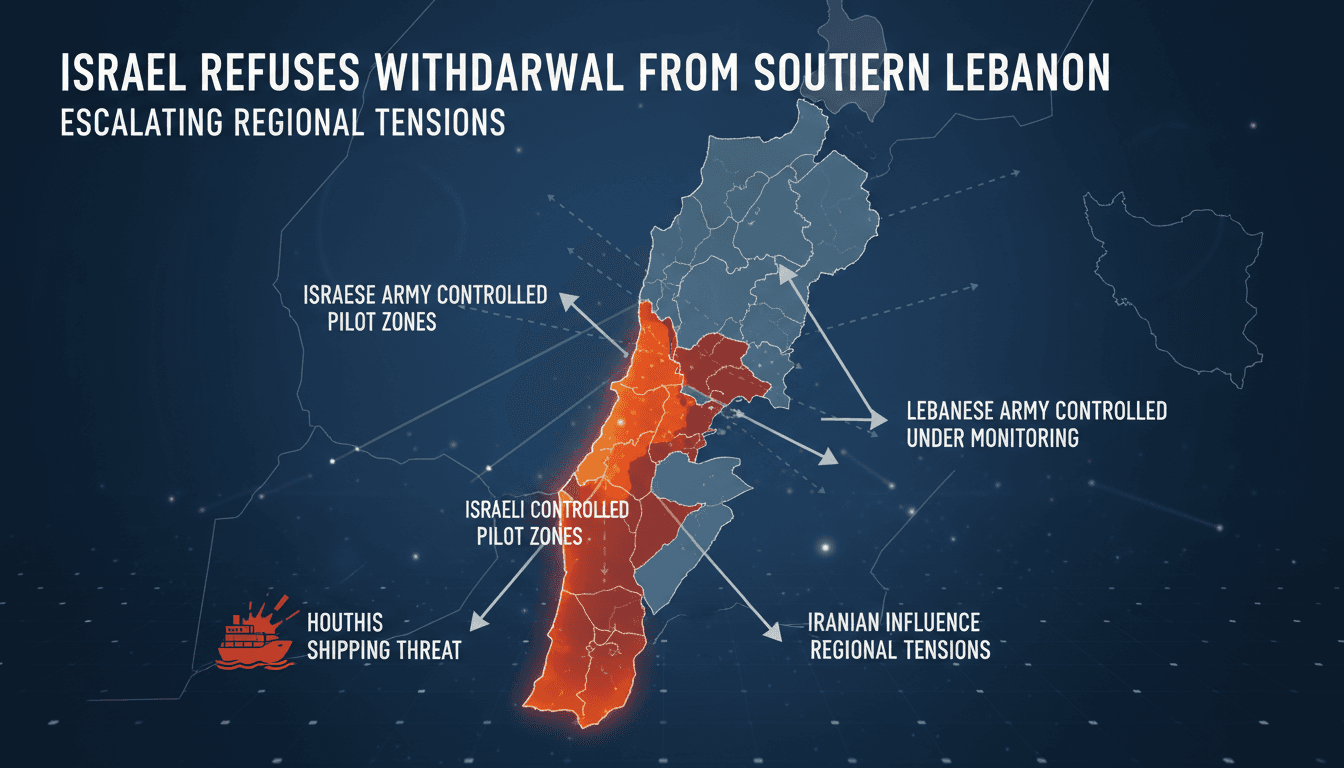
Israel has announced that it will not withdraw from additional areas of southern Lebanon until the Lebanese army gains full control over designated pilot zones. This decision follows the recent deaths of two Israeli reserve soldiers, highlighting the human cost of the ongoing conflict. The situation is further complicated by intensified attacks on shipping routes by the Houthis, raising security concerns for Israel and its allies.
The announcement was made on August 6, 2026, coinciding with the confirmation of the casualties among Israeli forces. As tensions escalate, Israel's military strategy appears to be focused on assessing the effectiveness of the Lebanese army in managing security within these zones. The implications of this decision could lead to prolonged military engagement in the region.
The Context
Israel's refusal to withdraw is rooted in significant security concerns regarding southern Lebanon, where the presence of hostile groups poses a threat to its national interests. The Houthis have ramped up their attacks on shipping, particularly targeting Saudi tankers, which adds another layer of complexity to the regional dynamics. The recent casualties among Israeli soldiers serve as a stark reminder of the ongoing conflict and its potential to escalate.
The Lebanese army's capability to assert control over the pilot zones is critical for Israel's future military posture in the area. The situation is further complicated by the involvement of Iran, which has historically supported groups hostile to Israel. As regional tensions rise, the actions of these stakeholders will be pivotal in shaping the security landscape.
Takeaway
Looking ahead, the focus will be on the Lebanese army's ability to establish control over the designated pilot zones and how this may affect Israel's military strategy. Observers should also monitor potential responses from Iran and the Houthis, as their actions could lead to further military confrontations. The situation remains fluid, and developments in the region will be crucial in determining the trajectory of the conflict.
As Israel continues to evaluate its military presence, the potential for increased engagement remains high. Stakeholders in the region must navigate these complexities carefully to avoid further escalation of tensions.
UAE-based English-language newspaper covering regional politics, economics, and global affairs.
"The National reflects Emirati policy perspectives while maintaining international editorial standards."
— A47 Editor
Iran war latest: Two Israeli reserve soldiers killed in southern Lebanon, military says
Two Israeli reserve soldiers were killed in southern Lebanon, prompting the Israeli military to conduct retaliatory strikes in the region. This escalation marks a significant increase in violence following a period of relative calm, raising concerns ...
European coverage of Middle East politics and security issues.
"France 24 offers international reporting with a European editorial perspective."
— A47 Editor
Israel refuses to withdraw from more south Lebanon areas at talks
Israel has announced that it will not withdraw from additional areas of southern Lebanon until the Lebanese army establishes full control over two initial pilot zones, as stated during talks in Rome. This decision comes amid ongoing tensions and viol...
Coverage of current events and conflicts in the Middle East.
"France 24 is viewed as a globally focused outlet with balanced coverage and a European perspective."
— A47 Editor
Israel refuses to withdraw from more south Lebanon areas at talks
Israel has announced that it will not withdraw from additional areas of southern Lebanon until the Lebanese army establishes full control over two initial pilot zones, as stated during talks in Rome. This decision comes amid ongoing tensions and viol...
Global news coverage with extensive reporting on Middle Eastern conflicts and geopolitics.
"Al Jazeera is a Qatar-based broadcaster known for wide regional coverage and alternative perspectives."
— A47 Editor
Iran war live: Tehran, Oman close in on Hormuz deal; Houthis attack tankers
Iran and Oman have reportedly reached an agreement on shipping routes in the strategically significant Strait of Hormuz, amidst ongoing tensions in the region, including recent Houthi attacks on Saudi tankers and Israeli bombings in Lebanon.
Comprehensive coverage of Middle Eastern and global issues.
"Al Jazeera is a prominent voice from the Global South, especially the Middle East, with an emphasis on underreported stories."
— A47 Editor
Iran war live: Tehran, Oman close in on Hormuz deal; Houthis attack tankers
Iran and Oman have reportedly reached an agreement on shipping routes in the strategically significant Strait of Hormuz, amidst ongoing tensions in the region, including recent Houthi attacks on Saudi tankers and Israeli bombings in Lebanon.