
Australia mandates government approval for Chinese investors in rare earths firm
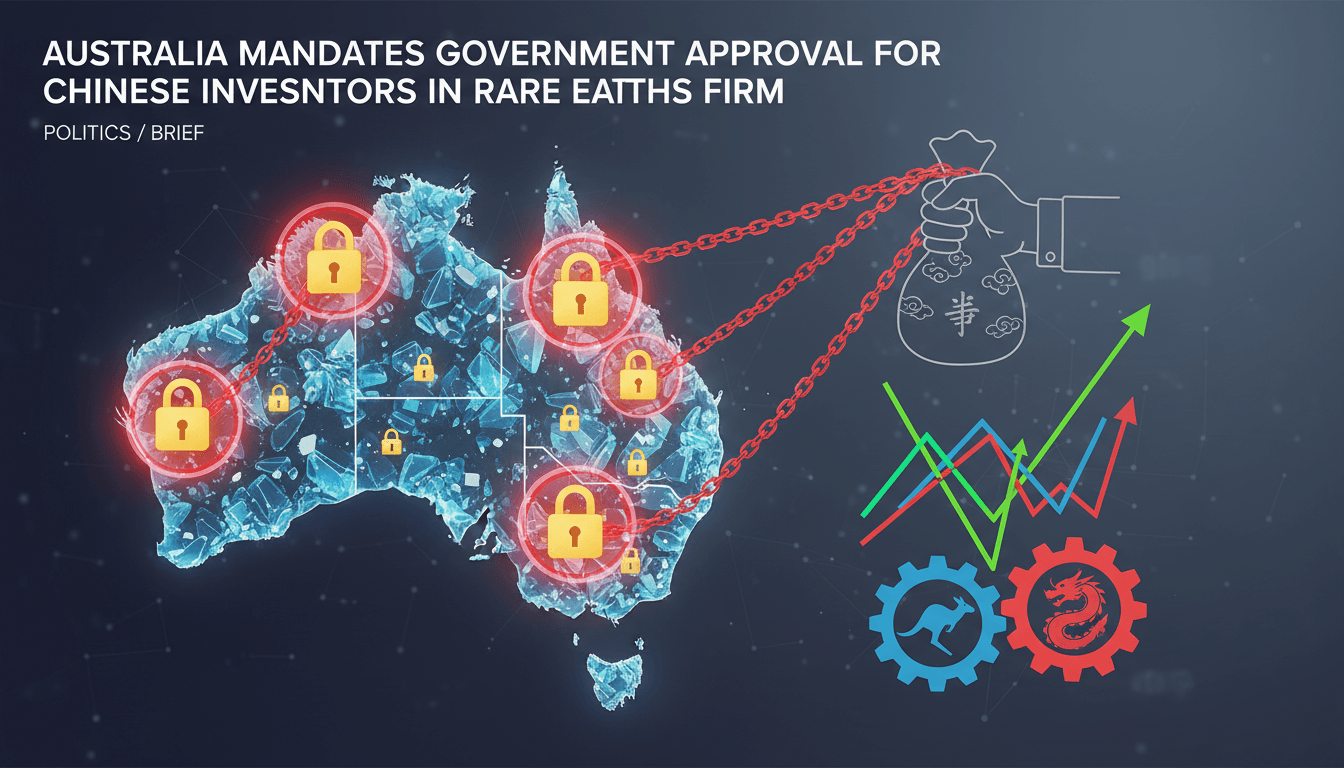
What happened
Australia has mandated that Chinese investors in a rare earths firm obtain government approval before selling their shares. This decision reflects the government's commitment to preventing the sale of shares to related parties, amid ongoing concerns about foreign influence in critical industries. The requirement specifically targets two parties involved in the investment.
This regulatory action follows previous orders for these investors to divest their holdings, indicating a tightening grip on foreign investments in strategic sectors. The Australian government is taking decisive steps to ensure that transactions do not compromise national interests.
The Context
The Australian government is increasingly focused on protecting its critical mineral resources, particularly in light of rising tensions regarding foreign investments from China. This regulatory tightening is part of a broader strategy to safeguard national interests and maintain control over essential resources.
The timing of this announcement comes as Australia navigates its complex relationship with China, a key player in the global rare earths market. Stakeholders must consider the implications of these measures on future investments and the overall economic landscape.
Takeaway
Australia's recent regulatory measures indicate a potential shift towards further restrictions on foreign investments in strategic sectors. Observers should watch for potential reactions from Chinese investors and the Chinese government, as these developments could influence future investment dynamics.
Additionally, further regulatory changes in Australia's foreign investment policies may be anticipated, impacting how foreign entities engage with the Australian market. The evolving landscape will require stakeholders to adapt their strategies accordingly.
Regional and international reporting focused on Middle Eastern politics, diplomacy, and economics.
"Asharq Al-Awsat is a Saudi-owned international newspaper reflecting mainstream Gulf political perspectives."
— A47 Editor
Australia Ups Scrutiny of Chinese-Linked Rare Earths Investors
Australia has increased scrutiny of investors linked to China in the rare earths sector, reflecting growing concerns over national security and economic dependency on foreign entities. This move comes amid rising geopolitical tensions and a focus on ...
Pan-Arab news coverage spanning politics, business, sports, and regional affairs.
"Asharq Al-Awsat reflects a broad Arab editorial perspective with strong attention to regional geopolitics."
— A47 Editor
أستراليا تشدّد التدقيق على مستثمرين مرتبطين بالصين في قطاع المعادن النادرة
The Australian Minister of Economy has intensified scrutiny on investors linked to China in a critical rare minerals project after they refused to comply with orders to divest their stakes. This move reflects growing concerns over foreign influence i...
Global markets, investing, and macroeconomics from a premier financial newsroom.
"Bloomberg is respected for in-depth financial reporting and data-driven analysis."
— A47 Editor
Australia Widens Orders on Chinese Investors in Rare Earths Firm
Australia has intensified its scrutiny of Chinese investors in a rare earths mining firm, mandating that two parties obtain government approval before selling their stakes to prevent transactions with related entities. This move reflects ongoing conc...