
Pakistan Saudi Arabia and Turkey sign defense pact to enhance regional security
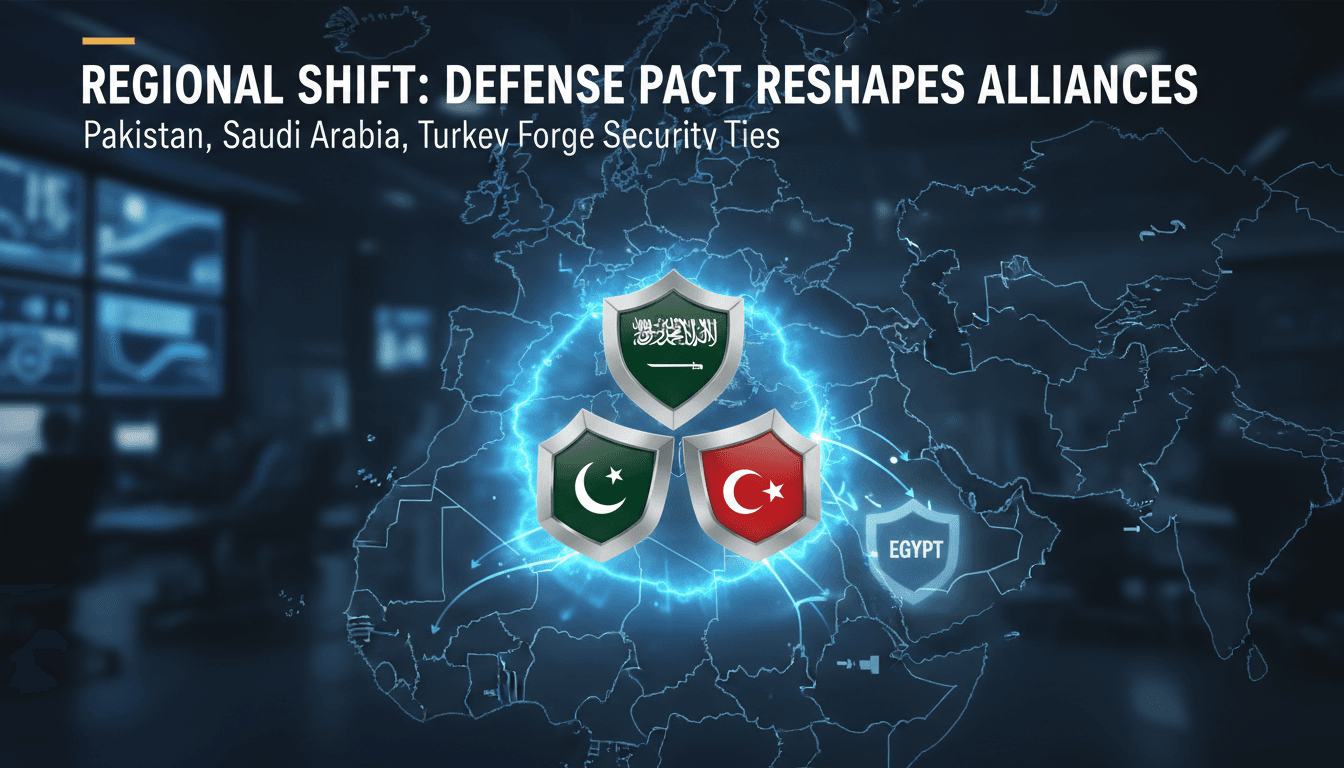
What happened
A defense agreement has been signed between Pakistan, Saudi Arabia, and Turkey, aimed at enhancing regional security. The pact includes provisions for potential expansion to include Egypt, highlighting a collective commitment to military cooperation among the three nations. It is characterized as a "purely defensive" measure, not directed at any specific country.
The agreement emphasizes a collective defense commitment, akin to NATO's Article 5, stating that an attack on one member is considered an attack on all. This framework aims to bolster military capabilities and cooperation among the signatory nations. The pact was formalized near the holy site of Mecca, underscoring its significance in the region.
The Context
This defense pact emerges from a backdrop of evolving security challenges in the Middle East, where regional powers are increasingly seeking collaborative approaches to defense. The involvement of three key nations—Pakistan, Saudi Arabia, and Turkey—highlights their collective commitment to addressing shared security concerns. The timing of this agreement reflects a growing recognition of the need for enhanced military cooperation in a complex geopolitical landscape.
The potential inclusion of Egypt in the pact could further alter the security dynamics in the region. As more countries consider joining, the implications for alliances and military strategies may become more pronounced. This agreement could serve as a catalyst for broader discussions on regional security frameworks.
Takeaway
Looking ahead, the defense pact may lead to stronger military ties among Pakistan, Saudi Arabia, and Turkey, influencing regional stability. The potential inclusion of Egypt is a significant development to watch, as it could attract interest from other nations in the region. Reactions from other regional powers will also be crucial in determining the pact's impact on existing alliances and security strategies.
As the geopolitical landscape continues to evolve, this agreement may prompt a reevaluation of defense policies among neighboring countries. The long-term implications of this pact could reshape the security architecture of the Middle East, making it a focal point for future diplomatic engagements.
English-language digital publication covering business, politics, technology, and current affairs.
"The Arabian Post mixes original and syndicated-style coverage with a broad regional and global business-news orientation."
— A47 Editor
Turkey opens Mecca defence pact door to Egypt
Turkey has indicated that Egypt may join the Mecca Joint Defence Agreement, a trilateral security pact with Saudi Arabia and Pakistan that includes a collective defense commitment similar to NATO's Article 5. Turkish Foreign Minister Hakan Fidan stat...
Arabic-language reporting focused on domestic developments in Saudi Arabia.
"Okaz is a mainstream Saudi newspaper that often reflects domestic priorities and official-facing coverage."
— A47 Editor
اتفاقية دفاع تاريخيّة في مكة
The historic 'Makkah Agreement for Joint Defense' was signed between Saudi Arabia, Pakistan, and Turkey near the holy site of the Kaaba, emphasizing a commitment to regional security and stability. The agreement aims to counter threats to the Arab an...
Conservative-leaning political and national coverage.
"The Washington Times is a conservative-leaning newspaper known for its political coverage and advocacy of right-of-center viewpoints."
— A47 Editor
Pakistan says new defense pact with Saudi and Turkey is 'purely defensive' and open to others
Pakistan's foreign minister announced a new defense pact signed with Saudi Arabia and Turkey, emphasizing that the agreement is purely defensive and not aimed at any specific country, while remaining open to other nations in the region.