
Anti-immigrant riots in Belfast expose enduring sectarian tensions in Northern Ireland
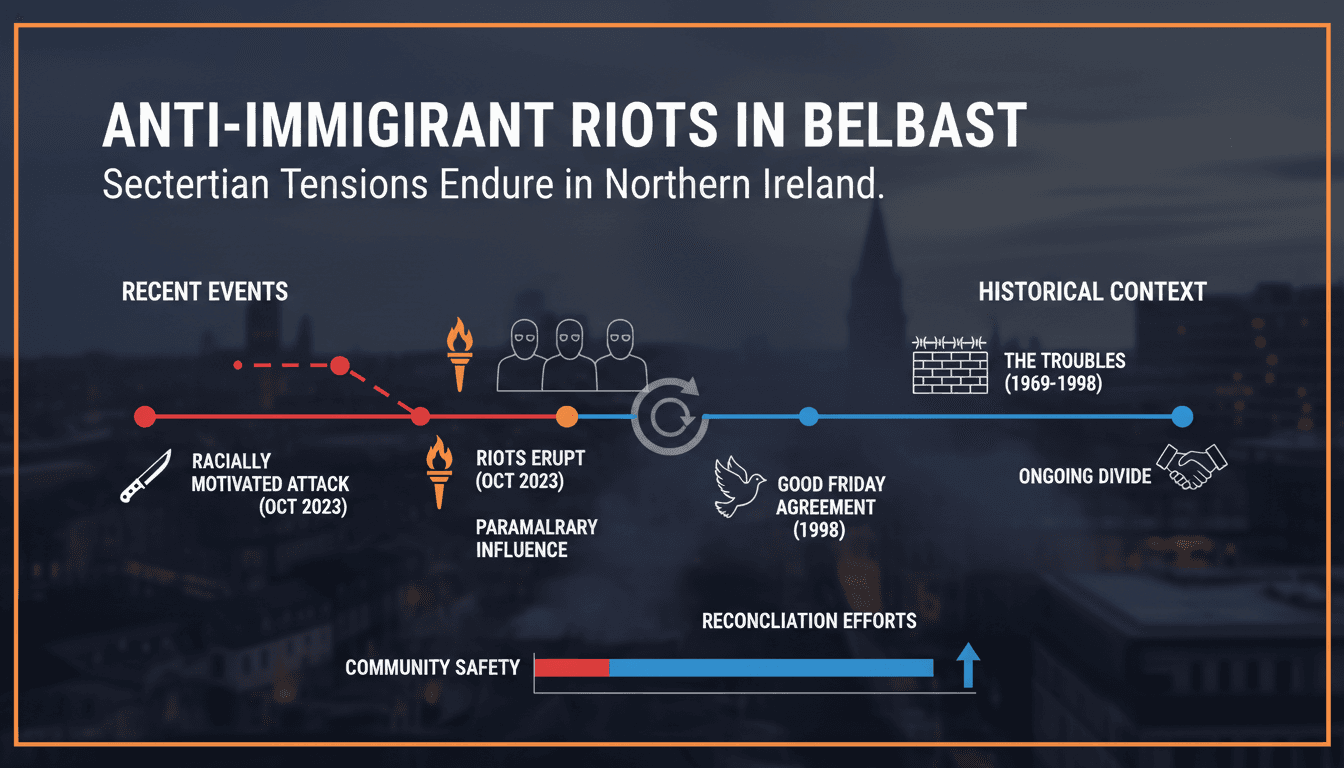
Here's what it means for you.
The recent riots in Belfast underscore the persistent sectarian divisions that continue to affect Northern Ireland. This unrest, ignited by a racially motivated knife attack, raises critical questions about community safety and the influence of loyalist paramilitary groups. As tensions escalate, local authorities may face increased pressure to implement effective integration policies and promote reconciliation efforts. The implications of these events extend beyond immediate violence, potentially impacting political dynamics as upcoming elections approach. Stakeholders must prioritize dialogue to address the underlying grievances that fuel such unrest.
What happened
Riots erupted in Belfast following a racially motivated knife attack, leading to violent disturbances primarily in a nationalist area. The immediate aftermath saw widespread unrest, with anti-immigrant sentiments surfacing prominently during the chaos. This incident has drawn significant attention to the role of loyalist paramilitary groups in the region, raising concerns about their influence on community relations.
The violence reflects a troubling pattern of sectarian strife that has plagued Northern Ireland for decades. As the situation unfolded, it became clear that the attack was not an isolated incident but rather a symptom of deeper societal issues.
The Context
The riots are part of a long legacy of sectarian violence in Northern Ireland, rooted in the historical conflict known as the Troubles. The disturbances occurred against a backdrop of union jacks and loyalist murals, which symbolize the ongoing tensions between communities. Residents and academics have noted that these events highlight persistent grievances and provocations within the local population.
The influence of loyalist paramilitary groups remains a critical factor in understanding the current climate. Their presence and activities contribute to the volatility of community relations, making it essential for policymakers to address these dynamics.
Takeaway
The situation in Belfast emphasizes the urgent need for ongoing dialogue and reconciliation efforts to bridge deep-seated divisions. As tensions remain high, community leaders and policymakers must engage in meaningful discussions to prevent further violence. Monitoring the response from local authorities regarding community safety and integration policies will be crucial in the coming weeks.
Additionally, the political ramifications of these events could shape the landscape as elections approach. Stakeholders should remain vigilant to the evolving situation and its potential impact on Northern Ireland's future.
Pan-Arab news coverage spanning politics, business, sports, and regional affairs.
"Asharq Al-Awsat reflects a broad Arab editorial perspective with strong attention to regional geopolitics."
— A47 Editor
أعمال شغب بلفاست توقظ إرث الانقسام الطائفي في آيرلندا الشمالية
Days of anti-immigration violence in Belfast have highlighted how three decades of turmoil in Northern Ireland continue to shape daily life. The unrest reflects deep-seated sectarian divisions that persist in the region, indicating a troubling resurg...
24/7 international news from a French perspective in multiple languages.
"France 24 is viewed as a globally focused outlet with balanced coverage and a European perspective."
— A47 Editor
Belfast anti-immigrant riots show long legacy of sectarian violence
Anti-immigrant riots erupted in Belfast, Northern Ireland, following a violent stabbing attack on June 8, 2026, which left a man in his 40s severely injured. The incident has been linked to a long-standing history of sectarian violence in the region,...
International coverage from The Guardian's global desks.
"The Guardian is known for its progressive editorial stance and in-depth analysis."
— A47 Editor
Belfast riots trigger renewed scrutiny over loyalist paramilitary influence
Violent riots erupted in Belfast following a brutal knife attack on June 8, 2026, which left a man in his 40s severely injured. The unrest, marked by the presence of union jacks and loyalist murals, highlights the ongoing tensions in a nationalist ar...