
Iran's military leadership overhaul signals aggressive stance amid stalled US negotiations
What happened
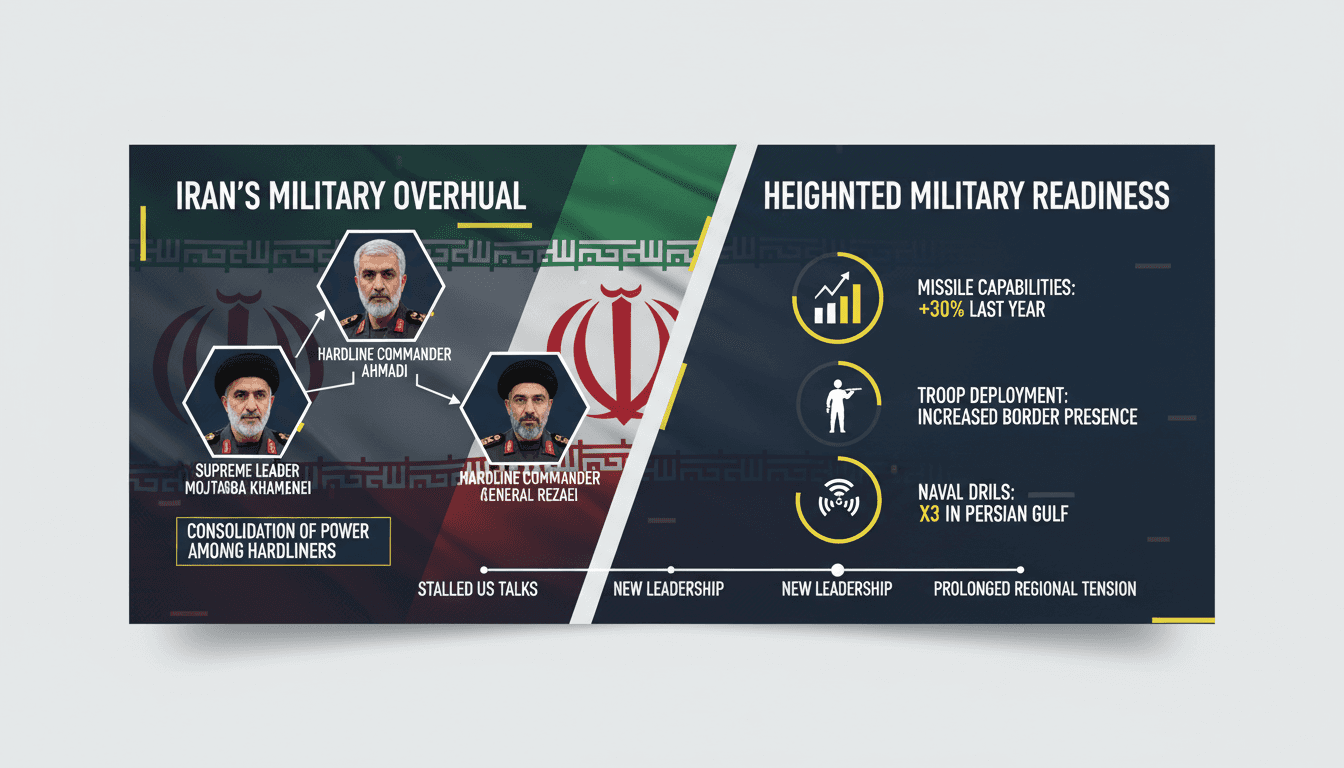
Iran has recently undergone a significant overhaul of its military leadership, appointing six hardline commanders to key positions. This shift is a direct response to stalled negotiations with the U.S. and reflects a strategic pivot towards a more aggressive military stance. The changes signal Tehran's readiness to confront external pressures rather than pursue diplomatic resolutions.
The appointments come amid ongoing discussions regarding a peace deal, which have seen little progress. As Iran's military strategy evolves, the focus appears to be shifting towards enhancing offensive capabilities. This development underscores the hard-liners' commitment to maintaining a defiant posture in the face of international scrutiny.
The Context
The leadership changes in Iran are indicative of a broader trend where hard-liners are consolidating power amid increasing tensions with the U.S. and Israel. Mojtaba Khamenei's appointments highlight a strategic decision to prioritize military readiness over diplomatic engagement. The backdrop of stalled negotiations has created an environment where military preparedness is viewed as essential.
Iran's military leadership now includes veterans with extensive operational experience, suggesting a shift towards a more experienced and potentially aggressive command structure. As the U.S. and Israel continue to exert pressure on Iran, the implications of these changes could lead to heightened military confrontations in the region.
Takeaway
The trajectory of Iran's military strategy suggests an escalation in military readiness and a potential for extended conflict. Observers should monitor further military appointments and any shifts in Iran's operational capabilities. Additionally, reactions from the U.S. and Israel will be crucial in understanding the evolving dynamics of this situation.
As tensions rise, the likelihood of a swift resolution appears low, indicating a prolonged period of instability in the region. Stakeholders should remain vigilant as the situation develops, particularly regarding Iran's military posture and its implications for international relations.
English-language digital publication covering business, politics, technology, and current affairs.
"The Arabian Post mixes original and syndicated-style coverage with a broad regional and global business-news orientation."
— A47 Editor
Iran sharpens military posture as US talks stall
Iran has intensified its military posture by appointing hardline commanders and enhancing offensive capabilities as negotiations with the United States remain stalled, indicating a shift towards a prolonged confrontation in the Gulf region. Supreme L...
Conservative-leaning political and national coverage.
"The Washington Times is a conservative-leaning newspaper known for its political coverage and advocacy of right-of-center viewpoints."
— A47 Editor
Hard-liners in Iran remain defiant despite peace rumblings
High-profile hard-liners in Iran, closely aligned with Supreme Leader Mojtaba Khamenei, have expressed defiance against U.S. and Israeli pressures, despite indications of a potential peace deal being brokered by mediators. This stance reflects a broa...
Global political, business, and cultural coverage from WSJ international desks.
"The Wall Street Journal offers extensive international reporting with a reputation for financial insight and a center-right editorial stance."
— A47 Editor
Iran’s Mysterious Ruler Signals a Hard Line on Trump With New Leadership
Mojtaba Khamenei has restructured Iran's security leadership, asserting control over the government following the onset of conflict, signaling a hardline stance towards U.S. President Trump. This overhaul reflects Khamenei's intent to consolidate pow...