
U.S. military loses 45 MQ-9 Reaper drones amid ongoing conflict with Iran
What happened
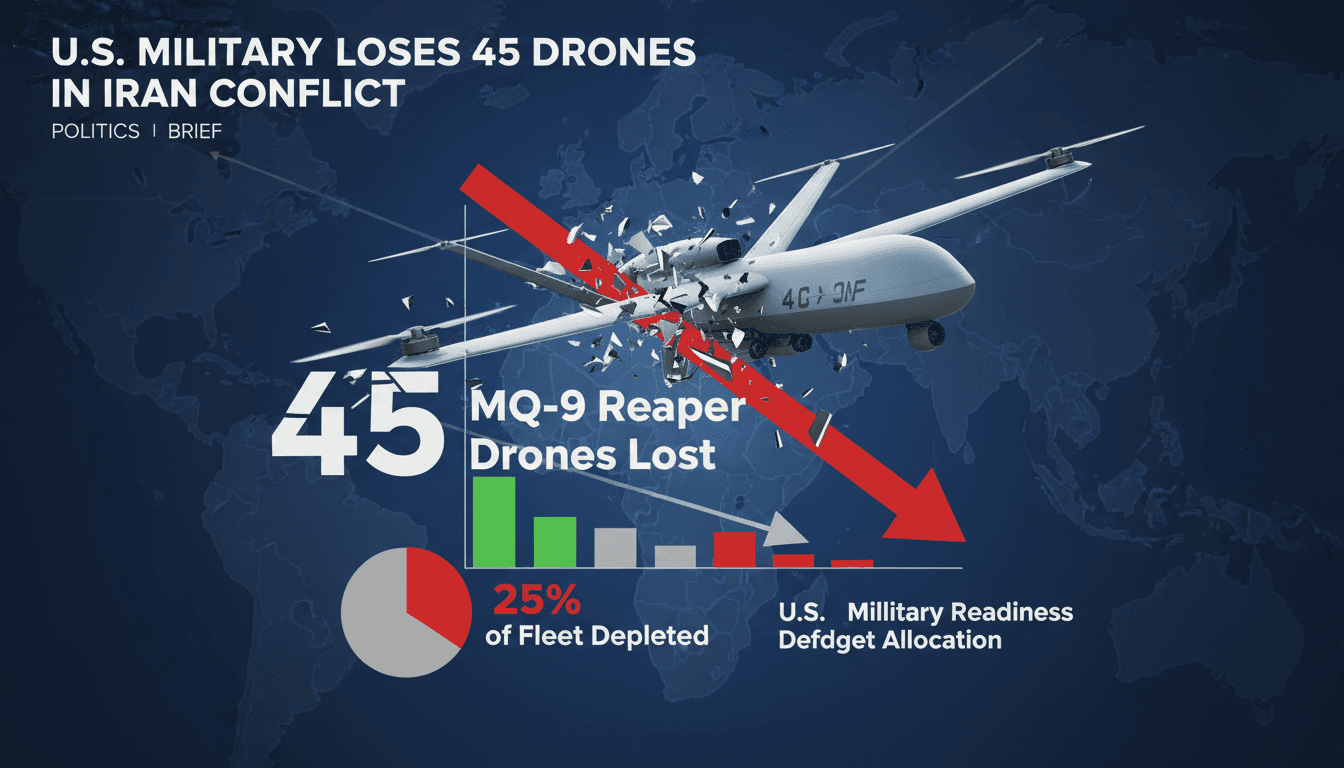
The U.S. military has reported the loss of 45 MQ-9 Reaper drones, which accounts for approximately 25% of its fleet. This significant depletion is attributed to the ongoing conflict with Iran, where military operations have intensified. Each drone is valued between $30 million and $50 million, highlighting the substantial financial impact of these losses on the military budget.
The loss of these drones not only affects operational capabilities but also raises concerns about the time required to replace them. The ongoing conflict has led to sustained operational losses, further straining U.S. military resources.
The Context
The MQ-9 Reaper is a critical asset for U.S. military operations, providing surveillance and strike capabilities. The ongoing conflict with Iran has created a challenging environment for military operations, leading to increased risks and losses. As the U.S. continues to engage in this conflict, the depletion of drone assets may necessitate strategic adjustments.
Replacing the lost drones could take years, which may significantly affect military readiness. The financial implications of these losses are substantial, potentially influencing future defense budgets and resource allocation.
Takeaway
As the conflict with Iran continues, the U.S. military may need to reassess its drone deployment strategies in light of these losses. The operational and financial challenges posed by the loss of 45 MQ-9 Reaper drones could lead to shifts in military strategy and resource management. Observers should watch for updates on the replenishment of U.S. drone capabilities and any potential changes in military operations in the region.
Pan-Arab news coverage spanning politics, business, sports, and regional affairs.
"Asharq Al-Awsat reflects a broad Arab editorial perspective with strong attention to regional geopolitics."
— A47 Editor
من «ريبر» إلى «ثاد»... الحرب مع إيران تستنزف ترسانة أميركا
The ongoing conflict with Iran has significantly depleted the U.S. military arsenal, with Washington reportedly losing 45 Reaper drones. The replacement of some of these weapons may take years, highlighting the strain on U.S. resources.
Global business headlines with AI angles.
"General business outlet that frequently covers AI."
— A47 Editor
The Iran War Continues Depleting The U.S.'s Arsenal. It Has Reportedly Lost a Quarter Of Its Reaper Drones.
The U.S. military has reportedly lost at least 45 Reaper drones during the ongoing conflict in Iran, which accounts for approximately a quarter of its total fleet. Each drone is valued between $30 million and $50 million, indicating a significant dep...
Arabic-language coverage of international news and geopolitics.
"RT Arabic is a Russian state-funded outlet often criticized for promoting Kremlin-aligned narratives."
— A47 Editor
الجيش الأمريكي يفقد 25% من أسطول مسيرات MQ9 في الحرب مع إيران
U.S. military sources have revealed that the American army has lost at least 45 MQ-9 Reaper drones during the conflict with Iran, which accounts for approximately 25% of its fleet. This significant loss highlights the challenges faced by the U.S. in ...
Jordanian news and regional updates.
"Roya News is a Jordanian outlet focused on breaking news and local affairs."
— A47 Editor
واشنطن بوست: الجيش الأمريكي فقد 45 مسيّرة خلال حرب إيران
The Washington Post reported that the U.S. military has lost 45 drones during the conflict in Iran, according to American officials. This significant loss highlights the challenges faced by the military in maintaining operational capabilities in host...