
Three anti-slavery activists sentenced to four years in prison in Mauritania
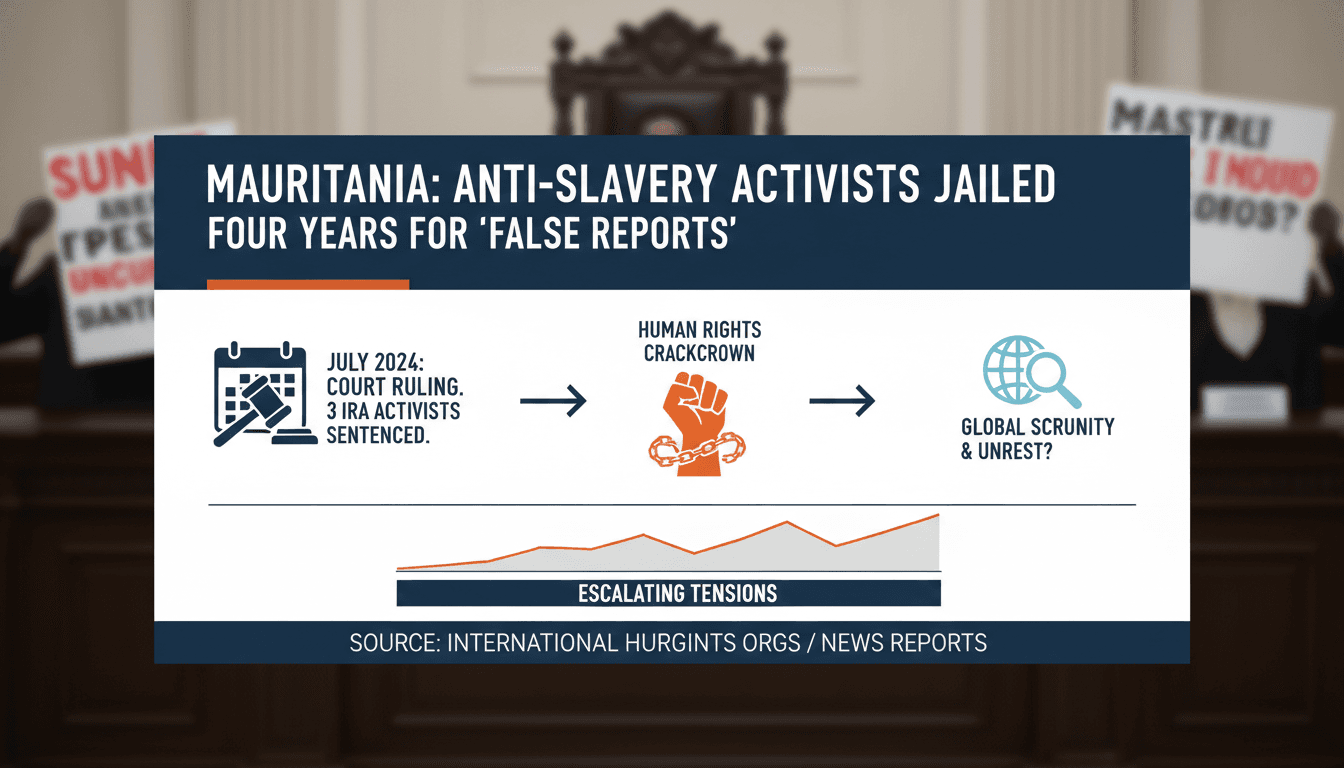
Here's what it means for you.
The sentencing of three anti-slavery activists in Mauritania signals a troubling trend for human rights advocacy in the region. This ruling may deter future efforts to combat slavery and protect human rights, as activists face severe penalties for their work. The implications extend beyond Mauritania, potentially drawing increased scrutiny from international human rights organizations and affecting diplomatic relations. As tensions rise between the Mauritanian government and human rights defenders, the global community will be watching closely. The situation underscores the precarious environment in which activists operate, raising questions about the future of human rights advocacy in the country.
What happened
A court in Nouakchott has sentenced three activists from the anti-slavery movement 'IRA' to four years in prison for making false reports. The activists were accused of falsely reporting a case involving a girl, leading to their conviction. This ruling was issued by the criminal court in the capital on August 14, 2026, and reflects the ongoing challenges faced by those advocating against slavery in Mauritania.
The activists are part of the 'IRA' movement, which is led by Biram Dah Abeid, a prominent figure in the fight against slavery. Their sentencing highlights the severe penalties that activists can face in Mauritania, raising concerns about the treatment of human rights defenders in the country.
The Context
The ruling against the activists comes amid heightened tensions between the Mauritanian government and human rights organizations. The 'IRA' movement has been vocal in its efforts to combat slavery, a practice that persists in various forms within the country. The conviction of these activists is viewed by many as a tactic to suppress dissent and discourage further activism against slavery practices.
The activists were arrested earlier in 2026, and their case has drawn attention from both local and international observers. The implications of this ruling extend beyond the immediate legal consequences, as it may influence the broader landscape of human rights advocacy in Mauritania.
Takeaway
The sentencing of these activists may deter future human rights advocacy in Mauritania, as the ruling sends a clear message about the risks involved in challenging the status quo. Potential appeals by the activists or their supporters could emerge, but the outcome remains uncertain.
International reactions to the ruling will be crucial in determining the next steps for human rights organizations operating in the region. The situation may provoke further unrest among activists as they continue to fight against slavery and advocate for their rights.
Pan-Arab news coverage spanning politics, business, sports, and regional affairs.
"Asharq Al-Awsat reflects a broad Arab editorial perspective with strong attention to regional geopolitics."
— A47 Editor
الحكم بسجن نشطاء مناهضين للعبودية في موريتانيا
Mauritanian judicial authorities sentenced three activists from the anti-slavery movement 'IRA' to four years in prison on Thursday evening. This ruling highlights ongoing tensions surrounding human rights issues in the country, particularly regardin...
Arabic-language coverage of international news and geopolitics.
"RT Arabic is a Russian state-funded outlet often criticized for promoting Kremlin-aligned narratives."
— A47 Editor
موريتانيا.. أحكام بسجن نشطاء مناهضين للعبودية
A court in Nouakchott, Mauritania, sentenced three activists from the anti-slavery movement 'IRA' to four years in prison after convicting them of false reporting. This ruling highlights ongoing tensions surrounding anti-slavery activism in the count...
Pan-Arab political news and analysis.
"Al-Quds Al-Arabi is a London-based Arabic newspaper known for political coverage."
— A47 Editor
الحكم بسجن نشطاء مناهضين للعبودية في موريتانيا
A court in Nouakchott, Mauritania, sentenced three activists from the anti-slavery movement Initiative for the Resurgence of the Abolitionist Movement (IRA) to four years in prison for false reporting. The activists, led by parliament member Biram Da...