
Combative Testimony in Tupac Murder Trial Highlights Gang Code Resistance
Here's what it means for you.
The ongoing trial of Duane Davis could reshape perceptions of accountability in high-profile criminal cases.
Why it matters
This trial highlights the enduring influence of street codes on legal proceedings, impacting how justice is served in cases involving gang affiliations.
What happened (in 30 seconds)
- Combative testimony: James 'Mob James' McDonald resisted identifying individuals involved in Tupac's murder, citing loyalty to the defendant.
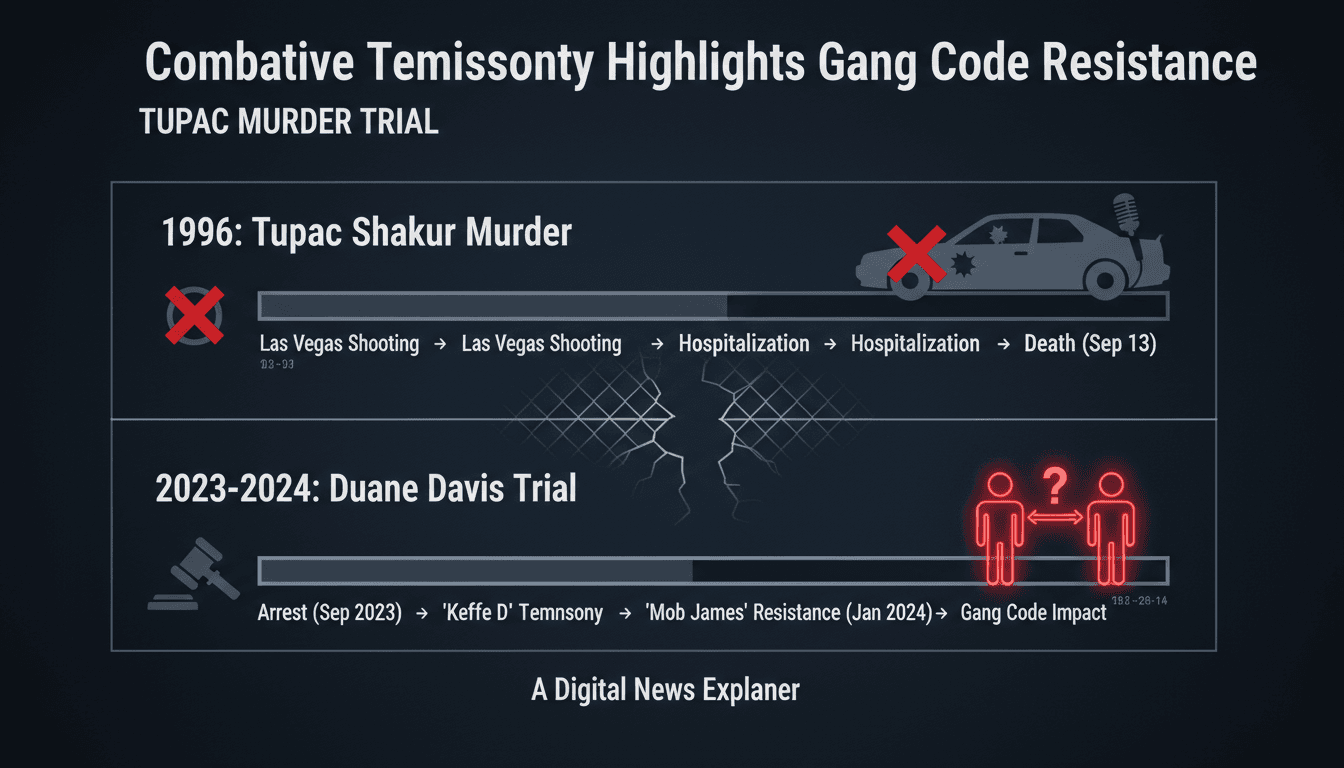
- Trial context: The trial centers on the 1996 drive-by shooting of Tupac Shakur, with Davis accused of orchestrating the attack.
- Ongoing tensions: The courtroom exchanges reflect deep-rooted gang rivalries and the complexities of cooperation with law enforcement.
The context you actually need
- Historical backdrop: Tupac was killed amid intense East Coast-West Coast hip-hop rivalries, with gang affiliations complicating investigations.
- Street code implications: The reluctance to cooperate with authorities stems from a distrust rooted in past injustices, such as the Rodney King incident.
- Decades of silence: It took 30 years for the case to gain traction again, largely due to Davis's public admissions and memoir.
What's really happening
The trial of Duane 'Keffe D' Davis is not just a legal proceeding; it is a reflection of the complex interplay between loyalty, fear, and the quest for justice in a world shaped by gang culture. James 'Mob James' McDonald’s combative testimony underscores the challenges faced by the legal system when dealing with witnesses who are deeply entrenched in street codes. These codes dictate a code of silence, often referred to as "no snitching," which is prevalent in many urban communities, particularly those with gang affiliations.
McDonald’s reluctance to fully cooperate with the prosecution illustrates the psychological and social pressures that individuals face when asked to testify against former associates or rivals. His statement, "I don't want to send him to prison, even though we don't like each other," reveals a complex web of personal loyalty that often supersedes the pursuit of justice. This dynamic is not unique to this case; it is a recurring theme in many criminal trials involving gang-related violence.
The implications of this trial extend beyond the courtroom. It raises questions about the effectiveness of the justice system in addressing crimes rooted in gang culture. The historical context of Tupac's murder, occurring during a time of heightened gang violence and rivalry, adds layers of complexity to the case. The fact that it took 30 years for the case to be revisited highlights systemic failures in addressing such crimes, often leaving victims' families without closure.
Moreover, the trial has reignited discussions about the cultural impact of hip-hop and its relationship with violence. As the trial unfolds, it serves as a reminder of the unresolved issues from the 1990s, including the societal factors that contribute to gang violence and the challenges of breaking the cycle of silence and retaliation.
As the courtroom drama continues, the focus will likely shift to how the defense will navigate these street codes and whether alternative suspects will be considered. The outcome of this trial could set precedents for future cases involving similar dynamics, influencing how law enforcement and the legal system approach gang-related crimes.
Who feels it first (and how)
- Legal professionals: Attorneys and judges involved in high-profile criminal cases may need to adapt strategies to address street code influences.
- Victims' families: Families of victims in gang-related violence may experience renewed hope or frustration depending on trial outcomes.
- Hip-hop community: Artists and fans may feel the cultural implications of the trial, impacting public perception of the genre and its history.
What to watch next
- Witness testimonies: Continued combative or evasive testimonies could influence the trial's direction and public perception of gang culture.
- Media coverage: How the media portrays the trial may affect public opinion and discussions around accountability in gang-related crimes.
- Legal precedents: The outcome could set new legal standards for handling cases involving street codes and gang affiliations.
The trial is ongoing, with testimonies revealing deep-rooted gang loyalties.
The case will draw further media attention, influencing public discourse on gang violence and accountability.
The final verdict and its implications for future cases involving similar dynamics remain uncertain.
Frequently Asked Questions
- Why it matters?
- This trial highlights the enduring influence of street codes on legal proceedings, impacting how justice is served in cases involving gang affiliations.
- What happened (in 30 seconds)?
- Combative testimony: James 'Mob James' McDonald resisted identifying individuals involved in Tupac's murder, citing loyalty to the defendant. Trial context: The trial centers on the 1996 drive-by shooting of Tupac Shakur, with Davis accused of orchestrating the attack. Ongoing tensions: The courtroom exchanges reflect deep-rooted gang rivalries and the complexities of cooperation with law enforcement.
- What's really happening?
- The trial of Duane 'Keffe D' Davis is not just a legal proceeding; it is a reflection of the complex interplay between loyalty, fear, and the quest for justice in a world shaped by gang culture. James 'Mob James' McDonald’s combative testimony underscores the challenges faced by the legal system when dealing with witnesses who are deeply entrenched in street codes. These codes dictate a code of silence, often referred to as "no snitching," which is prevalent in many urban communities, particular
- Who feels it first (and how)?
- Legal professionals: Attorneys and judges involved in high-profile criminal cases may need to adapt strategies to address street code influences. Victims' families: Families of victims in gang-related violence may experience renewed hope or frustration depending on trial outcomes. Hip-hop community: Artists and fans may feel the cultural implications of the trial, impacting public perception of the genre and its history.
- What to watch next?
- Witness testimonies: Continued combative or evasive testimonies could influence the trial's direction and public perception of gang culture. Media coverage: How the media portrays the trial may affect public opinion and discussions around accountability in gang-related crimes. Legal precedents: The outcome could set new legal standards for handling cases involving street codes and gang affiliations.
International coverage of politics, culture, and current affairs.
"BBC News is widely regarded as a reputable international news organization, known for its impartial tone and public service mandate."
— A47 Editor
Witness gets combative in Tupac murder trial - 'I don't want to send him to prison'
During the ongoing trial of Duane 'Keffe D' Davis for the 1996 murder of rapper Tupac Shakur, a witness became combative, expressing reluctance to provide testimony that could lead to Davis's imprisonment. This incident highlights the complexities an...
Top international stories selected by The Guardian editors.
"The Guardian is known for its progressive editorial stance and in-depth analysis."
— A47 Editor
Tupac Shakur trial: lawyers share full account of killing as witnesses still refuse to testify
The trial of Duane 'Keffe D' Davis, a 63-year-old former gang leader, has commenced in Las Vegas, marking a significant moment in the nearly 30-year investigation into the murder of rapper Tupac Shakur. Prosecutors accuse Davis of being the orchestra...
Comprehensive coverage of Middle Eastern and global issues.
"Al Jazeera is a prominent voice from the Global South, especially the Middle East, with an emphasis on underreported stories."
— A47 Editor
Tupac Shakur murder trial begins thirty years after his death
The trial of Duane 'Keffe D' Davis, a former gang leader, has commenced in Las Vegas, marking the first prosecution related to the murder of rapper Tupac Shakur nearly 30 years after his death in 1996. Davis, who has pleaded not guilty, is accused of...
News across North, Central, and South America including politics and economics.
"France 24 is viewed as a globally focused outlet with balanced coverage and a European perspective."
— A47 Editor
30 years after fatal shooting, Tupac's murder trial underway in Nevada
The murder trial of Duane 'Keffe D' Davis, a former gang leader, has commenced in Las Vegas, nearly 30 years after the fatal shooting of rapper Tupac Shakur in 1996. Prosecutors allege that Davis orchestrated the drive-by shooting as an act of reveng...
Arts, film, music, pop culture, and media criticism.
"The Guardian is known for its progressive editorial stance and in-depth analysis, often exploring the cultural impact of entertainment."
— A47 Editor
Tupac Shakur murder trial: gang leader plotted killing to avenge beating of nephew, court hears
The trial of Duane “Keffe D” Davis, a former gang leader, has commenced in Las Vegas, where he faces charges for orchestrating the 1996 murder of rapper Tupac Shakur. Prosecutors allege that Davis planned the drive-by shooting in retaliation for an a...
International coverage from The Guardian's global desks.
"The Guardian is known for its progressive editorial stance and in-depth analysis."
— A47 Editor
Tupac Shakur murder trial: gang leader plotted killing to avenge beating of nephew, court hears
The trial of Duane “Keffe D” Davis, a former gang leader, has commenced in Las Vegas, where he faces charges for orchestrating the 1996 murder of rapper Tupac Shakur. Prosecutors allege that Davis planned the drive-by shooting in retaliation for an a...
Global news coverage with extensive reporting on Middle Eastern conflicts and geopolitics.
"Al Jazeera is a Qatar-based broadcaster known for wide regional coverage and alternative perspectives."
— A47 Editor
‘Truth or fiction’: US trial of Tupac Shakur’s accused killer begins
The trial of Duane 'Keffe D' Davis, a former gang leader, has commenced in Las Vegas, where he is accused of orchestrating the 1996 murder of rapper Tupac Shakur. This marks the first prosecution related to Shakur's death nearly 30 years after the dr...
Comprehensive coverage of Middle Eastern and global issues.
"Al Jazeera is a prominent voice from the Global South, especially the Middle East, with an emphasis on underreported stories."
— A47 Editor
‘Truth or fiction’: US trial of Tupac Shakur’s accused killer begins
The trial of Duane 'Keffe D' Davis, a former gang leader, has commenced in Las Vegas, where he is accused of orchestrating the 1996 murder of rapper Tupac Shakur. This marks the first prosecution related to Shakur's death nearly 30 years after the dr...