
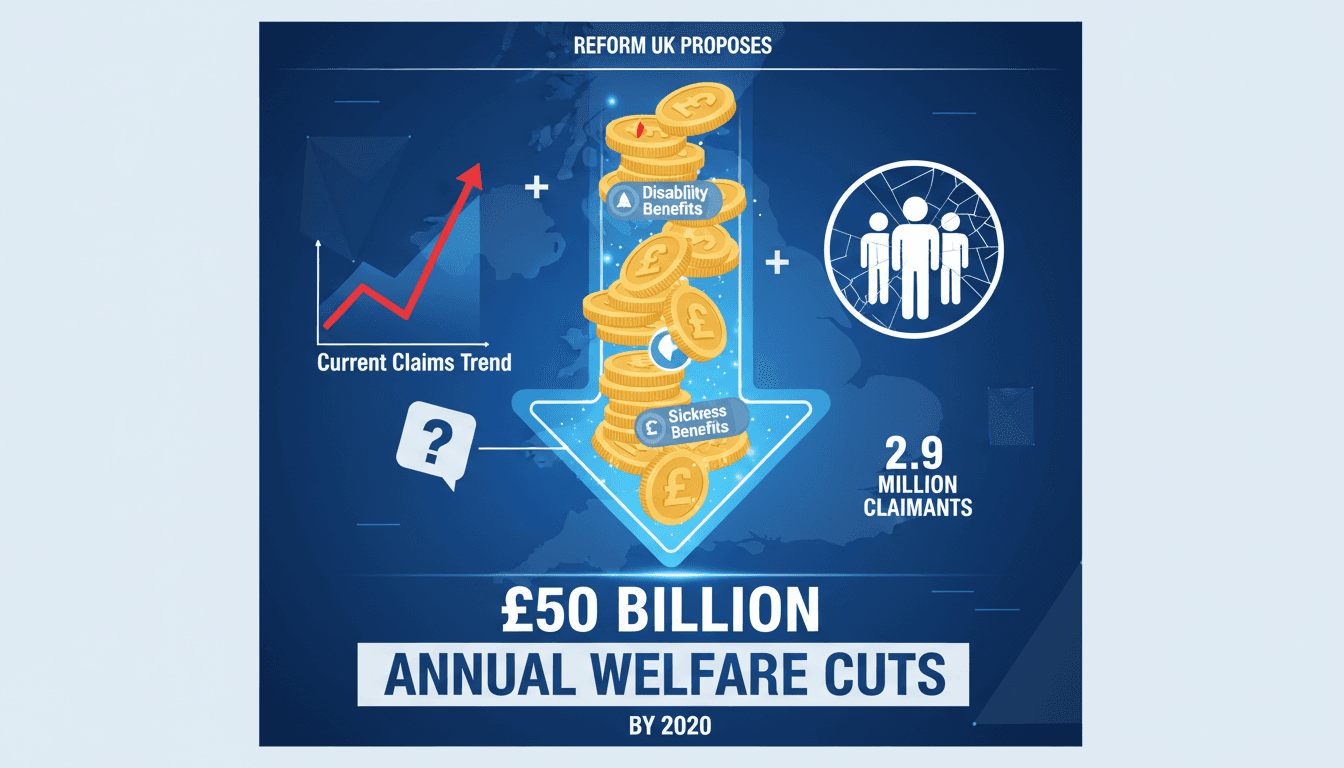
Reform UK Proposes £50 Billion Annual Welfare Cuts by 2030
Why it matters
This proposal could reshape the welfare landscape, affecting millions of claimants and altering the relationship between employment and social support.
What happened (in 30 seconds)
- Reform UK announced plans on August 16, 2026, to cut over £50 billion from annual welfare spending by 2030.
- The proposal includes replacing Personal Independence Payments (PIP) and Universal Credit health elements with a new Health Security Allowance for severe cases.
- Critics argue that these cuts could lead to increased poverty and hardship for vulnerable populations, including children.
The context you actually need
- Reform UK's platform emphasizes welfare reduction as a solution to rising claims for disability and sickness benefits amid fiscal pressures.
- The proposed Health Security Allowance would limit support to only the most severe cases, fundamentally changing how benefits are distributed.
- Charities and opposition parties have raised alarms about the potential for increased poverty and the adequacy of support for those in need.
What's really happening
Reform UK's proposal to overhaul the welfare system is rooted in a broader critique of existing benefits, which the party claims foster dependency rather than support independence. The plan aims to replace Personal Independence Payments (PIP) and Universal Credit health-related payments with a new Health Security Allowance, which would only cover the most severe cases of disability and illness. This shift is designed to save over £50 billion annually by 2030, with £22 billion expected from reforms to disability benefits alone.
The proposed changes also include a requirement for larger employers to provide sick pay insurance for their employees, modeled after the Dutch system. This would be offset by cuts to National Insurance contributions, effectively shifting some of the financial burden from the state to employers. The rationale behind these reforms is to create a more sustainable welfare system that protects pension commitments while addressing the rising costs associated with disability and sickness claims.
However, the ambitious nature of these proposals has drawn significant criticism. Labour has labeled the plans as "fantasy economics," arguing that they rely on stripping essential support from disabled individuals. Charities have warned that the cuts could lead to increased poverty and destitution for hundreds of thousands, including children. The Conservatives have also expressed skepticism, calling the proposals "half-baked" and a distraction from more pressing issues.
The implications of these reforms extend beyond immediate financial savings. They could fundamentally alter the social safety net in the UK, shifting the responsibility for health-related financial support from the government to individuals and employers. This could lead to a more precarious situation for those who rely on these benefits, as the new system may not adequately cover the needs of all claimants. The proposed changes reflect a significant ideological shift in how welfare is perceived and managed, prioritizing fiscal responsibility over comprehensive support.
Who feels it first (and how)
- Disabled individuals: Those currently receiving PIP or Universal Credit health elements will face immediate changes to their benefits.
- Employers: Larger companies will need to adapt to new sick pay insurance requirements, impacting their financial planning.
- Charities and social services: Organizations supporting vulnerable populations may see increased demand for their services as government support diminishes.
What to watch next
- Public response: Monitor how the public and advocacy groups react to the proposed changes, as widespread opposition could influence political outcomes.
- Legislative developments: Keep an eye on parliamentary discussions and potential amendments to the proposal, which could alter its final form.
- Economic indicators: Watch for shifts in employment rates and poverty levels, as these will reflect the real-world impact of the proposed welfare cuts.
Reform UK aims to save over £50 billion annually by 2030 through welfare cuts.
The proposals will face significant opposition from various political and social groups.
The exact impact on poverty levels and employment rates remains to be seen as the proposals are debated.
Frequently Asked Questions
- Why it matters?
- This proposal could reshape the welfare landscape, affecting millions of claimants and altering the relationship between employment and social support.
- What happened (in 30 seconds)?
- Reform UK announced plans on August 16, 2026, to cut over £50 billion from annual welfare spending by 2030. The proposal includes replacing Personal Independence Payments (PIP) and Universal Credit health elements with a new Health Security Allowance for severe cases. Critics argue that these cuts could lead to increased poverty and hardship for vulnerable populations, including children.
- What's really happening?
- Reform UK's proposal to overhaul the welfare system is rooted in a broader critique of existing benefits, which the party claims foster dependency rather than support independence. The plan aims to replace Personal Independence Payments (PIP) and Universal Credit health-related payments with a new Health Security Allowance, which would only cover the most severe cases of disability and illness. This shift is designed to save over £50 billion annually by 2030, with £22 billion expected from refor
- Who feels it first (and how)?
- Disabled individuals: Those currently receiving PIP or Universal Credit health elements will face immediate changes to their benefits. Employers: Larger companies will need to adapt to new sick pay insurance requirements, impacting their financial planning. Charities and social services: Organizations supporting vulnerable populations may see increased demand for their services as government support diminishes.
- What to watch next?
- Public response: Monitor how the public and advocacy groups react to the proposed changes, as widespread opposition could influence political outcomes. Legislative developments: Keep an eye on parliamentary discussions and potential amendments to the proposal, which could alter its final form. Economic indicators: Watch for shifts in employment rates and poverty levels, as these will reflect the real-world impact of the proposed welfare cuts.
Political developments, policy debates, elections, and government affairs in the UK.
"BBC News is widely regarded as a reputable international news organization, known for its impartial tone and public service mandate."
— A47 Editor
Could Reform really cut £50bn in welfare?
Reform UK has unveiled plans to overhaul the welfare system, targeting savings of over £50 billion annually. This initiative is part of a broader strategy to address economic challenges and reshape public services, with a detailed proposal expected t...
International coverage from The Guardian's global desks.
"The Guardian is known for its progressive editorial stance and in-depth analysis."
— A47 Editor
Huge number of children would fall into poverty under Reform’s benefits plans, say campaigners
Campaigners have raised alarms over Reform UK's proposal to cut £50 billion from the UK welfare budget, warning that such measures could push hundreds of thousands of children into poverty and destitution. The plans include significant reductions in ...
International coverage from The Guardian's global desks.
"The Guardian is known for its progressive editorial stance and in-depth analysis."
— A47 Editor
Reform accused of targeting the most vulnerable with £50bn benefit cut
Reform UK has announced plans to implement £50 billion in cuts to benefits, primarily targeting disabled individuals and foreign nationals, including EU citizens with settled status. Robert Jenrick, the party's finance spokesperson, has described the...