
Gulf States Initiate Diplomatic Efforts to Resolve Iran Shipping Crisis
Here's what it means for you.
If you rely on global energy markets, the outcome of this diplomatic initiative could directly impact your costs and supply chains.
Why it matters
The Strait of Hormuz is a critical chokepoint for global oil shipments, and any disruption can lead to significant fluctuations in energy prices.
What happened (in 30 seconds)
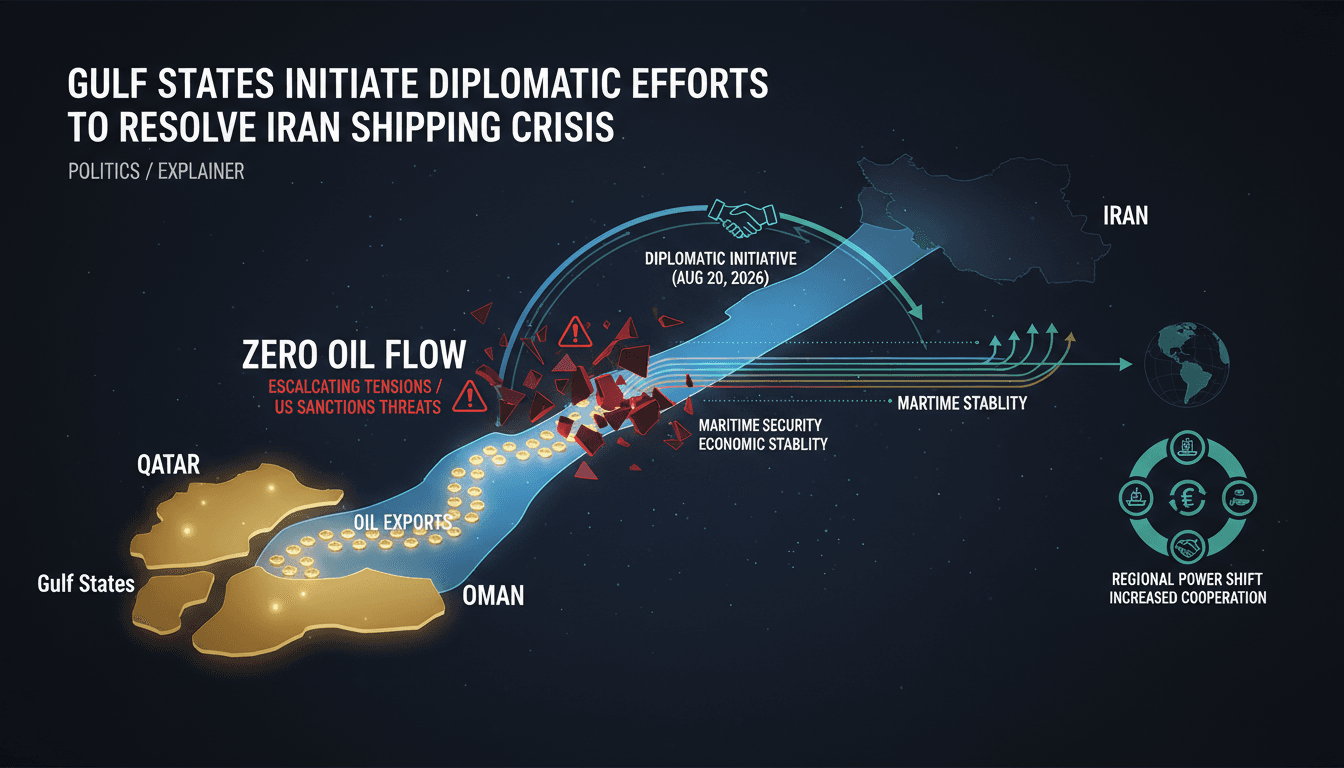
- On August 20, 2026, Gulf states led by Qatar and Oman launched a diplomatic initiative to mediate between Iran and the U.S. to restore shipping through the Strait of Hormuz.
- Iran's oil exports have reportedly fallen to zero, exacerbating economic strain amid ongoing sanctions and regional tensions.
- Saudi Arabia and Egypt are actively involved, coordinating with Qatar to enhance regional security and navigation safety.
The context you actually need
- Iran is facing severe economic challenges, including inflation and energy shortages, due to prolonged sanctions and conflict.
- U.S. President Donald Trump has threatened maximum economic pressure on Iran, which has heightened tensions and affected regional shipping.
- Gulf states are exploring alternatives to mitigate risks to energy exports, including potential pipeline projects that bypass the Strait of Hormuz.
What's really happening
The diplomatic initiative spearheaded by Qatar and Oman is a strategic response to escalating tensions in the Arabian Gulf, particularly concerning Iran's role in regional shipping and its economic struggles. The Strait of Hormuz, through which approximately 20% of the world's oil passes, has become a focal point of geopolitical conflict. With Iran's oil exports reportedly at zero, the country is under immense economic pressure, leading to inflation and currency devaluation. This dire situation has prompted Iranian officials to express a willingness to engage in dialogue, albeit framed as a negotiation rather than a surrender.
The U.S. has taken a hardline stance, with President Trump warning of severe consequences for any entities that assist Iran. This rhetoric has intensified fears of further conflict, leading Gulf states to seek a diplomatic resolution. Qatar's Prime Minister has emphasized the importance of mediation, while Oman and Japan have called for adherence to international maritime law, highlighting the need for a political solution to ensure freedom of navigation.
The involvement of Saudi Arabia and Egypt in these discussions underscores the broader regional implications of the Iran deadlock. Both countries are keen to stabilize the situation, as any disruption in the Strait of Hormuz could lead to increased oil prices and economic instability across the region. The ongoing talks are seen as positive steps toward de-escalation, although no immediate agreement has been reached.
As these diplomatic efforts unfold, the potential for a resolution could lead to a gradual reopening of shipping lanes, which would alleviate some of the economic pressures currently faced by Iran and stabilize global energy markets. However, the situation remains fluid, and the outcomes of these negotiations will significantly influence regional dynamics and international energy prices.
Who feels it first (and how)
- Energy companies: Fluctuations in oil prices will directly impact profitability and operational costs.
- Consumers: Increased energy prices could lead to higher costs for goods and services.
- Logistics and shipping sectors: Disruptions in shipping routes may cause delays and increased shipping costs.
- Investors: Volatility in regional financial markets could affect investment strategies and risk assessments.
What to watch next
- Progress in diplomatic talks: Continued negotiations between Gulf states and Iran will indicate the likelihood of restoring shipping through the Strait of Hormuz.
- Oil price fluctuations: Monitor global oil prices for signs of stability or volatility as the situation evolves.
- Regional security developments: Any escalation in military tensions could derail diplomatic efforts and impact shipping routes.
Iran's oil exports are currently at zero, and the country is under severe economic strain.
Continued diplomatic efforts will take place, with varying degrees of success.
The long-term impact on global energy prices and regional stability remains uncertain.
Frequently Asked Questions
- Why it matters?
- The Strait of Hormuz is a critical chokepoint for global oil shipments, and any disruption can lead to significant fluctuations in energy prices.
- What happened (in 30 seconds)?
- On August 20, 2026, Gulf states led by Qatar and Oman launched a diplomatic initiative to mediate between Iran and the U.S. to restore shipping through the Strait of Hormuz. Iran's oil exports have reportedly fallen to zero, exacerbating economic strain amid ongoing sanctions and regional tensions. Saudi Arabia and Egypt are actively involved, coordinating with Qatar to enhance regional security and navigation safety.
- What's really happening?
- The diplomatic initiative spearheaded by Qatar and Oman is a strategic response to escalating tensions in the Arabian Gulf, particularly concerning Iran's role in regional shipping and its economic struggles. The Strait of Hormuz, through which approximately 20% of the world's oil passes, has become a focal point of geopolitical conflict. With Iran's oil exports reportedly at zero, the country is under immense economic pressure, leading to inflation and currency devaluation. This dire situation
- Who feels it first (and how)?
- Energy companies: Fluctuations in oil prices will directly impact profitability and operational costs. Consumers: Increased energy prices could lead to higher costs for goods and services. Logistics and shipping sectors: Disruptions in shipping routes may cause delays and increased shipping costs. Investors: Volatility in regional financial markets could affect investment strategies and risk assessments.
- What to watch next?
- Progress in diplomatic talks: Continued negotiations between Gulf states and Iran will indicate the likelihood of restoring shipping through the Strait of Hormuz. Oil price fluctuations: Monitor global oil prices for signs of stability or volatility as the situation evolves. Regional security developments: Any escalation in military tensions could derail diplomatic efforts and impact shipping routes.
UAE-based English-language newspaper covering regional politics, economics, and global affairs.
"The National reflects Emirati policy perspectives while maintaining international editorial standards."
— A47 Editor
Gulf states push to break Iran deadlock and reopen Strait of Hormuz
Gulf states are intensifying efforts to resolve the ongoing deadlock with Iran and facilitate the reopening of the strategically vital Strait of Hormuz, a key maritime route for global oil shipments. This push comes amid heightened tensions following...
Conservative-leaning political and national coverage.
"The Washington Times is a conservative-leaning newspaper known for its political coverage and advocacy of right-of-center viewpoints."
— A47 Editor
The Fate of Hormuz: Iranian attacks force Gulf nations to find work-arounds to war-zone waterway
The ongoing crisis in the Strait of Hormuz has prompted Gulf nations to seek alternative routes for oil exports, as Iranian attacks have heightened tensions in this critical maritime passage. This shift aims to alleviate the global supply crunch whil...
Corporate leadership, finance, technology, and market trends.
"Fortune covers financial trends, leadership, and innovation with a pragmatic editorial approach."
— A47 Editor
The global ‘freedom of the seas’ is dying in the Strait of Hormuz—and everyone, everywhere, could pay the tolls
Iran's recent proposal to implement a toll system for ships navigating the Strait of Hormuz has raised significant concerns about the future of maritime trade in this critical waterway, which is vital for global oil transport. This move could lead to...