
Japanese Defense Minister visits Yasukuni Shrine amid regional tensions
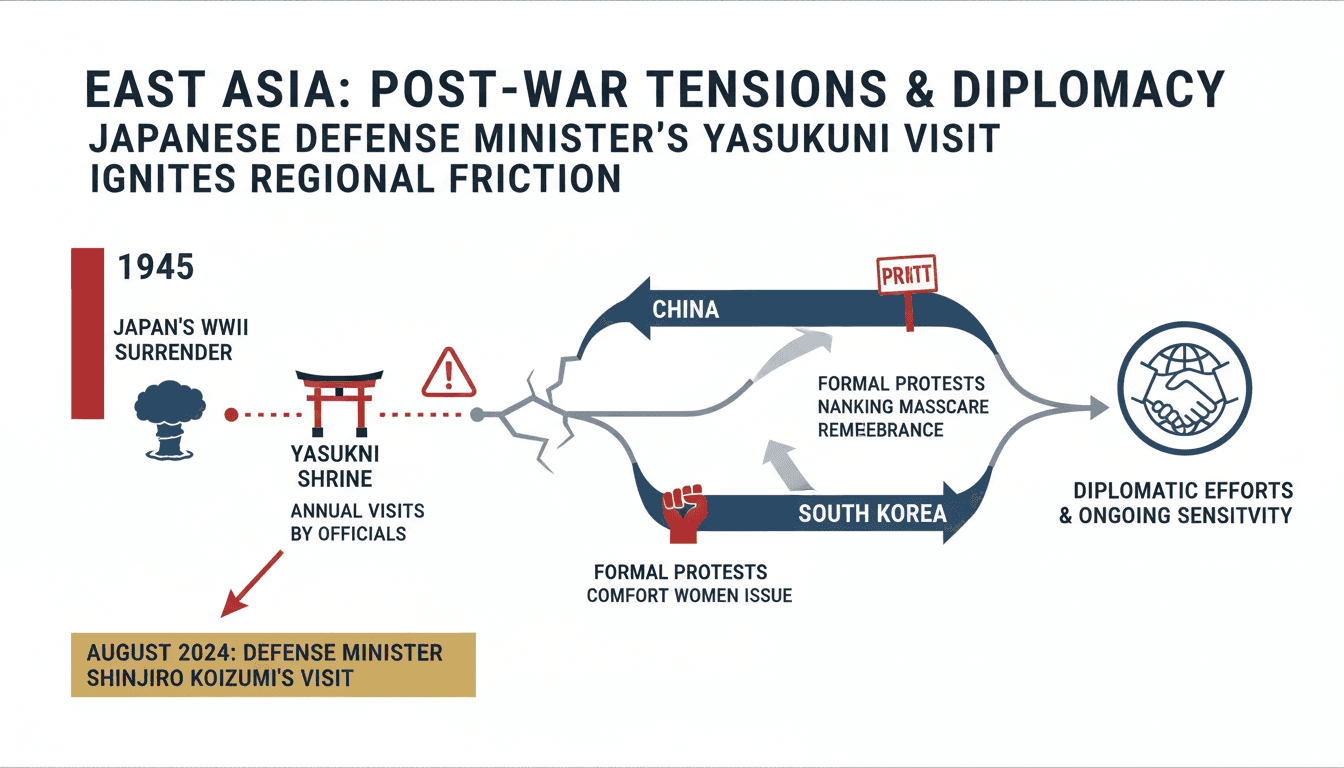
Here's what it means for you.
The visit by Japanese Defense Minister Shinjiro Koizumi to the Yasukuni Shrine underscores the ongoing complexities in Japan's diplomatic relations with its neighbors, particularly China and South Korea. This event, coinciding with a significant historical anniversary, may have implications for regional stability and cooperation. Stakeholders in international relations should closely monitor the responses from both nations as they could influence future diplomatic engagements.
What happened
Japanese Defense Minister Shinjiro Koizumi visited the Yasukuni Shrine on August 15, 2026, marking the 81st anniversary of Japan's surrender in World War II. This visit has reignited tensions with China and South Korea, both of which have expressed strong objections. China lodged a formal protest, labeling the visit a negative action, while South Korea conveyed deep regret and urged Japan to confront its historical actions.
The Yasukuni Shrine is a controversial site that honors approximately 2.5 million Japanese war dead, including 14 convicted war criminals. The timing of Koizumi's visit, aligned with Japan's commemoration of its WWII surrender, has amplified historical sensitivities in East Asia. This event highlights the delicate balance Japan must maintain between honoring its war dead and addressing the grievances of its neighbors.
The Context
The Yasukuni Shrine has long been a flashpoint in Japan's relations with China and South Korea, who view visits by Japanese officials as a denial of Japan's wartime actions. The historical context surrounding the shrine is critical, as it symbolizes Japan's militaristic past and the unresolved issues stemming from World War II. As Japan commemorates its surrender, the sensitivities surrounding this event are magnified, reflecting the complexities of Japan's post-war identity.
The reactions from China and South Korea are indicative of the broader regional dynamics at play. Both nations have historically condemned such visits, viewing them as obstacles to improving diplomatic relations. The ongoing tensions underscore the challenges Japan faces in reconciling its historical narrative with the expectations of its neighbors.
Takeaway
The visit to Yasukuni Shrine by Koizumi is likely to have lasting implications for Japan's diplomatic relations with China and South Korea. As both nations respond to this event, the potential for further diplomatic fallout remains high. Future visits by Japanese officials to the shrine will be closely scrutinized, as they could either exacerbate tensions or provide opportunities for dialogue.
Stakeholders should watch for any shifts in diplomatic rhetoric from China and South Korea in the wake of this visit. The ongoing sensitivity surrounding the shrine will continue to influence Japan's regional interactions and its efforts to navigate complex historical grievances.
Arabic-language coverage of political affairs and current events.
"Okaz political coverage typically follows mainstream Saudi framing on national and regional affairs."
— A47 Editor
زيارة تثير الغضب.. وزير الدفاع الياباني في ضريح ياسوكوني
Japanese Defense Minister Shinjiro Koizumi visited the Yasukuni Shrine in Tokyo, a site viewed by China and South Korea as a symbol of Japan's wartime aggression, coinciding with the 81st anniversary of Japan's surrender in World War II. This visit h...
Global news coverage with extensive reporting on Middle Eastern conflicts and geopolitics.
"Al Jazeera is a Qatar-based broadcaster known for wide regional coverage and alternative perspectives."
— A47 Editor
Japanese minister visits shrine to war dead, angering China, South Korea
Japanese Defence Minister Koizumi visited the Yasukuni Shrine on August 15, marking the 81st anniversary of Japan's surrender in World War II. This visit has sparked anger from China and South Korea, as the shrine is viewed as a symbol of Japan's mil...
Comprehensive coverage of Middle Eastern and global issues.
"Al Jazeera is a prominent voice from the Global South, especially the Middle East, with an emphasis on underreported stories."
— A47 Editor
Japanese minister visits shrine to war dead, angering China, South Korea
Japanese Defence Minister Koizumi visited the Yasukuni Shrine on August 15, marking the 81st anniversary of Japan's surrender in World War II. This visit has sparked anger from China and South Korea, as the shrine is viewed as a symbol of Japan's mil...
Global markets, investing, and macroeconomics from a premier financial newsroom.
"Bloomberg is respected for in-depth financial reporting and data-driven analysis."
— A47 Editor
China Protests Japan PM, Defense Minister’s Yasukuni Actions
China has formally protested against Japan following Prime Minister Sanae Takaichi's offering to the Yasukuni shrine and Defense Minister Shinjiro Koizumi's visit to the shrine on the anniversary of Japan's surrender in World War II. This action has ...