
Board of Peace Confirms No Israeli Withdrawal from Gaza Without Hamas Disarmament
Why it matters
The agreement sets a precedent for future negotiations in conflict zones, impacting regional stability and economic prospects.
What happened (in 30 seconds)
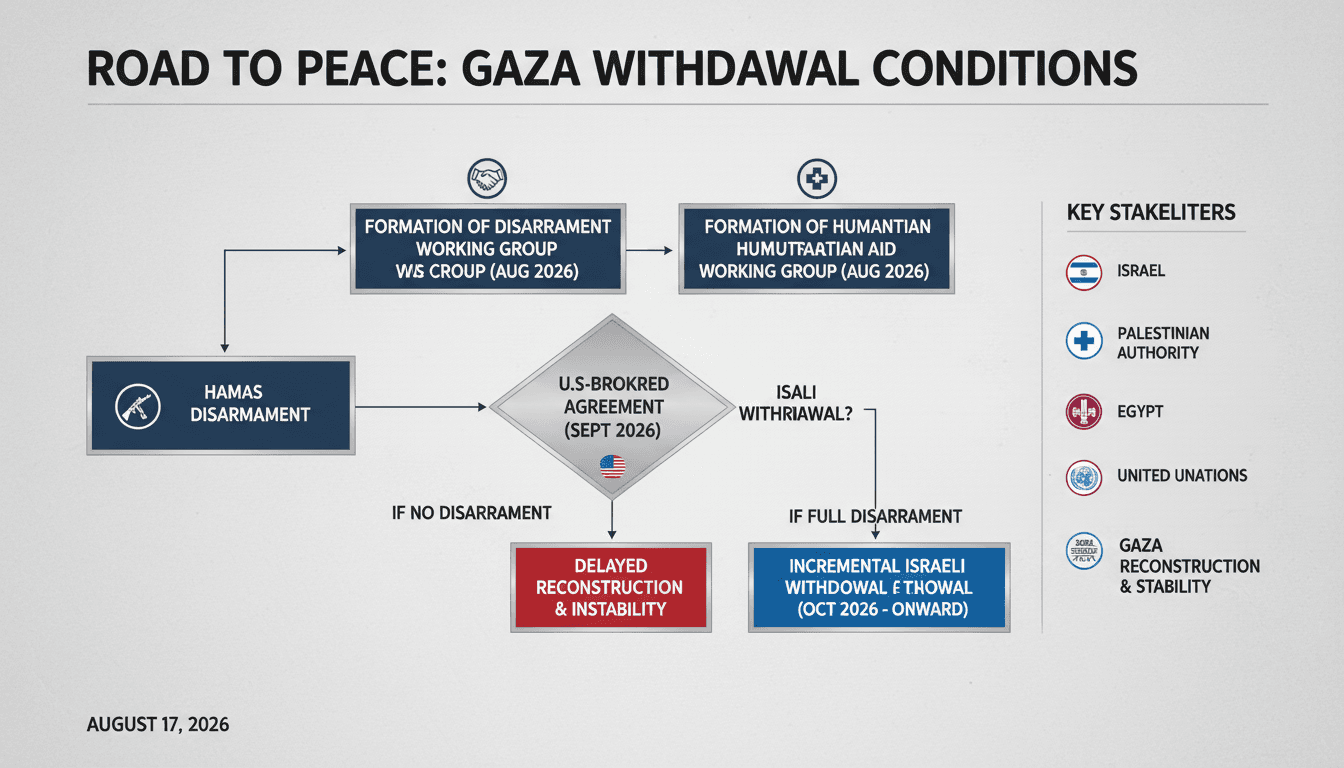
- On August 17, 2026, a Board of Peace official confirmed that Israel will not withdraw from Gaza until Hamas is fully disarmed.
- Two working groups have been established: one for disarmament and another for addressing humanitarian needs.
- U.S. envoy Jared Kushner is coordinating oversight to ensure compliance with the disarmament requirements.
The context you actually need
- This agreement is part of a broader U.S.-brokered plan to end the Gaza conflict, which includes multiple phases like ceasefires and reconstruction efforts.
- Israel's insistence on disarmament before any territorial concessions reflects longstanding security concerns and the desire to prevent future conflicts.
- Regional actors, including Egypt, are emphasizing the importance of implementing all phases of the plan to ensure stability.
What's really happening
The recent announcement from the Board of Peace marks a significant step in the ongoing negotiations surrounding the Gaza Strip. The agreement stipulates that Israel will not withdraw its military presence until Hamas is fully disarmed, which includes the destruction of tunnels and the removal of weapons. This condition aligns with Israel's long-standing security policy, which prioritizes the prevention of rearmament by militant groups.
The formation of two working groups—one focused on disarmament and the other on humanitarian needs—indicates a dual approach to the conflict. While the disarmament group will work on ensuring that Hamas relinquishes its weapons, the humanitarian group will address urgent needs such as sanitation and clean water. This dual focus is crucial, as it aims to balance security concerns with the immediate needs of the civilian population in Gaza.
Israeli Prime Minister Benjamin Netanyahu's office has previously confirmed that any reconstruction efforts will be contingent upon Hamas's disarmament. This precondition is not merely a bargaining chip; it reflects a broader strategy to ensure that any future peace is sustainable and that the cycle of violence does not repeat itself. The involvement of U.S. envoy Jared Kushner adds another layer of oversight, as he will coordinate efforts to ensure compliance with the disarmament demands.
The implications of this agreement extend beyond the immediate conflict. The insistence on disarmament before withdrawal could set a precedent for future negotiations in other conflict zones. It signals to regional actors that security concerns will be prioritized in any peace process, potentially influencing how other nations approach their own conflicts.
Moreover, the agreement has economic ramifications. Regional stability in Gaza is crucial for the Gulf economies, particularly for Dubai, which relies on trade and investment flows from the broader Middle East. Delays in reconstruction efforts could hinder economic growth and investor confidence in the region, affecting sectors like real estate and logistics.
Who feels it first (and how)
- Investors in the Gulf region: They may face uncertainty regarding the stability of trade routes and economic growth.
- Humanitarian organizations: They will need to navigate the complexities of aid distribution amid disarmament efforts.
- Local populations in Gaza: They will experience immediate impacts on humanitarian aid and living conditions as disarmament processes unfold.
What to watch next
- Implementation of disarmament: Monitoring how effectively Hamas complies with disarmament demands will be crucial for future negotiations.
- Humanitarian aid distribution: Watch for developments in how aid organizations adapt to the new working group focused on humanitarian needs.
- Regional diplomatic responses: Pay attention to how neighboring countries react to this agreement, as it may influence their own security policies.
Israel will not withdraw from Gaza until Hamas is fully disarmed.
The humanitarian situation in Gaza will remain precarious during the disarmament process.
The timeline for effective disarmament and subsequent Israeli withdrawal remains uncertain.
Frequently Asked Questions
- Why it matters?
- The agreement sets a precedent for future negotiations in conflict zones, impacting regional stability and economic prospects.
- What happened (in 30 seconds)?
- On August 17, 2026, a Board of Peace official confirmed that Israel will not withdraw from Gaza until Hamas is fully disarmed. Two working groups have been established: one for disarmament and another for addressing humanitarian needs. U.S. envoy Jared Kushner is coordinating oversight to ensure compliance with the disarmament requirements.
- What's really happening?
- The recent announcement from the Board of Peace marks a significant step in the ongoing negotiations surrounding the Gaza Strip. The agreement stipulates that Israel will not withdraw its military presence until Hamas is fully disarmed, which includes the destruction of tunnels and the removal of weapons. This condition aligns with Israel's long-standing security policy, which prioritizes the prevention of rearmament by militant groups. The formation of two working groups—one focused on disarma
- Who feels it first (and how)?
- Investors in the Gulf region: They may face uncertainty regarding the stability of trade routes and economic growth. Humanitarian organizations: They will need to navigate the complexities of aid distribution amid disarmament efforts. Local populations in Gaza: They will experience immediate impacts on humanitarian aid and living conditions as disarmament processes unfold.
- What to watch next?
- Implementation of disarmament: Monitoring how effectively Hamas complies with disarmament demands will be crucial for future negotiations. Humanitarian aid distribution: Watch for developments in how aid organizations adapt to the new working group focused on humanitarian needs. Regional diplomatic responses: Pay attention to how neighboring countries react to this agreement, as it may influence their own security policies.
Arabic-language coverage of political affairs and current events.
"Okaz political coverage typically follows mainstream Saudi framing on national and regional affairs."
— A47 Editor
مجلس السلام: لا انسحاب إسرائيلياً من غزة قبل نزع السلاح
A peace council official in Gaza announced that Israel will not withdraw from the region until the destruction of tunnels is completed, emphasizing a shared goal with Israel to disarm Gaza entirely. The agreement includes the formation of two working...
Arabic-language coverage of international news and geopolitics.
"RT Arabic is a Russian state-funded outlet often criticized for promoting Kremlin-aligned narratives."
— A47 Editor
مكتب نتنياهو: اتفاق مع "مجلس السلام" على تشكيل مجموعتي عمل تتولى إحداهما تجريد قطاع غزة من السلاح
The office of Israeli Prime Minister Benjamin Netanyahu announced an agreement with the Peace Council to form two working groups, one of which will focus on disarming the Gaza Strip. This development indicates a strategic move in the ongoing discussi...
Arabic-language coverage of international news and geopolitics.
"RT Arabic is a Russian state-funded outlet often criticized for promoting Kremlin-aligned narratives."
— A47 Editor
أكسيوس: "مجلس السلام" يطالب بانسحاب إسرائيلي من غزة فور بدء نزع سلاح "حماس"
Axios reported that the U.S.-led Peace Council is urging Israel to carry out a 'proper withdrawal of forces' from the Gaza Strip contingent upon Hamas beginning its disarmament process. This development highlights the ongoing international diplomatic...