
Israeli airstrikes in southern Lebanon result in civilian casualties and condemnation from Lebanese leaders
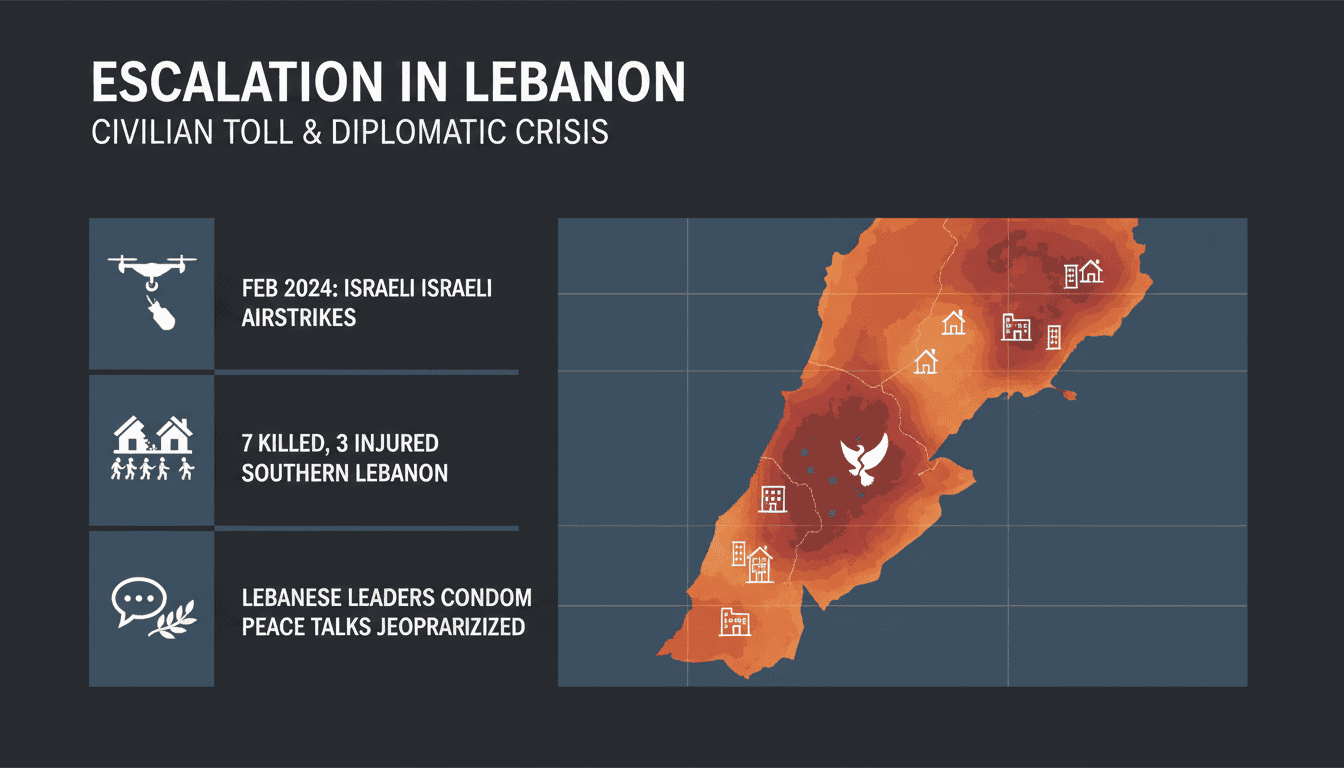
Here's what it means for you.
The recent Israeli airstrikes in southern Lebanon have significant implications for regional stability and ongoing peace negotiations. With seven civilian casualties reported, the incident underscores the human cost of military actions in conflict zones. Lebanese leaders are calling for an end to these aggressive tactics, which could influence international diplomatic efforts aimed at de-escalation. As tensions rise, stakeholders in the region must navigate a precarious landscape where military actions threaten to derail fragile peace talks. The situation demands urgent attention from global powers to prevent further escalation.
What happened
Israeli airstrikes in southern Lebanon on August 15, 2026, resulted in the deaths of seven civilians and injuries to three others, according to Lebanese sources. The strikes targeted areas such as Nabatieh and Ansar, which the Israeli military claimed housed Hezbollah infrastructure. This military action has drawn immediate condemnation from Lebanese officials, who emphasize the need to protect civilian lives during military operations.
The airstrikes have heightened tensions in a region already fraught with instability. The loss of civilian life has prompted calls for Israel to cease its aggressive actions, as the situation continues to escalate.
The Context
The recent airstrikes reflect broader regional instability and the fragile nature of peace negotiations between Israel and Lebanon. Lebanese President Joseph Aoun and Prime Minister Nawaf Salam have publicly condemned the strikes, arguing that they undermine both stability and ongoing diplomatic efforts. Their statements highlight the importance of respecting Lebanese sovereignty and the need for state control over military actions.
As the conflict unfolds, the potential for further violence looms large, raising concerns about the impact on civilian populations. The international community is closely monitoring the situation, as it may necessitate diplomatic interventions to restore peace.
Takeaway
The situation in southern Lebanon remains precarious, with significant implications for regional stability and peace negotiations. Observers should monitor further Israeli military actions and the responses from Lebanese officials, as these developments could shape the trajectory of the conflict. Additionally, international diplomatic efforts aimed at de-escalating tensions will be crucial in preventing a broader crisis.
As the situation evolves, the focus will be on how both local and international stakeholders respond to the escalating violence and civilian casualties.
Pan-Arab political news and analysis.
"Al-Quds Al-Arabi is a London-based Arabic newspaper known for political coverage."
— A47 Editor
عون وسلام: التصعيد الإسرائيلي يقوض مساعي تثبيت الاستقرار في جنوب لبنان
Lebanese President Joseph Aoun and Prime Minister Nawaf Salam warned of the consequences of Israeli escalation in southern Lebanon, stating that repeated Israeli attacks undermine negotiations and efforts to stabilize the region. They condemned the a...
Pan-Arab news coverage spanning politics, business, sports, and regional affairs.
"Asharq Al-Awsat reflects a broad Arab editorial perspective with strong attention to regional geopolitics."
— A47 Editor
عون يعدّ الانتهاكات الإسرائيلية «رسالةً للمسار التفاوضي»... وبري يضعها برسم رعاة المفاوضات
Lebanese President Joseph Aoun condemned the ongoing Israeli violations in southern Lebanon, emphasizing their detrimental impact on stability efforts in the region. Prime Minister Nawaf Salam echoed these sentiments, highlighting the need for intern...
Arabic-language coverage of political affairs and current events.
"Okaz political coverage typically follows mainstream Saudi framing on national and regional affairs."
— A47 Editor
رئيس وزراء لبنان: التصعيد الإسرائيلي يقوّض مساعي تثبيت الاستقرار
Lebanese Prime Minister Nawaf Salam warned that the recent Israeli escalation in Nabatieh, Ansar, and surrounding villages, characterized by airstrikes and heavy shelling, poses a serious threat to stability in the south. He emphasized that the seven...