
US Imposes Sanctions on ICC Officials Amidst International Backlash
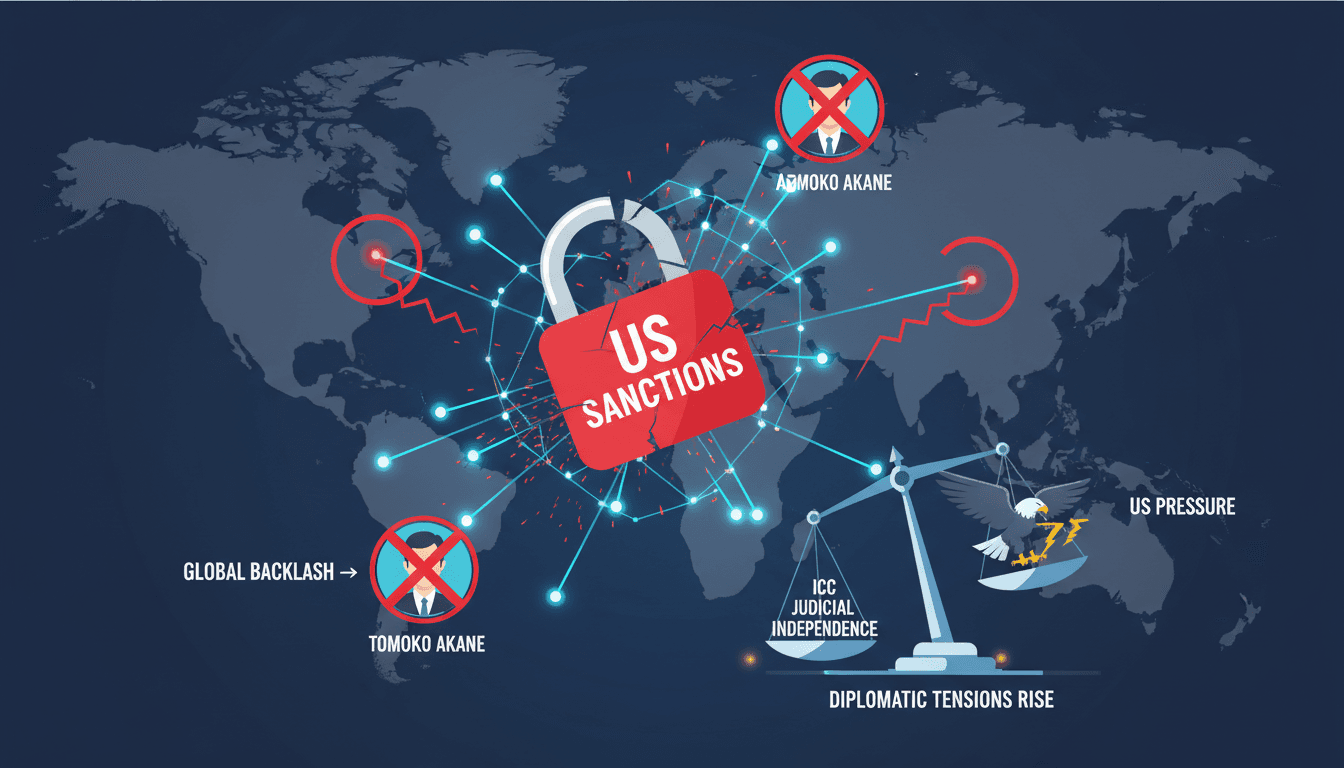
Here's what it means for you.
If you work in international law or human rights advocacy, these sanctions could reshape your operational landscape.
Why it matters
These sanctions challenge the integrity of international judicial systems, potentially affecting global legal norms.
What happened (in 30 seconds)
- On August 18, 2026, the US imposed sanctions on ICC President Tomoko Akane and senior trial lawyer Abdoulaye Seye.
- The ICC condemned these sanctions as a 'flagrant attack' on judicial independence, receiving support from the EU, Japan, and France.
- This marks a broader trend of US opposition to the ICC, with nine judges now sanctioned, raising concerns about the court's future.
The context you actually need
- The US has historically opposed the ICC, having signed but not ratified the Rome Statute, which established the court.
- Tensions escalated under the Trump administration, particularly regarding investigations involving US allies, including Israel.
- Recent sanctions are part of a larger campaign against the ICC's jurisdiction, with diplomatic pressure leading to withdrawals from the court by countries like Chad and Venezuela.
What's really happening
The recent sanctions against ICC President Tomoko Akane and senior trial lawyer Abdoulaye Seye represent a significant escalation in the ongoing conflict between the United States and the International Criminal Court (ICC). This conflict is rooted in the ICC's investigations into alleged war crimes and human rights violations involving non-member states, particularly those allied with the US, such as Israel. The Trump administration's sanctions, which bar these officials from entering the US and engaging in financial transactions, are framed as a response to what the US perceives as overreach by the ICC.
The ICC's condemnation of these sanctions highlights a critical tension: the balance between national sovereignty and international judicial authority. The court, based in The Hague, operates under the premise that it can hold individuals accountable for serious crimes, regardless of their nationality or the state’s consent. This principle has been met with resistance from the US, which argues that the ICC undermines its sovereignty and the sovereignty of its allies.
The sanctions are not just punitive; they are also strategic. By targeting ICC officials, the US aims to deter the court from pursuing cases that could implicate American citizens or allies. This tactic has broader implications for international law, as it raises questions about the enforceability of international norms when powerful nations choose to disregard them. The support from the European Union, Japan, and France for the ICC underscores a growing divide between the US and its traditional allies regarding the role of international institutions.
Moreover, the sanctions have sparked legal challenges, with human rights organizations filing lawsuits against the Trump administration. This legal pushback indicates that the sanctions may not only provoke diplomatic tensions but also lead to significant legal battles in US courts, potentially impacting the administration's ability to impose similar measures in the future.
As the ICC continues to assert its independence, the implications of these sanctions extend beyond the court itself. They signal a potential shift in how international law is perceived and enforced, particularly in relation to powerful states. The ongoing diplomatic tensions could lead to further isolation of the US in international legal matters, as countries rally around the ICC's mandate to uphold justice.
Who feels it first (and how)
- International lawyers and human rights advocates: Increased scrutiny and potential challenges in their work due to heightened tensions.
- Governments of ICC member states: Pressure to align with either the US or the ICC, impacting diplomatic relations.
- Judges and prosecutors at the ICC: Directly affected by sanctions, which may hinder their ability to operate effectively.
What to watch next
- Legal challenges in US courts: The outcomes could redefine the limits of US sanctions and their applicability to international bodies.
- Responses from ICC member states: Watch for shifts in support or opposition to the ICC, particularly from nations under US influence.
- Future US foreign policy: Changes in administration could lead to a reevaluation of the US stance on international judicial institutions.
The ICC has condemned the sanctions and received support from several countries.
Increased diplomatic tensions between the US and ICC member states.
The long-term impact on the ICC's operations and its relationship with non-member states.
Frequently Asked Questions
- Why it matters?
- These sanctions challenge the integrity of international judicial systems, potentially affecting global legal norms.
- What happened (in 30 seconds)?
- On August 18, 2026, the US imposed sanctions on ICC President Tomoko Akane and senior trial lawyer Abdoulaye Seye. The ICC condemned these sanctions as a 'flagrant attack' on judicial independence, receiving support from the EU, Japan, and France. This marks a broader trend of US opposition to the ICC, with nine judges now sanctioned, raising concerns about the court's future.
- What's really happening?
- The recent sanctions against ICC President Tomoko Akane and senior trial lawyer Abdoulaye Seye represent a significant escalation in the ongoing conflict between the United States and the International Criminal Court (ICC). This conflict is rooted in the ICC's investigations into alleged war crimes and human rights violations involving non-member states, particularly those allied with the US, such as Israel. The Trump administration's sanctions, which bar these officials from entering the US and
- Who feels it first (and how)?
- International lawyers and human rights advocates: Increased scrutiny and potential challenges in their work due to heightened tensions. Governments of ICC member states: Pressure to align with either the US or the ICC, impacting diplomatic relations. Judges and prosecutors at the ICC: Directly affected by sanctions, which may hinder their ability to operate effectively.
- What to watch next?
- Legal challenges in US courts: The outcomes could redefine the limits of US sanctions and their applicability to international bodies. Responses from ICC member states: Watch for shifts in support or opposition to the ICC, particularly from nations under US influence. Future US foreign policy: Changes in administration could lead to a reevaluation of the US stance on international judicial institutions.
Global news coverage with extensive reporting on Middle Eastern conflicts and geopolitics.
"Al Jazeera is a Qatar-based broadcaster known for wide regional coverage and alternative perspectives."
— A47 Editor
ICC condemns US sanctions as ‘flagrant attack’ on court’s independence
The International Criminal Court (ICC) has condemned the sanctions imposed by the Trump administration, labeling them a 'flagrant attack' on the court's independence. This condemnation follows a series of actions by the U.S. government aimed at under...
Comprehensive coverage of Middle Eastern and global issues.
"Al Jazeera is a prominent voice from the Global South, especially the Middle East, with an emphasis on underreported stories."
— A47 Editor
ICC condemns US sanctions as ‘flagrant attack’ on court’s independence
The International Criminal Court (ICC) has condemned the sanctions imposed by the Trump administration, labeling them a 'flagrant attack' on the court's independence. This condemnation follows a series of actions by the U.S. government aimed at under...
RT is a Russian state-funded network covering global events from a Russian perspective.
"RT is widely criticized for promoting pro-Kremlin narratives and is considered by many to be a state propaganda outlet."
— A47 Editor
US targets ICC chief in push to ‘dismantle’ court
The United States has imposed sanctions on two senior officials of the International Criminal Court (ICC), including its president, Tomoko Akane, as part of a broader campaign to challenge the court's jurisdiction over non-member states. This action ...
Conservative-leaning coverage of current events.
"Fox News is a highly influential conservative news outlet known for right-leaning political commentary and coverage."
— A47 Editor
Trump administration sanctions sitting president of the International Criminal Court for 'abuses of power'
The Trump administration has imposed sanctions on Tomoko Akane, the sitting president of the International Criminal Court (ICC), and senior prosecutor Abdoulaye Seye, citing alleged abuses of power and jurisdiction disputes as the rationale behind th...
Regional coverage and analysis focused on politics, diplomacy, and business across the Middle East.
"Al-Monitor is known for analytical reporting on Middle East politics and policy developments."
— A47 Editor
US sanctions ICC president, senior trial lawyer in latest attack on court
The United States has imposed sanctions on Tomoko Akane, the president of the International Criminal Court (ICC), and senior trial lawyer Abdoulaye Seye, marking a significant escalation in the Trump administration's ongoing campaign against the ICC,...
Conservative-leaning political and national coverage.
"The Washington Times is a conservative-leaning newspaper known for its political coverage and advocacy of right-of-center viewpoints."
— A47 Editor
U.S. hits ICC president and senior prosecutor with sanctions in another move against the court
The Trump administration has imposed sanctions on Tomoko Akane, president of the International Criminal Court (ICC), and senior prosecutor Abdoulaye Seye, as part of its ongoing efforts to undermine the court, which it accuses of targeting U.S. and I...
24/7 international news from a French perspective in multiple languages.
"France 24 is viewed as a globally focused outlet with balanced coverage and a European perspective."
— A47 Editor
ICC says US sanctions on top court members 'undermine rule of law'
The Trump administration has imposed sanctions on two senior members of the International Criminal Court (ICC), which the court claims undermines the rule of law. This action is part of a broader strategy by the U.S. to challenge the ICC's authority,...
Comprehensive coverage of Middle Eastern and global issues.
"Al Jazeera is a prominent voice from the Global South, especially the Middle East, with an emphasis on underreported stories."
— A47 Editor
US sanctions International Criminal Court president and trial lawyer
The Trump administration has imposed sanctions on the president and a trial lawyer of the International Criminal Court (ICC), intensifying its campaign to undermine the court, which it views as a threat to U.S. sovereignty. This action is part of a b...
Arabic-language coverage of political affairs and current events.
"Okaz political coverage typically follows mainstream Saudi framing on national and regional affairs."
— A47 Editor
واشنطن تفرض عقوبات على رئيسة المحكمة الجنائية الدولية
The U.S. Department of the Treasury announced sanctions today against Tomoko Akane, the Japanese president of the International Criminal Court (ICC), allowing until September 17 for the liquidation of transactions related to her. This move also prohi...
International coverage of politics, culture, and current affairs.
"BBC News is widely regarded as a reputable international news organization, known for its impartial tone and public service mandate."
— A47 Editor
US announces new sanctions on top ICC figures
The Trump administration has announced new sanctions targeting top officials of the International Criminal Court (ICC), reinforcing its commitment to dismantle the court's authority. This move follows previous threats to 'systematically disable' the ...
Top international stories selected by The Guardian editors.
"The Guardian is known for its progressive editorial stance and in-depth analysis."
— A47 Editor
US sanctions international criminal court president and prosecutor
The United States has imposed sanctions on Tomoko Akane, president of the International Criminal Court (ICC), and prosecutor Abdoulaye Seye, who was investigating alleged Israeli war crimes in Gaza. This action was announced by U.S. Secretary of Stat...
News from the United States including domestic politics, society, and culture.
"The Guardian is known for its progressive editorial stance and in-depth analysis, often advocating for social justice, environmental issues, and liberal values."
— A47 Editor
US sanctions international criminal court president and prosecutor
The United States has imposed sanctions on Tomoko Akane, president of the International Criminal Court (ICC), and prosecutor Abdoulaye Seye, who was investigating alleged Israeli war crimes in Gaza. This action was announced by U.S. Secretary of Stat...