
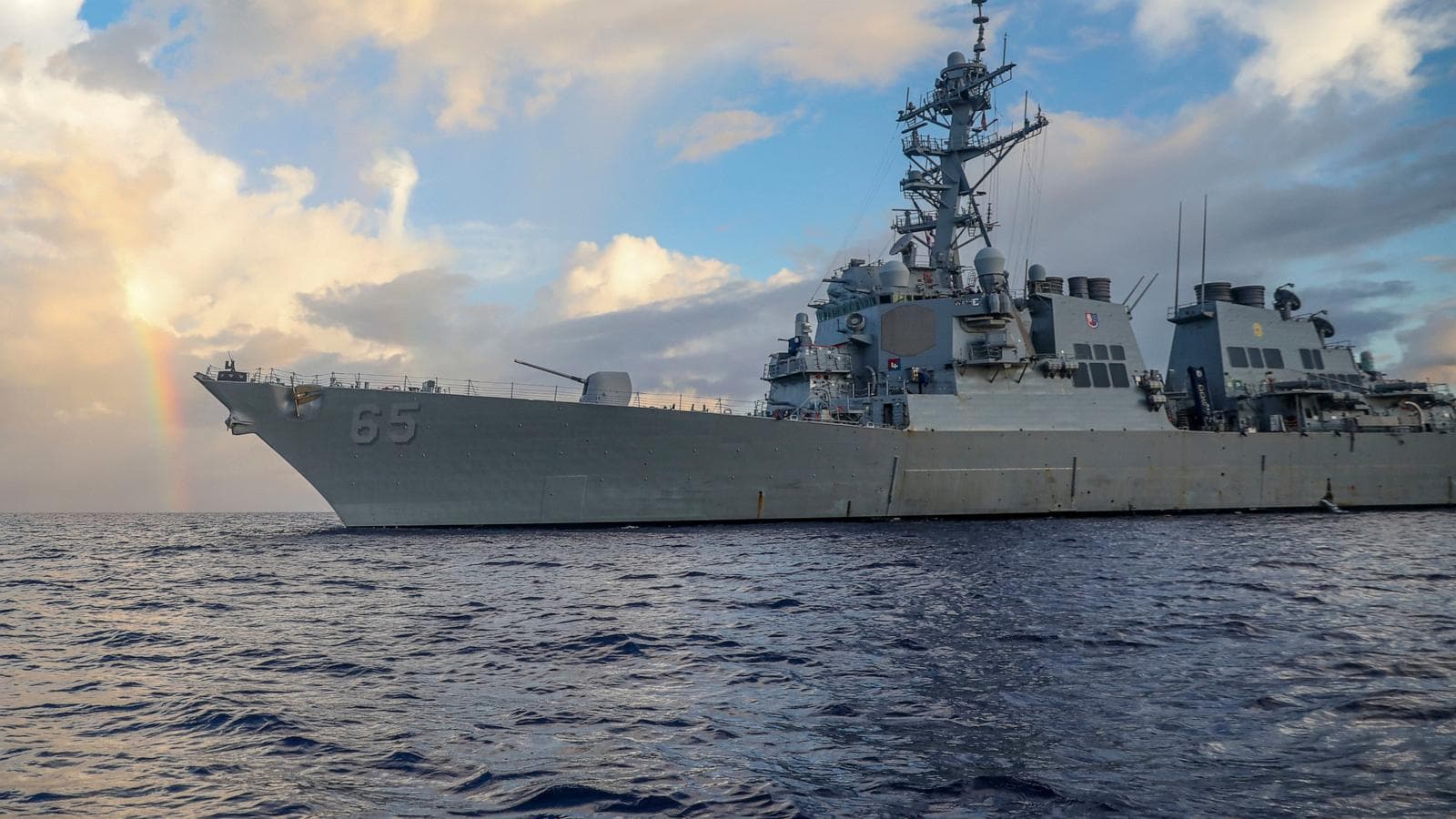
USS Benfold Destroyer Experiences Four-Day Power Outage in South China Sea
Why it matters
This incident raises questions about the reliability of naval operations amid rising geopolitical tensions.
What happened (in 30 seconds)
- On July 24, 2026, the USS Benfold suffered a complete power loss due to generator failure while in the South China Sea.
- The crew of approximately 300 sailors endured four days without essential services until the ship was towed for repairs.
- The incident coincided with heightened U.S. naval operations in the Indo-Pacific, amid scrutiny of crew welfare on other vessels.
The context you actually need
- Extended deployments of U.S. naval forces in the Indo-Pacific have been linked to rising tensions with China and Iran.
- Quality-of-life issues aboard naval vessels have prompted congressional inquiries into crew conditions and logistics support.
- The USS Benfold incident highlights vulnerabilities in naval operations that could affect broader military readiness and response capabilities.
What's really happening
The USS Benfold's power loss is emblematic of broader systemic issues within the U.S. Navy, particularly concerning operational readiness and crew welfare. The incident occurred during a period of intense naval activity in the Indo-Pacific, where U.S. forces are strategically positioned to counterbalance China's growing influence and respond to tensions with Iran. The generator failure not only left the ship incapacitated but also exposed the crew to significant hardships, including lack of potable water, hot meals, and sanitation facilities for four days.
This breakdown raises critical questions about the maintenance and reliability of naval assets, especially as the U.S. Navy faces increasing demands for presence and readiness in contested waters. The Navy's emphasis on resilience among the crew, with no reported injuries, may mask deeper issues related to equipment reliability and the adequacy of logistical support. Reports of supply shortages and crew welfare challenges on other vessels, such as the USS Abraham Lincoln, further complicate the narrative, suggesting that the Benfold incident is not an isolated case but part of a larger trend affecting naval operations.
The implications of this incident extend beyond the immediate operational challenges faced by the USS Benfold. It underscores the importance of maintaining robust support systems for naval personnel, particularly during extended deployments. As the U.S. Navy continues to navigate complex geopolitical landscapes, the ability to ensure crew welfare and operational readiness will be paramount. Congressional interest in these issues may lead to increased scrutiny and potential policy changes aimed at improving conditions aboard naval vessels.
Moreover, the incident could have ripple effects on defense contracting and military procurement, as the Navy may need to reassess its maintenance protocols and invest in more reliable technologies. The operational integrity of naval forces is crucial not only for military readiness but also for the stability of global trade routes, particularly in the Indo-Pacific region, where shipping lanes are vital for international commerce.
Who feels it first (and how)
- U.S. Navy personnel: Directly affected by operational conditions and welfare issues.
- Defense contractors: May face increased scrutiny and demand for improved technologies and maintenance solutions.
- Shipping and logistics sectors: Could experience disruptions if naval readiness impacts maritime security.
- Geopolitical analysts: Will monitor the implications for U.S. military strategy and regional stability.
What to watch next
- Congressional hearings: Watch for discussions on naval readiness and crew welfare, which could lead to policy changes.
- Maintenance protocols: Monitor any shifts in U.S. Navy maintenance practices in response to this incident.
- Geopolitical tensions: Keep an eye on developments in the Indo-Pacific, particularly regarding U.S.-China relations and military deployments.
The USS Benfold experienced a generator failure leading to a four-day power loss.
Increased scrutiny of naval operations and crew welfare will continue in Congress.
The long-term impact on U.S. naval strategy and procurement practices remains to be seen.
Frequently Asked Questions
- Why it matters?
- This incident raises questions about the reliability of naval operations amid rising geopolitical tensions.
- What happened (in 30 seconds)?
- On July 24, 2026, the USS Benfold suffered a complete power loss due to generator failure while in the South China Sea. The crew of approximately 300 sailors endured four days without essential services until the ship was towed for repairs. The incident coincided with heightened U.S. naval operations in the Indo-Pacific, amid scrutiny of crew welfare on other vessels.
- What's really happening?
- The USS Benfold's power loss is emblematic of broader systemic issues within the U.S. Navy, particularly concerning operational readiness and crew welfare. The incident occurred during a period of intense naval activity in the Indo-Pacific, where U.S. forces are strategically positioned to counterbalance China's growing influence and respond to tensions with Iran. The generator failure not only left the ship incapacitated but also exposed the crew to significant hardships, including lack of pota
- Who feels it first (and how)?
- U.S. Navy personnel: Directly affected by operational conditions and welfare issues. Defense contractors: May face increased scrutiny and demand for improved technologies and maintenance solutions. Shipping and logistics sectors: Could experience disruptions if naval readiness impacts maritime security. Geopolitical analysts: Will monitor the implications for U.S. military strategy and regional stability.
- What to watch next?
- Congressional hearings: Watch for discussions on naval readiness and crew welfare, which could lead to policy changes. Maintenance protocols: Monitor any shifts in U.S. Navy maintenance practices in response to this incident. Geopolitical tensions: Keep an eye on developments in the Indo-Pacific, particularly regarding U.S.-China relations and military deployments.
A curated Gulf News feed featuring major stories across news, business, opinion, and lifestyle.
"Gulf News is a major UAE newspaper whose featured stories feed reflects a broad editorial mix shaped for a Gulf audience."
— A47 Editor
US Navy destroyer with 300 sailors aboard broke down for four days in the Pacific: report
A U.S. Navy destroyer with 300 sailors aboard experienced a breakdown in the Pacific, remaining incapacitated for four days. This incident highlights ongoing operational challenges faced by the Navy in maintaining its fleet's readiness in critical ma...
UAE-based newspaper covering Gulf politics, society, and international developments.
"Gulf News is one of the UAE’s most prominent English-language publications."
— A47 Editor
US Navy destroyer with 300 sailors aboard broke down for four days in the Pacific: report
A U.S. Navy destroyer with 300 sailors aboard experienced a breakdown in the Pacific, remaining incapacitated for four days. This incident highlights ongoing operational challenges faced by the Navy in maintaining its fleet's readiness in critical ma...
Major U.S. developments and regional news.
"ABC News delivers broad national coverage with a mainstream editorial stance, focusing on accessibility and balanced reporting."
— A47 Editor
US Navy destroyer with 300 sailors aboard broke down for four days in the Pacific
The US Navy has confirmed that the USS Benfold, a guided-missile destroyer with approximately 300 sailors aboard, suffered a major breakdown in the Pacific Ocean last month, leaving the vessel without power for four days.
U.S. political news and right-leaning commentary.
"Fox News is a highly influential conservative news outlet known for right-leaning political commentary and coverage."
— A47 Editor
Massive risk in South China Sea exposed after four-day power loss on US Navy destroyer
The USS Benfold, a guided-missile destroyer of the US Navy, experienced a significant power loss due to a generator failure, leaving the vessel adrift in the South China Sea for four days before being towed to Subic Bay. This incident resulted in the...
Conservative-leaning political and national coverage.
"The Washington Times is a conservative-leaning newspaper known for its political coverage and advocacy of right-of-center viewpoints."
— A47 Editor
Navy destroyer stuck in South China Sea for 4 days without power
A Navy guided-missile destroyer experienced a system failure and was left without power for four days while operating in the South China Sea, as reported by the Navy's 7th Fleet. This incident highlights the vulnerabilities faced by naval vessels in ...
News from the United States including domestic politics, society, and culture.
"The Guardian is known for its progressive editorial stance and in-depth analysis, often advocating for social justice, environmental issues, and liberal values."
— A47 Editor
US Navy destroyer adrift in South China Sea for four days after losing power
The USS Benfold, a guided-missile destroyer of the US Navy, lost power due to an engineering casualty and spent four days adrift in the South China Sea, leaving sailors without essential services such as food, toilets, and air conditioning. The vesse...
International coverage from The Guardian's global desks.
"The Guardian is known for its progressive editorial stance and in-depth analysis."
— A47 Editor
US Navy destroyer adrift in South China Sea for four days after losing power
The USS Benfold, a guided-missile destroyer of the US Navy, lost power due to an engineering casualty and spent four days adrift in the South China Sea, leaving sailors without essential services such as food, toilets, and air conditioning. The vesse...