Trending

    Democrats Propose War Powers Resolution Against US Military Action in Oman

    Section editor: ·Low3 articles covering this·3 news sources·Updated an hour ago·World
    Share:
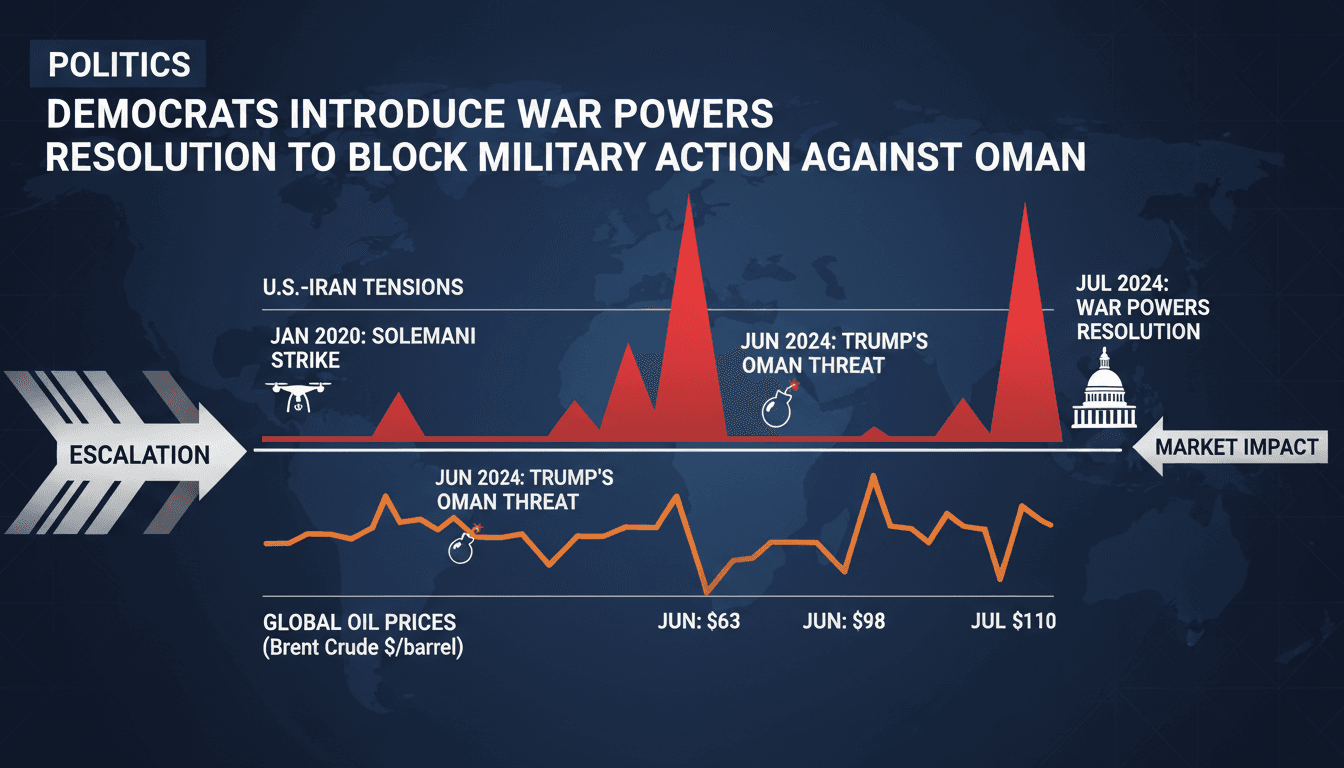
    Infographic showing the Strait of Hormuz's role in global oil trade and implications of U.S. military actions.

    Here's what it means for you.

    If you rely on global oil markets, this legislative move could impact energy prices and shipping routes.

    Why it matters

    This resolution aims to limit executive military actions, potentially stabilizing regional tensions that affect global oil supply.

    What happened (in 30 seconds)

    • Senator Tim Kaine announced plans to introduce a war powers resolution prohibiting military action against Oman.
    • President Trump threatened military action against Oman if it interfered with U.S. efforts in the Strait of Hormuz.
    • Democrats have filed over a dozen similar resolutions since February 2026, reflecting ongoing tensions with Iran.

    The context you actually need

    • Tensions escalated after a U.S.-Iran memorandum expired, which had aimed to reduce conflict and reopen the Strait of Hormuz.
    • Oman, a U.S. ally, engaged in talks with Iran regarding transit fees, prompting Trump's aggressive rhetoric.
    • Previous resolutions have faced significant hurdles in the Republican-controlled Senate, limiting their effectiveness.

    What's really happening

    On August 18, 2026, Senator Tim Kaine publicly criticized President Trump's threat to bomb Oman, labeling it "deranged." This statement came in response to Trump's comments on Fox News, where he warned of military action if Oman interfered with U.S. operations in the strategically vital Strait of Hormuz. The Strait is crucial for global oil transit, and any military action could disrupt shipping routes, impacting oil prices worldwide.

    Kaine's proposed war powers resolution seeks to reassert congressional authority over military decisions, particularly in light of escalating tensions in the region. The resolution is part of a broader Democratic strategy to curb executive overreach in military matters, especially concerning Iran, which has been a focal point of U.S. foreign policy since early 2026. Since February, Democrats have filed more than a dozen war powers resolutions related to Iran, reflecting a growing concern over the administration's military posture.

    The backdrop to this legislative initiative is the expiration of a U.S.-Iran memorandum of understanding on August 17, 2026, which had established a 60-day window for reducing hostilities and reopening the Strait. With the memorandum now expired, Oman’s engagement in talks with Iran regarding transit fees has drawn ire from Trump, who has previously suggested that the Strait could be declared U.S. territory. This aggressive stance raises the stakes for Oman, a key ally that has maintained a delicate balance in its relations with both the U.S. and Iran.

    The implications of this resolution extend beyond U.S. politics. If passed, it could signal a shift in how military decisions are made, potentially leading to a more restrained approach to foreign military engagements. However, given the current Republican majority in the Senate, the resolution's passage remains uncertain. Previous similar resolutions have often been symbolic, passing the House but facing roadblocks in the Senate.

    Iranian officials have indicated that failure in diplomacy could lead to escalated tensions, suggesting that the situation remains volatile. As Oman continues to engage diplomatically without public escalation, the potential for conflict looms, making the resolution's introduction a critical moment in U.S. foreign policy.

    Who feels it first (and how)

    • Oil traders: Potential disruptions in the Strait could lead to price volatility.
    • Shipping companies: Changes in military posture may alter shipping routes and insurance costs.
    • U.S. military personnel: Increased scrutiny and potential limitations on military engagement in the region.
    • Omani government: Directly impacted by U.S. military threats and regional diplomatic dynamics.

    What to watch next

    • Senate response: Watch for bipartisan support or opposition to the resolution, which could indicate broader political trends.
    • Iran's diplomatic moves: Monitor Iran's actions following the expiration of the memorandum, as they may escalate tensions or seek new negotiations.
    • Oil market reactions: Keep an eye on oil prices and shipping routes, as any military action or threats could lead to immediate market shifts.
    Known:

    The resolution aims to limit executive military actions against Oman.

    Likely:

    The Senate will debate the resolution upon returning from recess, but passage remains uncertain.

    Unclear:

    The long-term impact on U.S.-Iran relations and regional stability remains to be seen.

    Frequently Asked Questions

    Why it matters?
    This resolution aims to limit executive military actions, potentially stabilizing regional tensions that affect global oil supply.
    What happened (in 30 seconds)?
    Senator Tim Kaine announced plans to introduce a war powers resolution prohibiting military action against Oman. President Trump threatened military action against Oman if it interfered with U.S. efforts in the Strait of Hormuz. Democrats have filed over a dozen similar resolutions since February 2026, reflecting ongoing tensions with Iran.
    What's really happening?
    On August 18, 2026, Senator Tim Kaine publicly criticized President Trump's threat to bomb Oman, labeling it "deranged." This statement came in response to Trump's comments on Fox News, where he warned of military action if Oman interfered with U.S. operations in the strategically vital Strait of Hormuz. The Strait is crucial for global oil transit, and any military action could disrupt shipping routes, impacting oil prices worldwide. Kaine's proposed war powers resolution seeks to reassert con
    Who feels it first (and how)?
    Oil traders: Potential disruptions in the Strait could lead to price volatility. Shipping companies: Changes in military posture may alter shipping routes and insurance costs. U.S. military personnel: Increased scrutiny and potential limitations on military engagement in the region. Omani government: Directly impacted by U.S. military threats and regional diplomatic dynamics.
    What to watch next?
    Senate response: Watch for bipartisan support or opposition to the resolution, which could indicate broader political trends. Iran's diplomatic moves: Monitor Iran's actions following the expiration of the memorandum, as they may escalate tensions or seek new negotiations. Oil market reactions: Keep an eye on oil prices and shipping routes, as any military action or threats could lead to immediate market shifts.
    3 Articles
    RT (Russia Today)

    Democrats plan war powers vote over Trump’s ‘deranged’ Oman threat

    U.S. Senator Tim Kaine announced plans to introduce a war powers resolution aimed at preventing President Donald Trump from executing military action against Oman, following Trump's recent threats to bomb the country if it disrupts U.S. negotiations ...

    15 hours ago
    Read Full Article
    RT Arabic

    "سي إن إن" تقلل من جدية ترامب في تنفيذ وعيده بقصف عُمان وتوضح الأسباب

    CNN has reported that this is not the first time U.S. President Donald Trump has threatened Oman, indicating that his use of threats is a familiar tactic in his international dealings.

    NBC News

    Trump threatens to bomb Oman if it interferes with Strait of Hormuz deal

    President Donald Trump issued a stark warning to Oman, threatening military action if the nation interferes with U.S. negotiations regarding the Strait of Hormuz and Iran. Trump emphasized that if Oman disrupts the ongoing discussions, the U.S. would...

    NBC News

    Trump threatens to bomb Oman if it interferes with Strait of Hormuz deal

    President Donald Trump issued a stark warning to Oman, threatening military action if the nation interferes with U.S. negotiations regarding the Strait of Hormuz and Iran. Trump emphasized that if Oman disrupts the ongoing discussions, the U.S. would...