
Wassim al-Assad Sentenced to Death for War Crimes in Syria
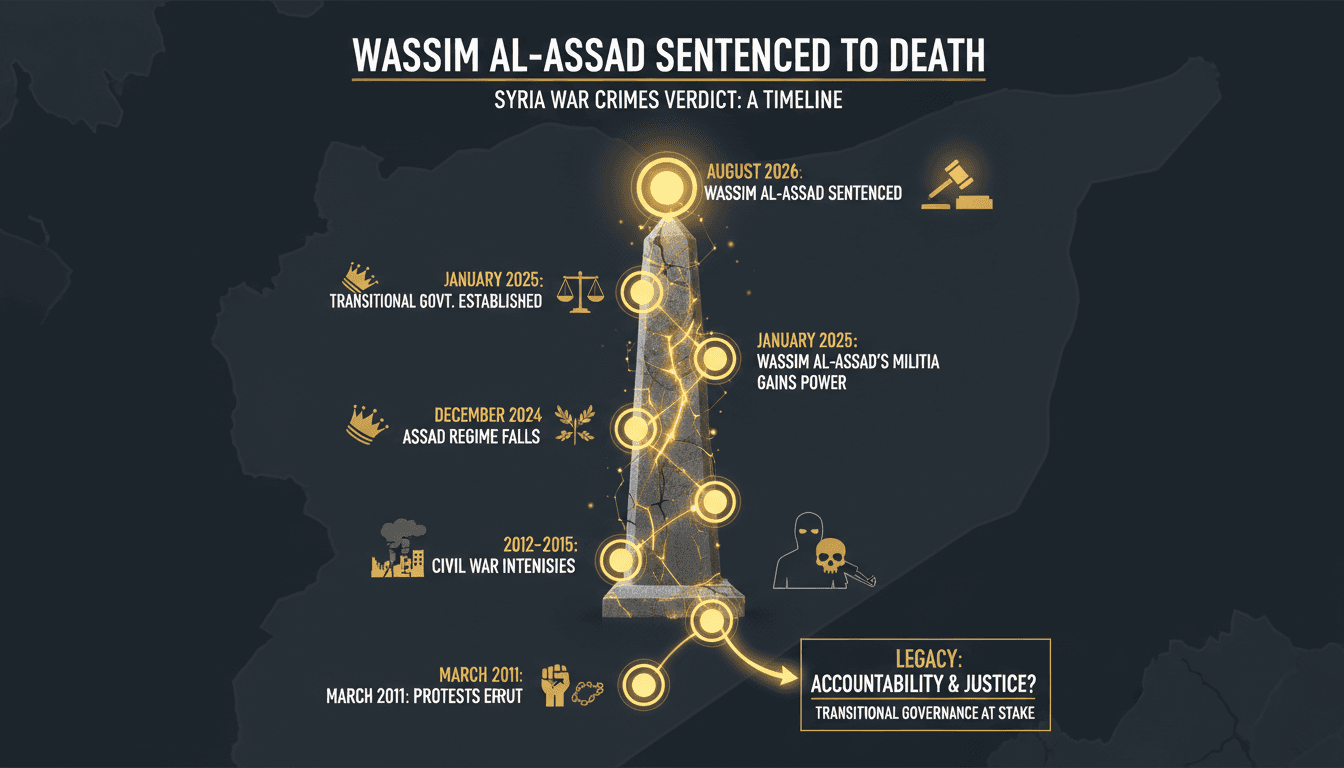
Why it matters
This ruling marks a significant step in transitional justice, potentially impacting international relations and humanitarian policies.
What happened (in 30 seconds)
- Wassim al-Assad was sentenced to death on August 18, 2026, for war crimes, including premeditated murder and torture.
- The ruling is part of Syria's transitional justice process following the fall of the Assad regime in December 2024.
- Celebrations erupted outside the courthouse in Damascus, indicating public support for the accountability measures being taken.
The context you actually need
- Syria's civil war began in 2011, leading to nearly 14 years of conflict and significant humanitarian crises, with around 500,000 deaths and millions displaced.
- Wassim al-Assad, a cousin of former President Bashar al-Assad, was convicted for leading paramilitary groups that targeted civilians, particularly in Eastern Ghouta.
- The transitional government under President Ahmed al-Sharaa is pursuing justice against former regime figures, reflecting a shift in governance and accountability.
What's really happening
The sentencing of Wassim al-Assad is a landmark event in Syria's ongoing struggle for justice following a brutal civil war that has left deep scars on its society. His conviction is not merely a legal decision; it symbolizes a broader commitment to accountability by the transitional government that emerged after the fall of the Assad regime in December 2024. This regime change was precipitated by a combination of internal dissent and external pressures, leading to a power vacuum that the new government is now attempting to fill with a focus on justice and reconciliation.
Wassim al-Assad's trial highlighted the systematic nature of the atrocities committed during the civil war, particularly in Eastern Ghouta, where his paramilitary groups were implicated in numerous civilian deaths. The court's decision to issue a death sentence reflects a significant shift in the judicial landscape of Syria, where previously, members of the Assad family operated with impunity. This ruling is part of a series of legal actions against high-profile figures associated with the former regime, including death sentences issued in absentia to Bashar and Maher al-Assad.
The transitional government is under immense pressure to deliver justice, not only to address the grievances of the Syrian people but also to gain legitimacy on the international stage. The public's reaction to the sentencing—celebrations outside the courthouse—indicates a desire for accountability and a break from the past. However, the government faces challenges, including the need to navigate complex international relations and the potential for backlash from loyalists of the former regime.
Moreover, Wassim al-Assad's conviction could have implications beyond Syria's borders. It may influence how other nations approach transitional justice and accountability in their own contexts, particularly in regions experiencing conflict or authoritarian rule. The international community is watching closely, as this case could set precedents for future legal actions against war criminals globally.
Who feels it first (and how)
- Syrian civilians: They may experience a renewed sense of hope for justice and accountability.
- International human rights organizations: They will likely increase pressure on other nations to pursue similar accountability measures.
- Former regime loyalists: They may feel threatened by the transitional government's actions and could react defensively.
What to watch next
- Future trials of regime figures: The outcomes will indicate the transitional government's commitment to justice and could influence public sentiment.
- International responses: Watch for shifts in diplomatic relations, particularly with nations that supported the Assad regime.
- Humanitarian aid policies: Changes in accountability measures may affect how aid is distributed and monitored in Syria.
Wassim al-Assad has been sentenced to death for war crimes.
The transitional government will continue pursuing justice against other regime figures.
The long-term impact of these legal actions on Syria's stability and international relations remains uncertain.
Frequently Asked Questions
- Why it matters?
- This ruling marks a significant step in transitional justice, potentially impacting international relations and humanitarian policies.
- What happened (in 30 seconds)?
- Wassim al-Assad was sentenced to death on August 18, 2026, for war crimes, including premeditated murder and torture. The ruling is part of Syria's transitional justice process following the fall of the Assad regime in December 2024. Celebrations erupted outside the courthouse in Damascus, indicating public support for the accountability measures being taken.
- What's really happening?
- The sentencing of Wassim al-Assad is a landmark event in Syria's ongoing struggle for justice following a brutal civil war that has left deep scars on its society. His conviction is not merely a legal decision; it symbolizes a broader commitment to accountability by the transitional government that emerged after the fall of the Assad regime in December 2024. This regime change was precipitated by a combination of internal dissent and external pressures, leading to a power vacuum that the new gov
- Who feels it first (and how)?
- Syrian civilians: They may experience a renewed sense of hope for justice and accountability. International human rights organizations: They will likely increase pressure on other nations to pursue similar accountability measures. Former regime loyalists: They may feel threatened by the transitional government's actions and could react defensively.
- What to watch next?
- Future trials of regime figures: The outcomes will indicate the transitional government's commitment to justice and could influence public sentiment. International responses: Watch for shifts in diplomatic relations, particularly with nations that supported the Assad regime. Humanitarian aid policies: Changes in accountability measures may affect how aid is distributed and monitored in Syria.
Comprehensive coverage of Middle Eastern and global issues.
"Al Jazeera is a prominent voice from the Global South, especially the Middle East, with an emphasis on underreported stories."
— A47 Editor
Who is Wassim al-Assad, sentenced to death for Syria war atrocities?
Wassim al-Assad, a cousin of former Syrian President Bashar al-Assad, has been sentenced to death by a Syrian court for war crimes, including premeditated murder and torture. This ruling, issued on August 18, 2026, follows a similar verdict against B...
Business and economy coverage focused on Dubai, the UAE, Saudi Arabia, and the wider Middle East.
"Arabian Business is a well-known regional business outlet with strong focus on Gulf markets, leadership, and investment stories."
— A47 Editor
Syria court sentences Wassim al-Assad to death
A Syrian court has sentenced Wassim al-Assad, a cousin of former President Bashar al-Assad, to death for war crimes and acts of torture. This ruling, issued on August 18, 2026, underscores the ongoing legal efforts to hold members of the Assad regime...
European coverage of Middle East politics and security issues.
"France 24 offers international reporting with a European editorial perspective."
— A47 Editor
Syria sentences to death detained cousin of ousted president Assad
Wassim al-Assad, a cousin of the ousted Syrian president Bashar al-Assad, has been sentenced to death by a Damascus court for multiple murders, including acts of torture and brutality. This ruling reflects ongoing efforts to hold members of the forme...
Coverage of current events and conflicts in the Middle East.
"France 24 is viewed as a globally focused outlet with balanced coverage and a European perspective."
— A47 Editor
Syria sentences to death detained cousin of ousted president Assad
A Syrian court has sentenced Wassim al-Assad, a cousin of the ousted president Bashar al-Assad, to death for multiple murders, including acts of torture and brutality. This ruling, issued on August 18, 2026, highlights the ongoing legal repercussions...
Regional and international reporting focused on Middle Eastern politics, diplomacy, and economics.
"Asharq Al-Awsat is a Saudi-owned international newspaper reflecting mainstream Gulf political perspectives."
— A47 Editor
Syria Issues Death Sentence to Detained Assad Cousin
A Syrian court has issued a death sentence for Wassim al-Assad, a cousin of former President Bashar al-Assad, for war crimes and acts of torture committed during the ongoing civil war. This ruling, announced on August 18, 2026, underscores the legal ...
UAE-based English-language newspaper covering regional politics, economics, and global affairs.
"The National reflects Emirati policy perspectives while maintaining international editorial standards."
— A47 Editor
Syrian court sentences former president's cousin Waseem Al Assad to death
A Syrian court has sentenced Waseem Al Assad, a cousin of the former president, to death. This ruling reflects ongoing legal actions against individuals associated with the previous regime amid the country's complex political landscape.