
South Korea Blocks Polymarket Access Over Gambling Violations
Why it matters
This move reflects a growing global trend of jurisdictions tightening controls on speculative betting platforms.
What happened (in 30 seconds)
- South Korea blocked access to Polymarket on August 18, 2026, citing illegal gambling violations.
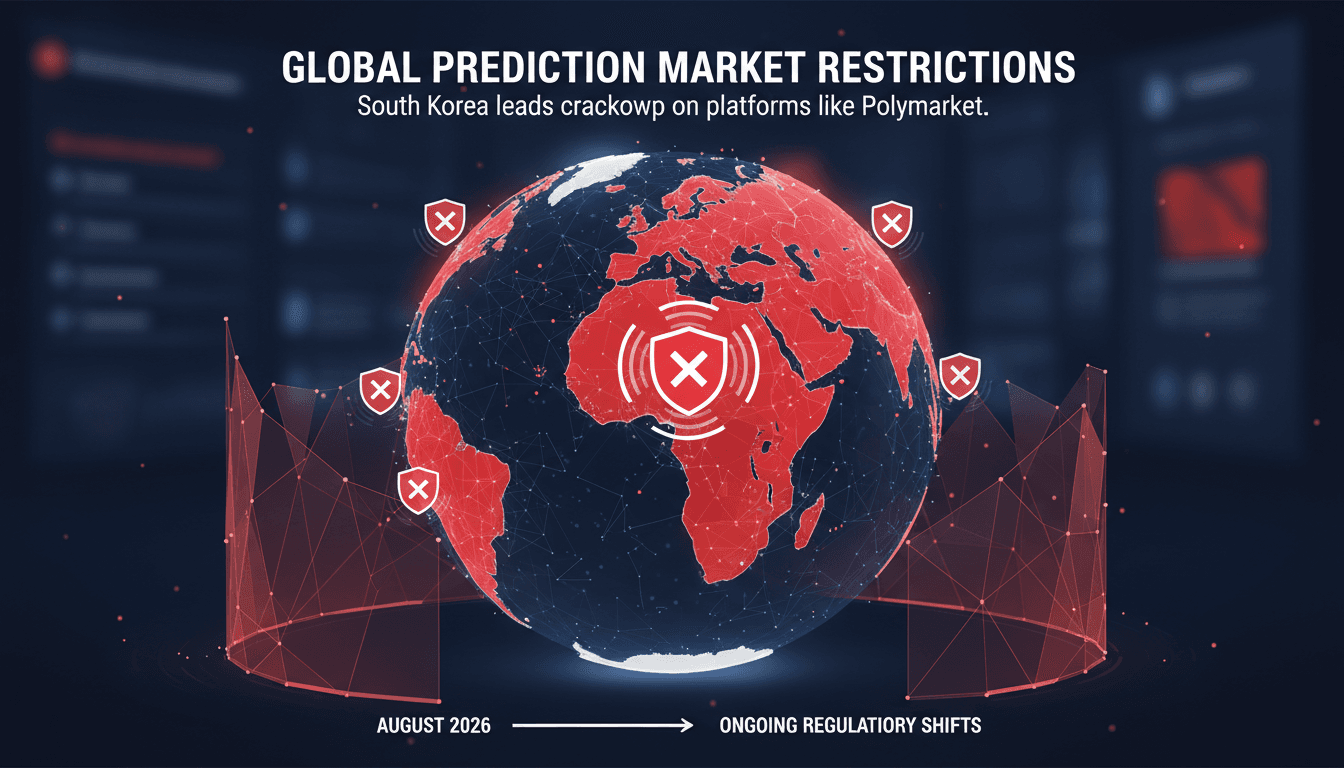
- Over 30 jurisdictions have imposed similar restrictions, including France and Spain, due to concerns over speculative betting.
- Regulators dismissed Polymarket's defenses, asserting that it still facilitates gambling despite its peer-to-peer structure.
The context you actually need
- Prediction markets like Polymarket allow users to trade on real-world events using cryptocurrency, but many jurisdictions classify them as gambling.
- South Korea's regulatory action follows investigations into local users for suspected illegal gambling, reflecting a broader crackdown on unauthorized betting.
- Polymarket's compliance measures include geographic restrictions, yet regulators argue it still controls essential market functions, leading to its classification as a gambling platform.
What's really happening
On August 18, 2026, the Korea Media and Communications Standards Commission (KCC) officially blocked domestic access to Polymarket, a prediction market platform that allows users to bet on the outcomes of various events using cryptocurrency. This decision was rooted in findings that the platform facilitates illegal gambling under South Korean law, specifically the Criminal Act and the National Sports Promotion Act. The KCC's review began in July 2026, prompted by referrals from the National Police Agency and the National Gambling Control Commission, which had been investigating local users for potential illegal gambling activities.
Despite Polymarket's arguments that it had removed Korean-language support and avoided transactions in the South Korean won (KRW), the KCC concluded that the platform still exerts control over market creation, trading rules, and fee collection. This control is critical because it positions Polymarket as a facilitator of gambling, even if it operates on a peer-to-peer basis. The KCC's decision aligns South Korea with over 30 other jurisdictions that have similarly restricted access to Polymarket, including countries like France, Spain, and Indonesia, all of which have cited concerns over speculative betting.
The implications of this ban extend beyond South Korea. As more jurisdictions adopt similar restrictions, the landscape for prediction markets could shift significantly. Users in affected regions may find their access to such platforms curtailed, leading to a potential decline in user engagement and trading volumes. Furthermore, the ongoing investigations into South Korean users could result in fines or other legal repercussions, creating a chilling effect on participation in prediction markets.
Polymarket's internal list indicates that it has already identified 39 countries with access restrictions, but South Korea's recent action highlights the increasing scrutiny these platforms face globally. As regulators continue to grapple with the intersection of cryptocurrency and gambling laws, the future of prediction markets remains uncertain, with potential for further restrictions and regulatory challenges.
Who feels it first (and how)
- Local users in South Korea: They will immediately lose access to Polymarket and may face legal scrutiny.
- Cryptocurrency traders: Those involved in prediction markets may see reduced opportunities for speculative trading.
- Regulatory bodies: Increased workload as they monitor compliance and investigate local users for illegal gambling.
What to watch next
- Regulatory trends: Watch for similar actions in other jurisdictions, as regulators globally assess the legality of prediction markets.
- Polymarket's response: Monitor how Polymarket adapts its operations and compliance measures in light of these restrictions.
- User engagement metrics: Keep an eye on trading volumes and user activity on Polymarket and similar platforms to gauge the impact of these bans.
South Korea has blocked access to Polymarket, joining over 30 jurisdictions with similar restrictions.
Other countries may follow suit, tightening regulations on prediction markets and speculative betting.
The long-term impact on Polymarket's user base and trading volumes remains uncertain.
Frequently Asked Questions
- Why it matters?
- This move reflects a growing global trend of jurisdictions tightening controls on speculative betting platforms.
- What happened (in 30 seconds)?
- South Korea blocked access to Polymarket on August 18, 2026, citing illegal gambling violations. Over 30 jurisdictions have imposed similar restrictions, including France and Spain, due to concerns over speculative betting. Regulators dismissed Polymarket's defenses, asserting that it still facilitates gambling despite its peer-to-peer structure.
- What's really happening?
- On August 18, 2026, the Korea Media and Communications Standards Commission (KCC) officially blocked domestic access to Polymarket, a prediction market platform that allows users to bet on the outcomes of various events using cryptocurrency. This decision was rooted in findings that the platform facilitates illegal gambling under South Korean law, specifically the Criminal Act and the National Sports Promotion Act. The KCC's review began in July 2026, prompted by referrals from the National Poli
- Who feels it first (and how)?
- Local users in South Korea: They will immediately lose access to Polymarket and may face legal scrutiny. Cryptocurrency traders: Those involved in prediction markets may see reduced opportunities for speculative trading. Regulatory bodies: Increased workload as they monitor compliance and investigate local users for illegal gambling.
- What to watch next?
- Regulatory trends: Watch for similar actions in other jurisdictions, as regulators globally assess the legality of prediction markets. Polymarket's response: Monitor how Polymarket adapts its operations and compliance measures in light of these restrictions. User engagement metrics: Keep an eye on trading volumes and user activity on Polymarket and similar platforms to gauge the impact of these bans.
Covers blockchain, cryptocurrency news, project analysis, and market insights.
"CoinDesk is a well-established cryptocurrency and blockchain news provider, offering comprehensive insights, market data, and industry research."
— A47 Editor
South Korea joins more than 30 jurisdictions restricting Polymarket access
Regulators rejected Polymarket's defense regarding its P2P nature, arguing the platform manages market rules and facilitates crypto-based gambling activity.
Covers blockchain, cryptocurrency news, project analysis, and market insights.
"Cointelegraph is a leading crypto-focused media outlet known for timely news, analysis, and educational content related to blockchain and digital assets."
— A47 Editor
South Korea moves to block Polymarket over gambling concerns
<p style="float:right; margin:0 0 10px 15px; width:240px;"><img src="https://s3-images.ctmedia.io/media/article-covers/hi-you-are-once-again-banning-crypto-content-polymarket.jpg" alt="South Korea moves to block Polymarket over gambling concerns" cla...
Real-time updates, analysis, and reports on the blockchain and cryptocurrency sectors.
"Crypto News delivers real-time updates, analysis, and reports on the blockchain and cryptocurrency sectors."
— A47 Editor
South Korea orders Polymarket block over illegal gambling concerns
South Korea has ordered access to Polymarket to be blocked after regulators found that the crypto-based prediction market provides an illegal gambling environment to domestic users. South Korea’s Broadcasting, Media and Communications Review Committe...