
U.S. Reduces Joint Military Exercises with South Korea Amid Iran Policy Pressure
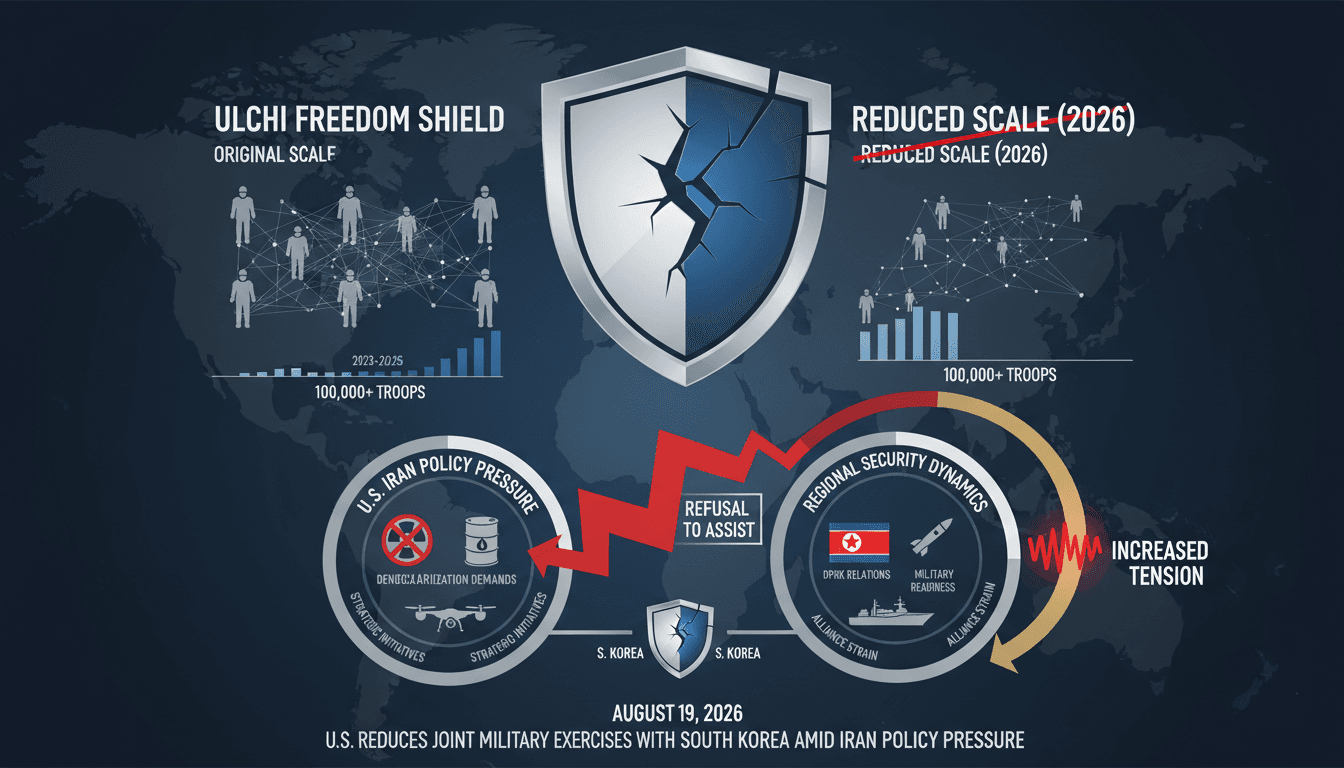
Why it matters
This reduction in military exercises signals potential shifts in U.S. foreign policy that could affect global security dynamics.
What happened (in 30 seconds)
- U.S. President Donald Trump ordered a substantial reduction in joint military exercises with South Korea, citing improved relations with North Korea.
- South Korean Foreign Minister Jo Hyun indicated that this move appears to pressure Seoul into supporting U.S. policies regarding Iran.
- The Ulchi Freedom Shield drills, involving approximately 18,000 South Korean troops, have been scaled back, raising concerns about the U.S.-South Korea alliance.
The context you actually need
- Ulchi Freedom Shield exercises have historically been a cornerstone of deterrence against North Korean aggression, simulating responses to potential threats.
- Trump's administration has pursued aggressive policies toward Iran, including denuclearization efforts, which South Korea declined to support.
- The decision to scale back military exercises reflects broader geopolitical tensions and the complexities of U.S. alliances in Asia and the Middle East.
What's really happening
On August 16-17, 2026, President Trump directed the Pentagon to significantly reduce the scope of the Ulchi Freedom Shield exercises, which were set to begin shortly thereafter. He characterized these drills as costly and potentially provocative, especially given his ongoing diplomatic overtures to North Korean leader Kim Jong Un. By linking the reduction of military exercises to South Korea's refusal to assist in U.S. efforts regarding Iran's denuclearization, Trump is employing a strategy that intertwines military cooperation with diplomatic leverage.
This approach underscores a shift in U.S. foreign policy, where military readiness is being recalibrated in response to broader geopolitical objectives. The reduction of exercises, which typically involve thousands of troops and extensive logistical planning, raises questions about the U.S. commitment to its allies in the region. South Korea's military, which has relied on these exercises for preparedness against North Korean threats, now faces uncertainty regarding its defense posture.
The South Korean government has expressed concern over the lack of prior notification regarding the scale-back, indicating a potential strain in the U.S.-South Korea alliance. This situation is compounded by the fact that South Korea has recently declined U.S. requests to participate in initiatives aimed at Iran's denuclearization, suggesting a divergence in strategic priorities between the two nations.
As the U.S. seeks to balance its interests in both the Asia-Pacific and Middle East regions, the implications of this military reduction could reverberate beyond immediate defense concerns. It may embolden North Korea, which could interpret the reduced military presence as a sign of weakness or a shift in U.S. resolve. Additionally, it raises questions about the future of U.S. alliances in Asia, as other regional players may reassess their security strategies in light of these developments.
Who feels it first (and how)
- South Korean military officials: They must adapt to a new defense strategy with reduced U.S. support.
- U.S. defense contractors: Potential shifts in military spending and contracts related to joint exercises.
- Regional security analysts: They will need to reassess the implications for North Korean aggression and U.S. deterrence strategies.
- Diplomatic circles: Increased scrutiny on U.S. foreign policy and its impact on international relations, particularly in Asia and the Middle East.
What to watch next
- South Korea's military response: Watch for announcements regarding adjustments to defense strategies or new military partnerships.
- U.S.-North Korea relations: Monitor any developments in diplomatic talks that could arise from this military reduction.
- Iran's regional activities: Keep an eye on Iran's response to U.S. policies and how it may influence South Korea's stance on military cooperation.
The Ulchi Freedom Shield exercises have been scaled back significantly.
South Korea will reassess its military strategies in light of reduced U.S. support.
The long-term impact on U.S.-South Korea relations and regional security dynamics remains uncertain.
Frequently Asked Questions
- Why it matters?
- This reduction in military exercises signals potential shifts in U.S. foreign policy that could affect global security dynamics.
- What happened (in 30 seconds)?
- U.S. President Donald Trump ordered a substantial reduction in joint military exercises with South Korea, citing improved relations with North Korea. South Korean Foreign Minister Jo Hyun indicated that this move appears to pressure Seoul into supporting U.S. policies regarding Iran. The Ulchi Freedom Shield drills, involving approximately 18,000 South Korean troops, have been scaled back, raising concerns about the U.S.-South Korea alliance.
- What's really happening?
- On August 16-17, 2026, President Trump directed the Pentagon to significantly reduce the scope of the Ulchi Freedom Shield exercises, which were set to begin shortly thereafter. He characterized these drills as costly and potentially provocative, especially given his ongoing diplomatic overtures to North Korean leader Kim Jong Un. By linking the reduction of military exercises to South Korea's refusal to assist in U.S. efforts regarding Iran's denuclearization, Trump is employing a strategy that
- Who feels it first (and how)?
- South Korean military officials: They must adapt to a new defense strategy with reduced U.S. support. U.S. defense contractors: Potential shifts in military spending and contracts related to joint exercises. Regional security analysts: They will need to reassess the implications for North Korean aggression and U.S. deterrence strategies. Diplomatic circles: Increased scrutiny on U.S. foreign policy and its impact on international relations, particularly in Asia and the Middle East.
- What to watch next?
- South Korea's military response: Watch for announcements regarding adjustments to defense strategies or new military partnerships. U.S.-North Korea relations: Monitor any developments in diplomatic talks that could arise from this military reduction. Iran's regional activities: Keep an eye on Iran's response to U.S. policies and how it may influence South Korea's stance on military cooperation.
Pan-Arab political news and analysis.
"Al-Quds Al-Arabi is a London-based Arabic newspaper known for political coverage."
— A47 Editor
سول: قرار تقليص التدريبات العسكرية استهدف الضغط علينا بشأن إيران
South Korean Foreign Minister Jo Hyun stated that the decision to reduce military exercises was aimed at pressuring South Korea regarding Iran. This statement reflects ongoing tensions in the region and highlights the complexities of international re...
Arabic-language political and world news coverage for UAE readers.
"Emarat Al Youm world coverage usually presents international developments through a UAE and Arab audience lens."
— A47 Editor
ترامب ينتقد كوريا الجنوبية.. ويمدح زعيم «الشمالية» كيم جونغ أون ترامب ينتقد كوريا الجنوبية.. ويمدح زعيم «الشمالية» كيم جونغ أون
Former President Donald Trump criticized South Korea while praising North Korean leader Kim Jong Un, highlighting a shift in his stance towards the two Koreas. This comes amid concerns regarding the reduction of military exercises with South Korea, r...
Pan-Arab news coverage spanning politics, business, sports, and regional affairs.
"Asharq Al-Awsat reflects a broad Arab editorial perspective with strong attention to regional geopolitics."
— A47 Editor
اليابان تشدّد على أهمية التعاون بين واشنطن وسيول
U.S. President Donald Trump defended the decision to reduce military exercises with South Korea, while Japan emphasized the importance of the trilateral alliance with the U.S. and South Korea to deter North Korea.
English-language news from Qatar covering domestic and regional affairs.
"Gulf Times reflects Qatari perspectives on regional developments."
— A47 Editor
Asian allies stress 'critical' US co-operation as Trump slashes Korea drills
Japan has emphasized the 'critical' importance of security cooperation with the US and South Korea following President Donald Trump's decision to scale back military drills with Seoul, a move that has raised concerns among allies.
Arabic-language coverage of international news and geopolitics.
"RT Arabic is a Russian state-funded outlet often criticized for promoting Kremlin-aligned narratives."
— A47 Editor
ترامب يأمر بتقليص المناورات مع كوريا الجنوبية ويشيد بعلاقته مع كيم جونغ أون
U.S. President Donald Trump has instructed Defense Secretary Pete Hegseth to reduce joint military exercises with South Korea, deeming them an inappropriate and hostile signal towards North Korea. This decision reflects a shift in U.S. military strat...