
US Imposes Sanctions on ICC Officials Amid Investigations into Israel
Why it matters
The sanctions against the ICC signal a significant shift in the U.S. stance on international judicial authority, potentially undermining global justice mechanisms.
What happened (in 30 seconds)
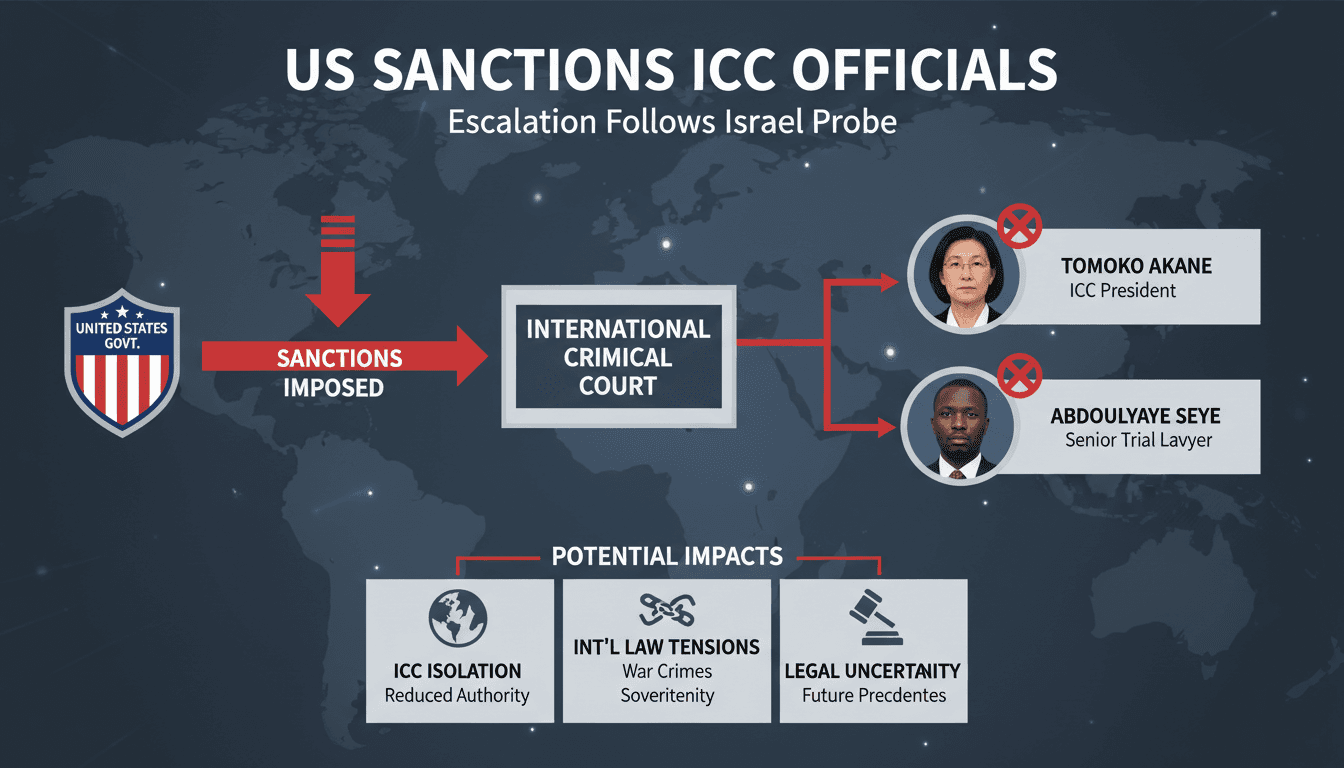
- On August 18, 2026, the U.S. imposed sanctions on ICC President Tomoko Akane and senior trial lawyer Abdoulaye Seye.
- These sanctions freeze U.S. assets and restrict access to the international financial system for targeted individuals.
- The ICC condemned the sanctions as attacks on judicial independence, while Israel welcomed the measures.
The context you actually need
- The U.S. has never ratified the Rome Statute, which established the ICC, and has consistently rejected its jurisdiction over U.S. nationals.
- Tensions escalated after the ICC issued arrest warrants for Israeli officials related to alleged war crimes in Gaza.
- Historical precedents include the 2002 American Servicemembers' Protection Act, reflecting ongoing U.S. resistance to supranational judicial authority.
What's really happening
The recent sanctions against the International Criminal Court (ICC) are part of a broader strategy by the Trump administration to exert pressure on the Hague-based institution. This campaign began in 2025, following the ICC's investigations into alleged war crimes committed by Israeli officials. The U.S. has long viewed the ICC with skepticism, primarily because it has never ratified the Rome Statute that established the court in 2002. This lack of ratification has allowed the U.S. to maintain a stance of non-compliance with the court's jurisdiction, particularly concerning American nationals.
The sanctions, authorized under Executive Order 14203, specifically target ICC President Tomoko Akane and senior trial lawyer Abdoulaye Seye. They freeze U.S. assets and restrict access to the international financial system for these individuals, effectively isolating them from global financial networks. This move has been framed by U.S. officials, including Secretary of State Marco Rubio, as a necessary response to what they describe as the ICC's illegitimate targeting of non-consenting states. Rubio has gone so far as to declare a commitment to dismantle the court "brick by brick," urging allies to withdraw funding and participation.
The ICC has responded by condemning the sanctions as an attack on judicial independence, asserting that they undermine the rule of law. The European Union and United Nations have also expressed concern, highlighting the potential threats to international justice mechanisms. Despite this, Israel has welcomed the U.S. actions, viewing them as a necessary defense against what it perceives as unjust legal actions.
As of mid-2026, the U.S. sanctions regime has expanded to include 9 of the 18 ICC judges, indicating a systematic effort to undermine the court's operational capacity. The cumulative pressure from these sanctions raises questions about the ICC's ability to function effectively in the face of sustained diplomatic and economic challenges from a non-member state. The implications extend beyond the ICC itself, as they may influence how other countries perceive and engage with international legal frameworks.
Who feels it first (and how)
- International lawyers: Increased scrutiny and potential challenges in pursuing cases against powerful states.
- Human rights organizations: Possible funding and operational impacts as international support may wane.
- Diplomatic entities: Countries aligned with the U.S. may reconsider their participation in international legal frameworks.
What to watch next
- Further sanctions: Monitor for additional U.S. sanctions targeting more ICC officials, which could further cripple the court's operations.
- International responses: Watch how the European Union and United Nations react, as their support is crucial for the ICC's legitimacy.
- Geopolitical shifts: Observe if other non-member states follow the U.S. lead, potentially leading to a broader trend of resistance against international judicial authority.
The U.S. has imposed sanctions on ICC officials, impacting their financial and operational capabilities.
The ICC will continue to operate under condemnation, but its effectiveness may be compromised.
The long-term impact on international law and justice mechanisms remains uncertain, particularly regarding global compliance.
Frequently Asked Questions
- Why it matters?
- The sanctions against the ICC signal a significant shift in the U.S. stance on international judicial authority, potentially undermining global justice mechanisms.
- What happened (in 30 seconds)?
- On August 18, 2026, the U.S. imposed sanctions on ICC President Tomoko Akane and senior trial lawyer Abdoulaye Seye. These sanctions freeze U.S. assets and restrict access to the international financial system for targeted individuals. The ICC condemned the sanctions as attacks on judicial independence, while Israel welcomed the measures.
- What's really happening?
- The recent sanctions against the International Criminal Court (ICC) are part of a broader strategy by the Trump administration to exert pressure on the Hague-based institution. This campaign began in 2025, following the ICC's investigations into alleged war crimes committed by Israeli officials. The U.S. has long viewed the ICC with skepticism, primarily because it has never ratified the Rome Statute that established the court in 2002. This lack of ratification has allowed the U.S. to maintain a
- Who feels it first (and how)?
- International lawyers: Increased scrutiny and potential challenges in pursuing cases against powerful states. Human rights organizations: Possible funding and operational impacts as international support may wane. Diplomatic entities: Countries aligned with the U.S. may reconsider their participation in international legal frameworks.
- What to watch next?
- Further sanctions: Monitor for additional U.S. sanctions targeting more ICC officials, which could further cripple the court's operations. International responses: Watch how the European Union and United Nations react, as their support is crucial for the ICC's legitimacy. Geopolitical shifts: Observe if other non-member states follow the U.S. lead, potentially leading to a broader trend of resistance against international judicial authority.
Global news coverage with extensive reporting on Middle Eastern conflicts and geopolitics.
"Al Jazeera is a Qatar-based broadcaster known for wide regional coverage and alternative perspectives."
— A47 Editor
Could US sanctions destroy the International Criminal Court?
The United States has imposed sanctions on the president of the International Criminal Court (ICC), Tomoko Akane, and trial lawyer Abdoulaye Seye, escalating tensions between Washington and the ICC, particularly in light of ongoing investigations int...
Comprehensive coverage of Middle Eastern and global issues.
"Al Jazeera is a prominent voice from the Global South, especially the Middle East, with an emphasis on underreported stories."
— A47 Editor
Could US sanctions destroy the International Criminal Court?
The United States has imposed sanctions on the president of the International Criminal Court (ICC), Tomoko Akane, and trial lawyer Abdoulaye Seye, escalating tensions between Washington and the ICC, particularly in light of ongoing investigations int...
Arabic-language political and world news coverage for UAE readers.
"Emarat Al Youm world coverage usually presents international developments through a UAE and Arab audience lens."
— A47 Editor
"الجنائية الدولية" تنتقد القرار الأميركي بفرض عقوبات على رئيسة المحكمة "الجنائية الدولية" تنتقد القرار الأميركي بفرض عقوبات على رئيسة المحكمة
The International Criminal Court (ICC) criticized the recent U.S. sanctions targeting high-ranking officials within the court, including its president. This move has raised concerns regarding the independence and functioning of the ICC amid ongoing t...
English-language reporting on Saudi politics, policy, and society.
"Saudi Gazette reflects mainstream Saudi institutional perspectives."
— A47 Editor
ICC hits back after US announces fresh sanctions on senior court figures
The International Criminal Court (ICC) has condemned the recent sanctions imposed by the United States on its president, Tomoko Akane, and senior trial lawyer Abdoulaye Seye, labeling the actions a “flagrant attack” on the court's independence. The s...
Jordanian news and regional updates.
"Roya News is a Jordanian outlet focused on breaking news and local affairs."
— A47 Editor
الولايات المتحدة تعلن فرض عقوبات على رئيسة المحكمة الجنائية الدولية توموكو أكاني
The United States announced on Wednesday the imposition of sanctions against Tomoko Akane, the President of the International Criminal Court (ICC). This decision reflects the U.S. government's stance on the ICC and its leadership, indicating a signif...