
US Imposes Additional Sanctions on ICC Officials Amid Netanyahu Arrest Warrant
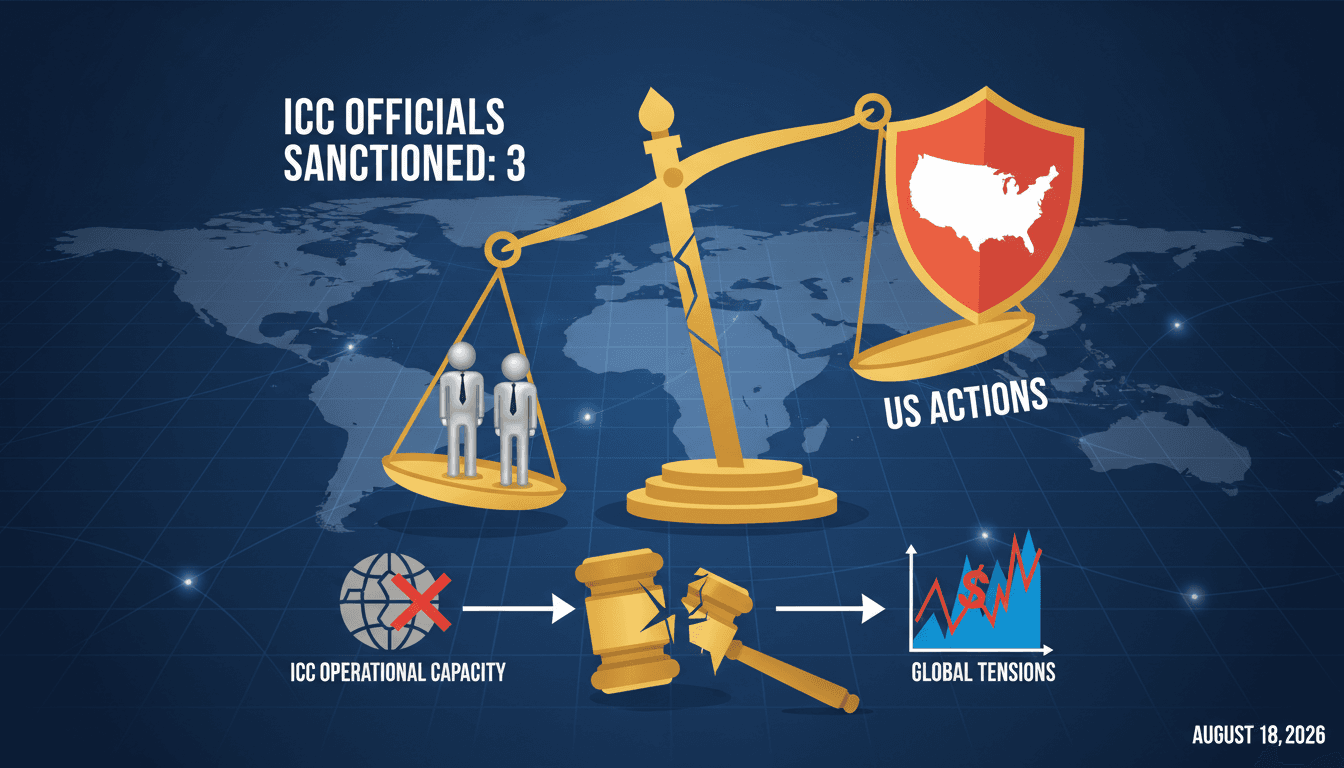
Here's what it means for you.
If you work in international law or human rights advocacy, these sanctions could reshape your operational landscape.
Why it matters
The sanctions against ICC officials signal a significant shift in the U.S. stance on international justice, impacting global legal frameworks.
What happened (in 30 seconds)
- On August 18, 2026, the U.S. imposed sanctions on ICC President Tomoko Akane and senior trial lawyer Abdoulaye Seye.
- This action is part of a broader campaign against the ICC, following its investigations into Israeli officials for alleged war crimes.
- International reactions include condemnation from the EU and UN, while Israel has expressed support for the U.S. measures.
The context you actually need
- The U.S. has never ratified the Rome Statute, which established the ICC, leading to longstanding tensions.
- Executive Order 14203, issued in February 2025, authorized sanctions against ICC personnel involved in investigations of U.S. or allied nationals.
- As of August 2026, nine out of eighteen ICC judges have been sanctioned, raising concerns about the court's operational integrity.
What's really happening
The recent sanctions against ICC officials are not merely punitive measures; they reflect a strategic maneuver by the U.S. government to assert its influence over international legal proceedings. The Trump administration's Executive Order 14203, enacted in February 2025, marked the beginning of a systematic campaign against the ICC, particularly targeting personnel involved in investigations of U.S. or allied nationals. This escalation has been fueled by the ICC's pursuit of arrest warrants for Israeli leaders, including Prime Minister Benjamin Netanyahu, over alleged war crimes in Gaza. The U.S. views these actions as an overreach of the ICC's mandate, especially since the court operates under a treaty that the U.S. has never ratified.
The sanctions have significant implications for the ICC's functionality and its ability to operate independently. By targeting key officials, the U.S. aims to undermine the court's credibility and deter future investigations that may implicate U.S. allies. The ICC has responded by rejecting these sanctions as attacks on judicial independence, emphasizing that such measures threaten the integrity of international law.
Internationally, the sanctions have drawn sharp criticism from various bodies, including the European Union and the United Nations, which have condemned the coercive measures as detrimental to global justice. Conversely, Israel has welcomed the sanctions, viewing them as a necessary defense against what it perceives as unjust legal actions. This dichotomy highlights the polarized views on the ICC's role in international law and the challenges it faces in maintaining its authority.
As the situation evolves, the ICC's operational resilience will be tested. The court's ability to function effectively in the face of these sanctions will depend on its capacity to garner international support and navigate the complex geopolitical landscape. The long-term effects of these sanctions could lead to a diminished role for the ICC in global justice, potentially emboldening states to disregard international legal norms.
Who feels it first (and how)
- International lawyers: Increased scrutiny and potential challenges in cases involving U.S. or allied nationals.
- Human rights organizations: Possible funding and operational impacts due to shifts in international legal support.
- Governments of non-member states: Heightened tensions with the U.S. regarding compliance with international legal standards.
What to watch next
- Future ICC investigations: Monitor how the ICC adapts its strategies in light of U.S. sanctions and whether it continues to pursue cases against U.S. allies.
- International diplomatic responses: Watch for shifts in support from other nations and international bodies regarding the ICC's legitimacy and operations.
- Legal challenges in U.S. courts: Keep an eye on civil society groups filing lawsuits against the sanctions, which could influence future U.S. policy.
The U.S. has sanctioned nine ICC officials as of August 2026.
The ICC will face operational challenges and potential isolation in pursuing investigations against U.S. allies.
The long-term impact on international law and the ICC's authority remains uncertain.
Frequently Asked Questions
- Why it matters?
- The sanctions against ICC officials signal a significant shift in the U.S. stance on international justice, impacting global legal frameworks.
- What happened (in 30 seconds)?
- On August 18, 2026, the U.S. imposed sanctions on ICC President Tomoko Akane and senior trial lawyer Abdoulaye Seye. This action is part of a broader campaign against the ICC, following its investigations into Israeli officials for alleged war crimes. International reactions include condemnation from the EU and UN, while Israel has expressed support for the U.S. measures.
- What's really happening?
- The recent sanctions against ICC officials are not merely punitive measures; they reflect a strategic maneuver by the U.S. government to assert its influence over international legal proceedings. The Trump administration's Executive Order 14203, enacted in February 2025, marked the beginning of a systematic campaign against the ICC, particularly targeting personnel involved in investigations of U.S. or allied nationals. This escalation has been fueled by the ICC's pursuit of arrest warrants for
- Who feels it first (and how)?
- International lawyers: Increased scrutiny and potential challenges in cases involving U.S. or allied nationals. Human rights organizations: Possible funding and operational impacts due to shifts in international legal support. Governments of non-member states: Heightened tensions with the U.S. regarding compliance with international legal standards.
- What to watch next?
- Future ICC investigations: Monitor how the ICC adapts its strategies in light of U.S. sanctions and whether it continues to pursue cases against U.S. allies. International diplomatic responses: Watch for shifts in support from other nations and international bodies regarding the ICC's legitimacy and operations. Legal challenges in U.S. courts: Keep an eye on civil society groups filing lawsuits against the sanctions, which could influence future U.S. policy.
Global news coverage with extensive reporting on Middle Eastern conflicts and geopolitics.
"Al Jazeera is a Qatar-based broadcaster known for wide regional coverage and alternative perspectives."
— A47 Editor
Could US sanctions destroy the International Criminal Court?
The United States has imposed sanctions on the president of the International Criminal Court (ICC), Tomoko Akane, and trial lawyer Abdoulaye Seye, escalating tensions between Washington and the ICC, particularly in light of ongoing investigations int...
Comprehensive coverage of Middle Eastern and global issues.
"Al Jazeera is a prominent voice from the Global South, especially the Middle East, with an emphasis on underreported stories."
— A47 Editor
Could US sanctions destroy the International Criminal Court?
The United States has imposed sanctions on the president of the International Criminal Court (ICC), Tomoko Akane, and trial lawyer Abdoulaye Seye, escalating tensions between Washington and the ICC, particularly in light of ongoing investigations int...
Arabic-language political and world news coverage for UAE readers.
"Emarat Al Youm world coverage usually presents international developments through a UAE and Arab audience lens."
— A47 Editor
"الجنائية الدولية" تنتقد القرار الأميركي بفرض عقوبات على رئيسة المحكمة "الجنائية الدولية" تنتقد القرار الأميركي بفرض عقوبات على رئيسة المحكمة
The International Criminal Court (ICC) criticized the recent U.S. sanctions targeting high-ranking officials within the court, including its president. This move has raised concerns regarding the independence and functioning of the ICC amid ongoing t...
English-language reporting on Saudi politics, policy, and society.
"Saudi Gazette reflects mainstream Saudi institutional perspectives."
— A47 Editor
ICC hits back after US announces fresh sanctions on senior court figures
The International Criminal Court (ICC) has condemned the recent sanctions imposed by the United States on its president, Tomoko Akane, and senior trial lawyer Abdoulaye Seye, labeling the actions a “flagrant attack” on the court's independence. The s...
Jordanian news and regional updates.
"Roya News is a Jordanian outlet focused on breaking news and local affairs."
— A47 Editor
الولايات المتحدة تعلن فرض عقوبات على رئيسة المحكمة الجنائية الدولية توموكو أكاني
The United States announced on Wednesday the imposition of sanctions against Tomoko Akane, the President of the International Criminal Court (ICC). This decision reflects the U.S. government's stance on the ICC and its leadership, indicating a signif...
Arabic-language coverage of political affairs and current events.
"Okaz political coverage typically follows mainstream Saudi framing on national and regional affairs."
— A47 Editor
بعد استهداف رئيستها.. «الجنائية الدولية» تتحدى أمريكا وتتمسك بموقفها
The International Criminal Court (ICC) has rejected the U.S. sanctions imposed on its president, Tomoko Akane, and a judicial official, Abdullah Sieh, asserting its commitment to its position and support for its staff against external pressures. The ...
UAE-based English-language newspaper covering regional politics, economics, and global affairs.
"The National reflects Emirati policy perspectives while maintaining international editorial standards."
— A47 Editor
US sanctions imposed on ICC president and senior lawyer in campaign against court
The United States has imposed sanctions on Tomoko Akane, president of the International Criminal Court (ICC), and senior trial lawyer Abdoulaye Seye, escalating tensions between the U.S. and the ICC amid ongoing disputes regarding the court's investi...
Regional coverage and analysis focused on politics, diplomacy, and business across the Middle East.
"Al-Monitor is known for analytical reporting on Middle East politics and policy developments."
— A47 Editor
US sanctions ICC chief Tomoko Akane of Japan
The United States has imposed sanctions on Tomoko Akane, the president of the International Criminal Court (ICC), and senior trial lawyer Abdoulaye Seye, escalating tensions between the U.S. and the ICC, which the Trump administration has accused of ...